How much our baby’s birth was
Get Out-Of-Pocket in your email
Looking to hire the best talent in healthcare? Check out the OOP Talent Collective - where vetted candidates are looking for their next gig. Learn more here or check it out yourself.
 Hire from the Out-Of-Pocket talent collective
Healthcare 101 Crash Course
%2520(1).gif)
Featured Jobs
Finance Associate - Spark Advisors
- Spark Advisors helps seniors enroll in Medicare and understand their benefits by monitoring coverage, figuring out the right benefits, and deal with insurance issues. They're hiring a finance associate.
- firsthand is building technology and services to dramatically change the lives of those with serious mental illness who have fallen through the gaps in the safety net. They are hiring a data engineer to build first of its kind infrastructure to empower their peer-led care team.
- J2 Health brings together best in class data and purpose built software to enable healthcare organizations to optimize provider network performance. They're hiring a data scientist.
Looking for a job in health tech? Check out the other awesome healthcare jobs on the job board + give your preferences to get alerted to new postings.
This episode of Out-Of-Pocket is brought to you by...

Two rumors to nip in the bud: Redox costs too much and only connects to EHRs. Both were true once. Neither is today. Pricing was rebuilt years ago, and our connected network now covers 12,000+ systems and organizations. Yes, EHRs are the core, but also payers, labs, pharmacies, analytics, RIS, EMPI, RCM, fax servers, HIEs, and national networks like TEFCA. If it involves using healthcare data, we're probably already connected to it. And there's so much more...
–
Our new media kit for 2027 is out, ping us to talk next year’s sponsorship
The numbers add up
Today we finally reach the conclusion of our trauma dumping about the birth of our baby.
- Part 1: The context of medical stuff that happens during a birth
- Part 2: How things end up getting measured + suggested improvements
- Part 3: The tension between medical guidelines and practical reality
- Today is part 4, which obviously has to be the bill
How much do you think this entire pregnancy cost us? Close your eyes for a second and guess. We are in New York and have great insurance. Then we’ll get to the bottom and see if you shoulda been on healthcare’s Price is Right.
We’ll talk through each component and get a final tally at the end.
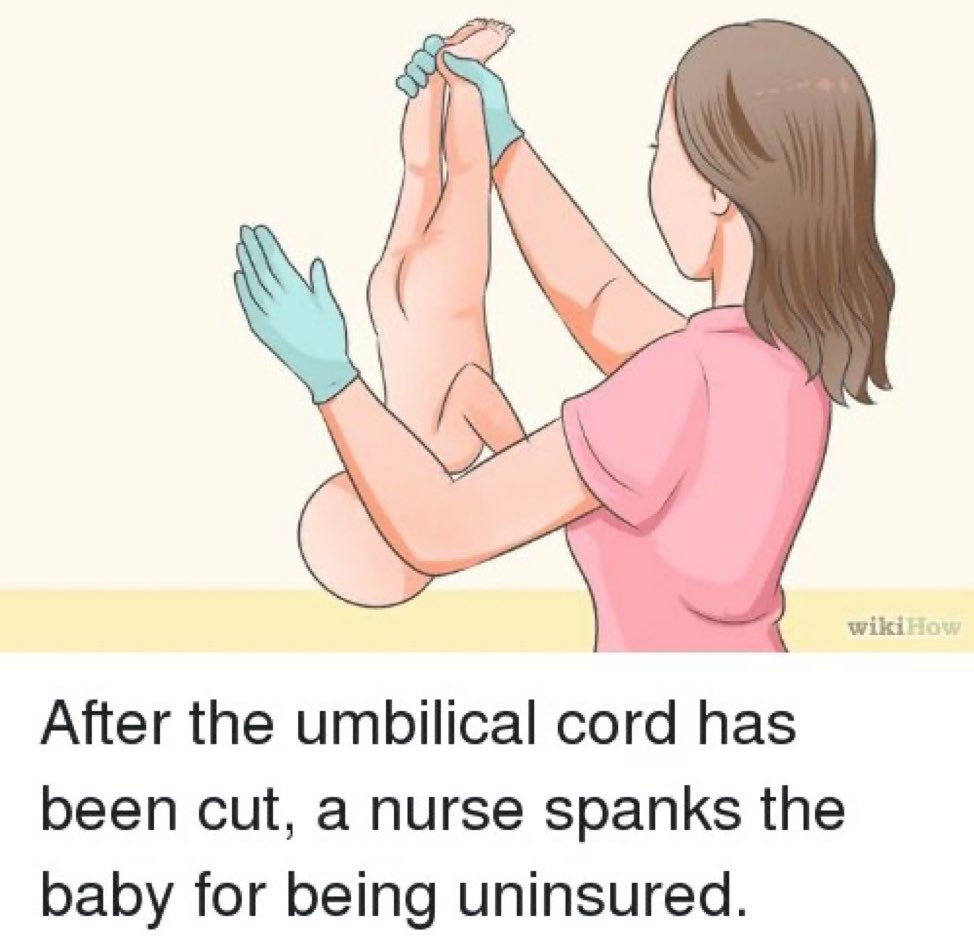
The professional and facility fee
First it’s worth understanding how pregnancy gets billed in the first place. There are a few different components.
The first is your regular visits to the obstetrician, which is a somewhat unusual type of billing. You’re not really billed for the visits leading up to the birth. But then you’re charged a “bundle” of payment once you give birth which includes all the visits leading up to it + whatever happened during the delivery. This is dependent on the kind of delivery you had.
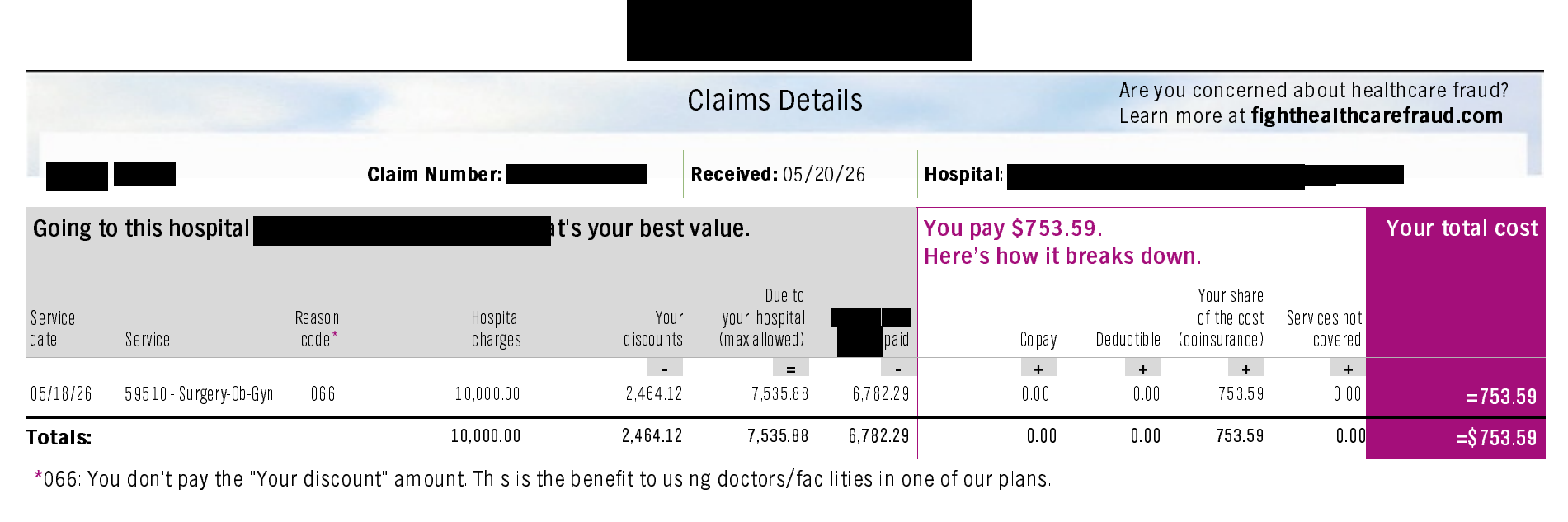
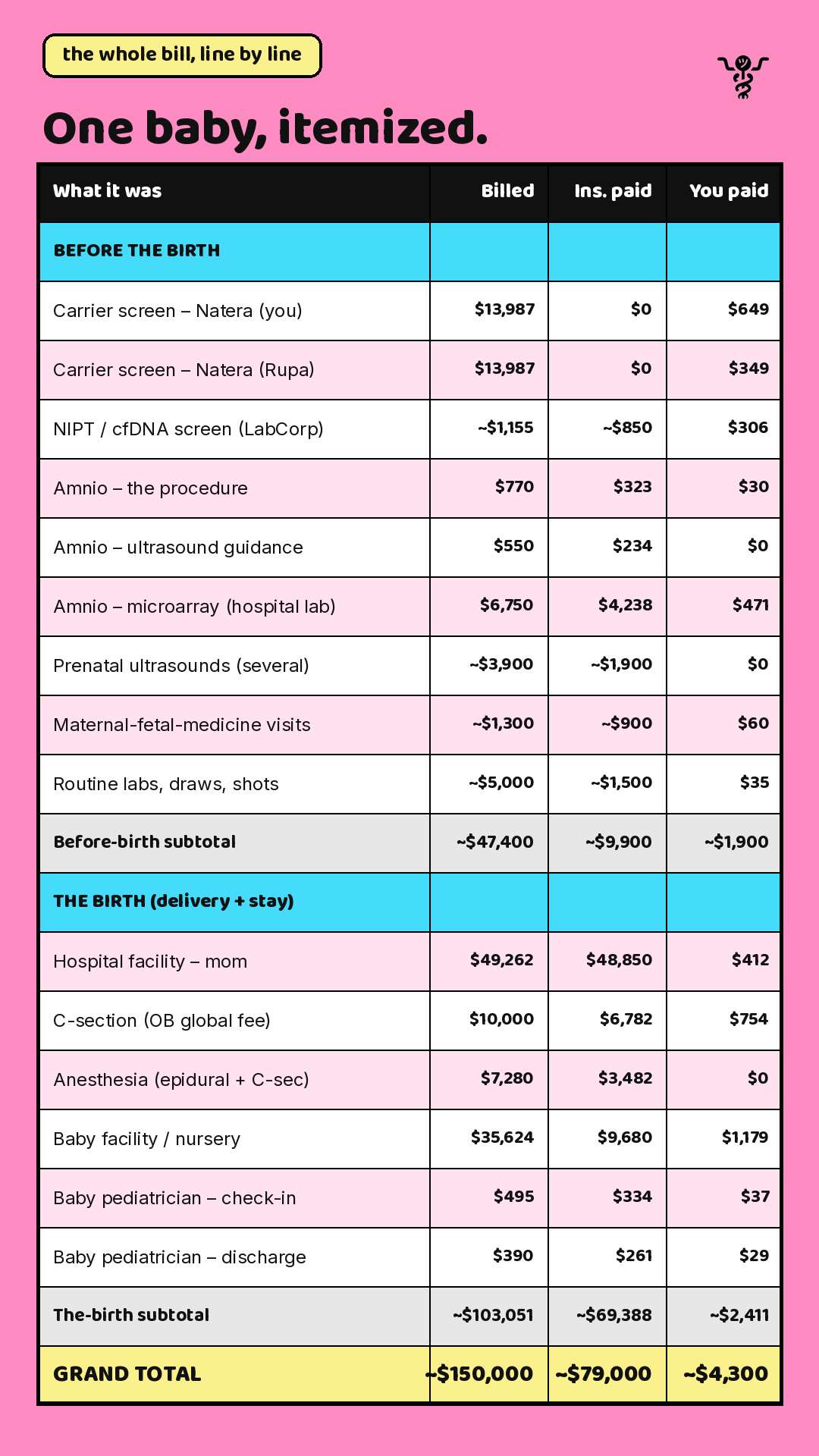
So in our case the C-section birth was a payment bundle of $10K which is the CPT code 59510 in the service line. This included:
- The routine visits to our OB leading up to the birth
- The doctor’s time during the surgery/delivery
- A couple follow-up visits after the birth
But the $10K is sort of a fake price the hospital sets, it’s always negotiated down by insurance. Our insurance negotiated a ~25% discount to $7500. Since we have a plan with 10% coinsurance, that ended up being ~$6750 from insurance and $750 from us.
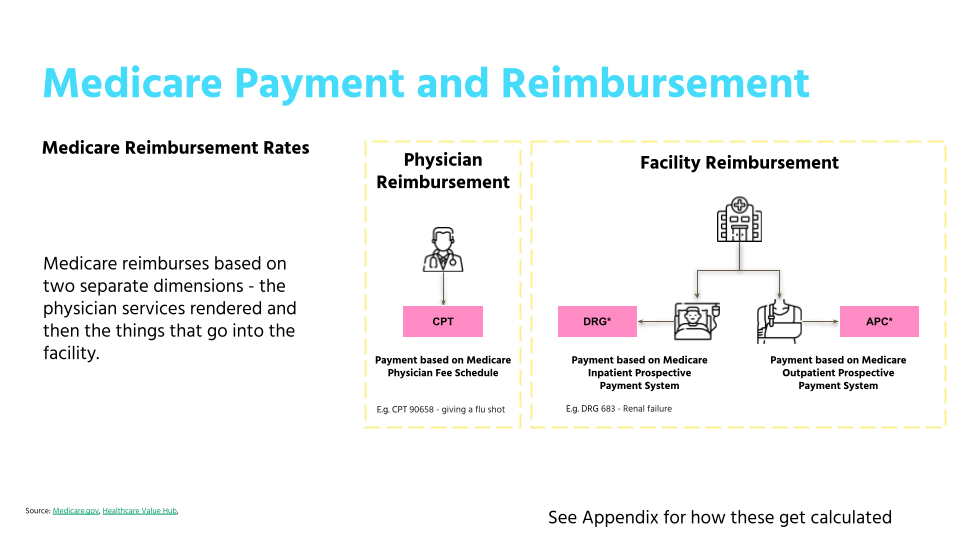
HOWEVER...bills that involve a hospital have two separate components. What we’ve described so far is the professional fee, which is the amount the OB gets paid. But the hospital has its own bill which includes everything involved in the facility itself - the staff, meds, the machines, room/board, etc. This is pretty standard for anything in a hospital setting - we talk about how this payment works in the healthcare 101 course (ENROLLMENT ENDS THIS WEEK!!)
The facility reimbursement is where this gets interesting IMO. For a birth, there are actually two different facility payments. There’s one for the mom, and then baby gets their own. Can’t think of anything more American than a hospital bill being the very first thing a baby gets.
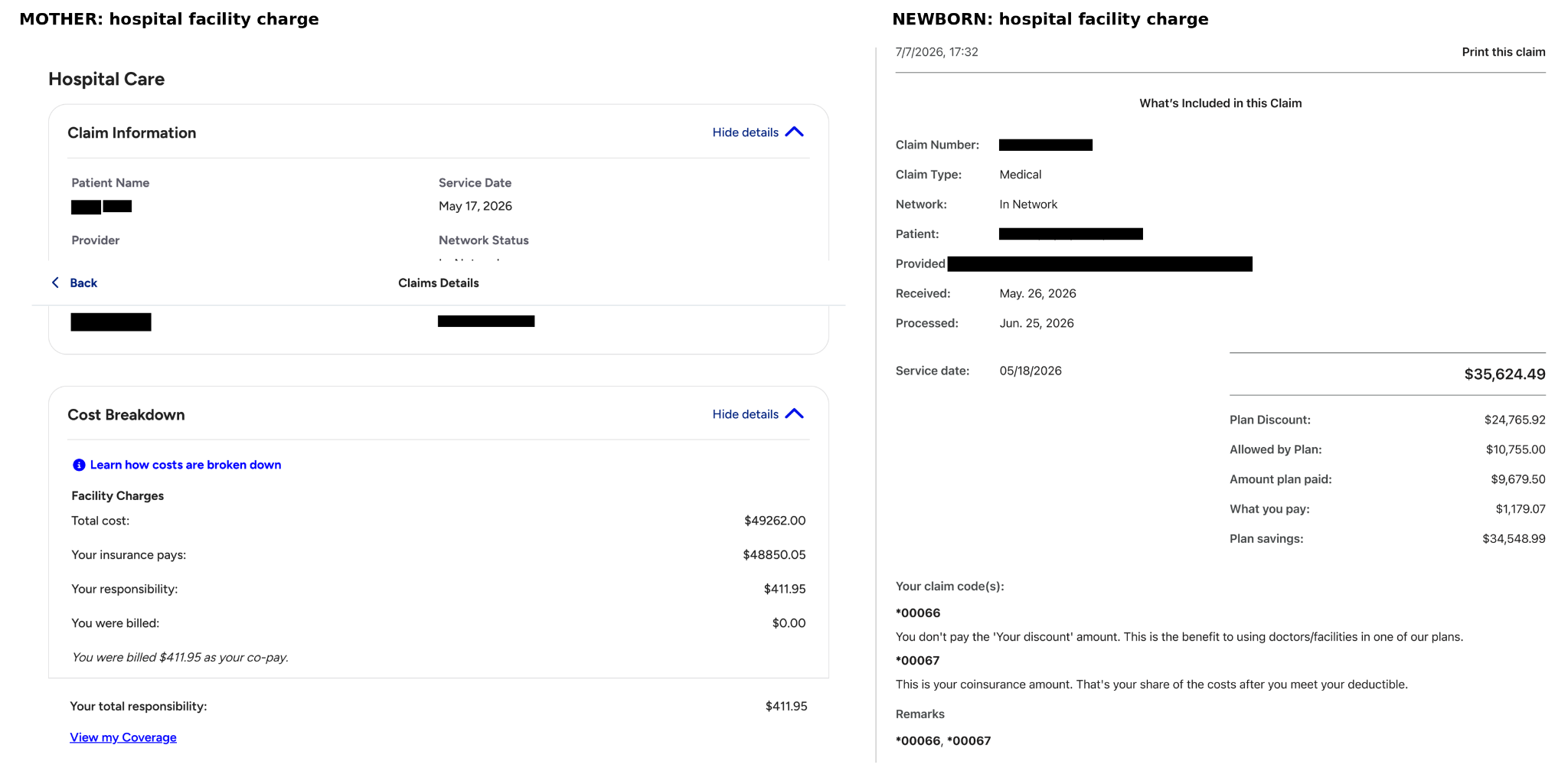
In our case the hospital facility payment for my wife was billed at $49K and the insurance was an excellent negotiator, bringing it down to $48,850. And then our baby got his own little bill of $35K, which got negotiated to ~$10K. Welcome to the world small child, pay up.
Out-Of-Pocket is also supported by...
The other charges during the journey
But wait...there’s more. Don’t forget the other small things throughout the course of this journey. Below are all the amounts insurance paid.
- Because the birth was deemed higher risk on the ultrasound (all ended up being fine), there’s an extra charge for additional visits outside of the ones included in that bundled payment ($900).
- Routine blood draws, labs, immunizations, etc (totaling about $1500)
- The anesthesiologist has his own bill that’s separate. And he sent us two different bills, one for the regular anesthesia and then one for the anesthesia top up for the C-section ($3482). I would literally tip that man if I could though.
- Baby gets their first pediatrician visit in the hospital to make sure he’s doing well, weighs him, measures him, etc. ($334) and does a discharge visit to greenlight him ($261)
- The amniocentesis to do confirmatory genetic testing on the amniotic fluid ($770 for the procedure + $550 for the ultrasound guidance) and the lab analysis of the sample ($4238).
- The $30 of Pad See Ew we ordered to the hospital and silently ate just trying to survive. I haven’t eaten Pad See Ew since.
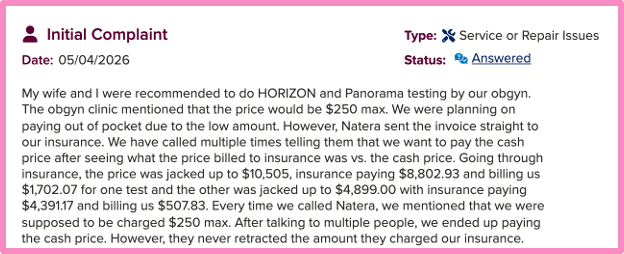
One particularly interesting saga was around carrier screening. My wife and I both used Natera to see if there were any potential hereditary diseases we should look out for when having a baby.
But the billing for this was more confusing than trying to actually read my own genetic code. I got a bill for $13K+ that I was told to pay because insurance denied it. What?? That doesn’t seem right. So I emailed the OB’s office and they said “oh yeah don’t worry, we’ll ask them to adjust it”. Then suddenly it became a cash pay price of $649? Even more confusing is my wife somehow negotiated a price of $349? Everything is made up ahhhh why does this feel like I’m haggling in a wet market.

To this day I still don’t know what happened here. But talking to other parents in the OOP slack group and perusing the Better Business Bureau complaints it’s clear this is relatively common. Try billing insurance, leave the patient with the full bill if the plan denies the test, then offer a much cheaper cash-pay price which seems like a great deal.
It’s clear that OB’s know this is an issue since they knew exactly what to do when I got the egregious bill. In general this was probably the only truly negative billing experience through our pregnancy, and it also just goes to show how strange the shenanigans around lab billing are. Feels like the providers or Natera should really be checking your insurance eligibility for the tests before ordering them. But why do something that makes sense! It’s healthcare!
Last call for Knowledgefest sponsors and Healthcare 101
Quick Out-Of-Pocket things to remind you of all the cool stuff we’re doing.
- We’re doing out last call for sponsors for Knowledgefest. If your product is mostly used by ops/product people at healthcare companies, we should chat. Examples include credentialing companies, voice/back-office automation, project management tools that sign a BAA, patient engagement tools, etc.
- Two free courses about to happen: Our value-based care course started today, getting into contracting, ops, and payment (we have 850+ people!).
- On 10/27 we have an AI agents for Ops course too with Champ, where we’re going through back-office stuff related to RCM, credentialing, etc.
- It’s the final week to sign up for our healthcare 101 crash course. Let’s be honest no one on your team has time to teach the people new to healthcare, and they’re getting lost in the acronyms and incentives. I’ll teach them, hand them off to me. Starts Monday!!! Sign up here, we do group discounts.

Now back to the sticker shock of our pregnancy bill.
Final tally
So when we put this all together, what was the final tally? The Europeans are really gonna shit themselves at this one.
We were billed ~$150K, our insurance paid ~$79K, and our out-of-pocket costs were ~$4300. And this was for a largely uneventful birth cost wise - NICU babies can end up as multi-hundreds of thousands of dollars to occasionally $1M+!
What’s crazy is how wide the variance of contracted prices can be between hospitals AND between payers. The Turquoise Health team graciously pulled the data so I could show you all just how wide that range is. Especially for C-Sections, where the swing can be $35-40K between hospitals. Even WITHIN a hospital you could have the same C-Section costing twice as much depending on which insurance you have (e.g. NYU)!
Obviously you have to layer outcomes on top of this. But damn...you could buy a Honda Civic and still save money if you went to Elmhurst (along with getting some of the best halal cart in the city). And that’s just for the facility component.

The coding system for maternal care is going through an overhaul next year
Turns out everything I said about billing is changing next year. This is why you shouldn’t learn anything ever.
Remember the way this gets billed is one CPT code that encompasses all the visits leading up to it + the type of birth + a few visits after as one single bill. But there are a few issues with this:
- This assumes that the OB who you’re seeing is the same OB that’s going to deliver you. What happens if you deliver at a different hospital? Or a different OB than the one you regularly see actually does the delivery (very common today)?
- It also assumes that all patients have relatively similar needs and bakes in ~13 visits per patient. The reality is some patients may need way more visits and others may need way fewer. Or some may need more check ups after the birth and some may not. The current codes really only assume variance during the birth itself.
- It creates a cash flow issue for the OB’s since they don’t get paid until 9 months later + whatever time it takes for payers to reconcile the bills. Can you imagine if all your invoices were paid net 300???
- Our god forsaken pop health analysis infrastructure is built on using billing data in ways it’s not supposed to be used. So having CPT codes that only talk about the delivery itself means we don’t get much population level insight into the visits that happen leading up to it and after if we want to analyze it.
Starting Jan 1, 2027 the AMA is deleting that $10K global bundle and breaking it into four separately-billed pieces: the prenatal visits, labor management, the delivery itself, and postpartum.

Very curious to see what happens, my guess is:
- You’ll see more pushes for pre-birth visits if they become billable, including telehealth visits so the patient doesn’t have to come in each time.
- Postpartum care might actually become more of a priority if it's billable. Let’s see if total costs go up with a new billable interaction or down by catching emergencies earlier.
- Payers start scrutinizing which births are actually high risk and need extra visits while providers try to code most visits as high risk. You’ll start seeing clawbacks, prior auths, and other utilization management tings (not a typo) happen.
- OB groups start looking to RCM vendors to help as billing starts getting more complex.
- 100 virtual post-partum care startups put this as the “why now” moment in their deck and in 2-3 years realize they shouldn’t have raised venture.
I really enjoyed Neel Shah’s writeup of this, if you want to go deeper around this change.
A few random notes about billing
Some miscellaneous notes that didn’t fit above.
- It’s crazy the sheer number of bills you get through this process. Even trying to piece it together for this post, I went through approximately 15-20 different bills and probably still missed some.
- You usually have to sign your baby up for health insurance within 30 days of being born (sometimes 60). Because of course, you don’t have other priorities in those 30 days. If you don’t it becomes kind of a really annoying situation of begging your employer/health insurance to let you add or signing up for a new plan.
- If you both have different plans? Well...I found myself in a hell of my own writing. It’s all fun and games until benefit coordination punches you in the mouth.

- All of the bills came way later - but it’s interesting to think about whether we’d have made different choices if we knew all the costs upfront. This is the premise behind a lot of the consumer shopping companies. But I can see a world where patients are actually making suboptimal choices because they anchor TOO heavily on the cost aspect. Would we really have wanted to know the emergency C-Section would add an extra $7-10K to our bill in the moment we’re making a really heavy decision?
- This is a lot of money no doubt. But when thinking about where to pay extra for healthcare, delivering healthy babies is a good place from a societal perspective (vs. very expensive cancer drugs that work questionably at the end of life that are much more expensive).
- I was impressed at how well Claude was able to rip through these bills and provide good explanations. I used a local model to strip identifiers and then fed these bills to Claude and it was able to piece together the story, answer a lot of questions, and even pointed out areas that I’m probably missing a bill and should check. Though this was with Opus 4.8, Opus 5 will give an explanation more confusing than the bill itself.
Conclusion, parting thoughts, and thank you
Again - why are we sharing all of this? IMO healthcare wins because patients are afraid to share their experiences with each other. We gained a lot by having friends who would share their stories with us. This is our family's small part of trying to break that information asymmetry.
I really want to thank my wife who obviously not only did all the hard work involved in creating the baby and shouldering a lot of the household burden while I made memes in powerpoint for a job. But also for basically ghost writing these posts with me so we could share our story.
And also thank you to everyone who’s been sending such nice messages (and gifts??? I’ve gotten a lot of really useful stuff mailed to us that have really helped out).
Hope you enjoyed this series. If you want to also share the trials and tribulations of your birth story and what it taught you about healthcare, I’d love to hear.

Thinkboi out,
Nikhil aka. “shoulda named the kid Bill” aka. “Claude Coparent” aka “Nateradactyl”
P.S. Don’t forget to hit us up if you’re thinking about your next job, maybe we can place you
Thanks to Jennifer Rohs and Laura Heacock for reading drafts of this
Twitter: @nikillinit
Other posts: outofpocket.health/posts
Quick Interlude - “Am I a fit for Knowledgefest?”
See All Courses →Based on the questions I’m getting about Knowledgefest, I’m doing a really bad job explaining who should come.
The conference is for anyone building in healthcare.
- It is not specific to companies delivering patient care - Lots of people at software only, insurance, etc are coming.
- Any size of company can come - We have two person just out of YC companies, people that run ops at clinics, to F500 companies.
- You can be any role - Almost every role touches ops in some way. Product, founders, clinical, etc. should definitely come.
You should apply if you’re not sure, and we’ll let you know :)

Get Out-Of-Pocket in your email