Is this really how we measure things during pregnancy?
Get Out-Of-Pocket in your email
Looking to hire the best talent in healthcare? Check out the OOP Talent Collective - where vetted candidates are looking for their next gig. Learn more here or check it out yourself.
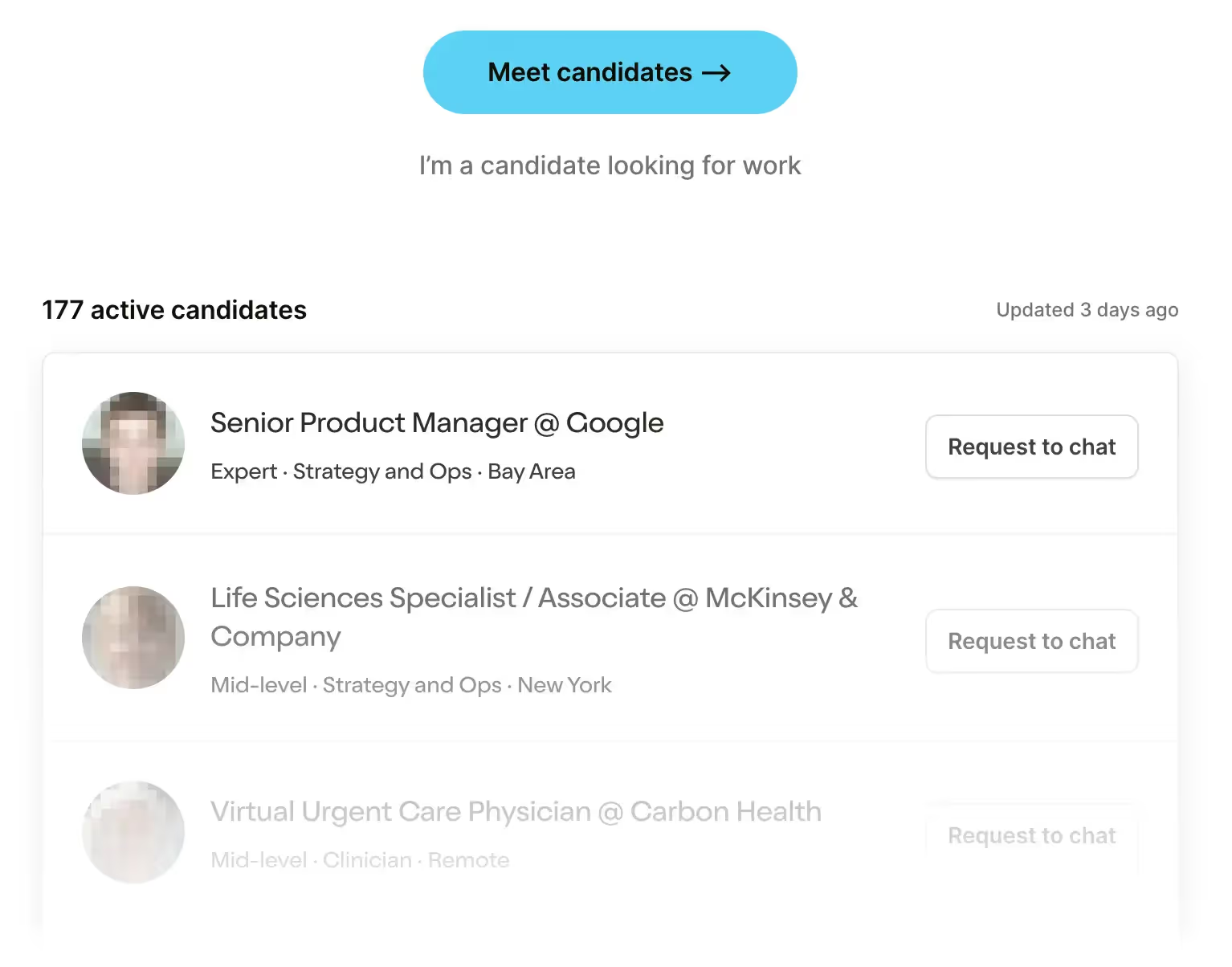 Hire from the Out-Of-Pocket talent collective
AI Agents in Healthcare Ops 101

Featured Jobs
Finance Associate - Spark Advisors
- Spark Advisors helps seniors enroll in Medicare and understand their benefits by monitoring coverage, figuring out the right benefits, and deal with insurance issues. They're hiring a finance associate.
- firsthand is building technology and services to dramatically change the lives of those with serious mental illness who have fallen through the gaps in the safety net. They are hiring a data engineer to build first of its kind infrastructure to empower their peer-led care team.
- J2 Health brings together best in class data and purpose built software to enable healthcare organizations to optimize provider network performance. They're hiring a data scientist.
Looking for a job in health tech? Check out the other awesome healthcare jobs on the job board + give your preferences to get alerted to new postings.
This episode of Out-Of-Pocket is brought to you by...
EHR integrations are notoriously slow. We're talking "grind for hours, farm for resources, never quite level up" slow. Redox cuts that timeline dramatically with configurable connections already established across 12,000+ systems. That's not a sales number; it's a library of solved problems your team gets to skip entirely. Add in experts who've seen every gnarly edge case imaginable and will actually respond when you need them, and shipping fast stops feeling like a fantasy.
–
There's too much and not enough data during the pregnancy journey
Last time we talked about a lot of the various healthcare processes around pregnancy. I shared some of the things I learned going through this with my wife and son. I got about 50 emails back about the gory details of your own birth stories, which makes me feel a level of intimacy with you that I probably haven't earned.
Today I wanted to talk a bit more about how data was used and not used during the pregnancy journey. Oddly enough it's both too much data and not enough data?
Some loosely related vignettes with anecdotes from our own birth journey.
{{interlude 3}}
How measurements are captured could use improvement
I was surprised at how ad-hoc a lot of the measurement during this whole pregnancy process seemed to be. In an era where computers can get millimeter level precision, it feels very cro magnon core to pull out a tape measure for literally anything. Also important downstream decisions depend very heavily on these measurements!
The ultrasound was one example. During the process they're basically moving the ultrasound around, taking pictures at random points to try and get a good enough view of something like a limb, screenshot it, and then measure the length. A lot of decisions around what to do next, including somewhat invasive options, are based on that screenshot. And the baby likes to "do a barrel roll!" every time they're being watched, which makes precision very hard here.
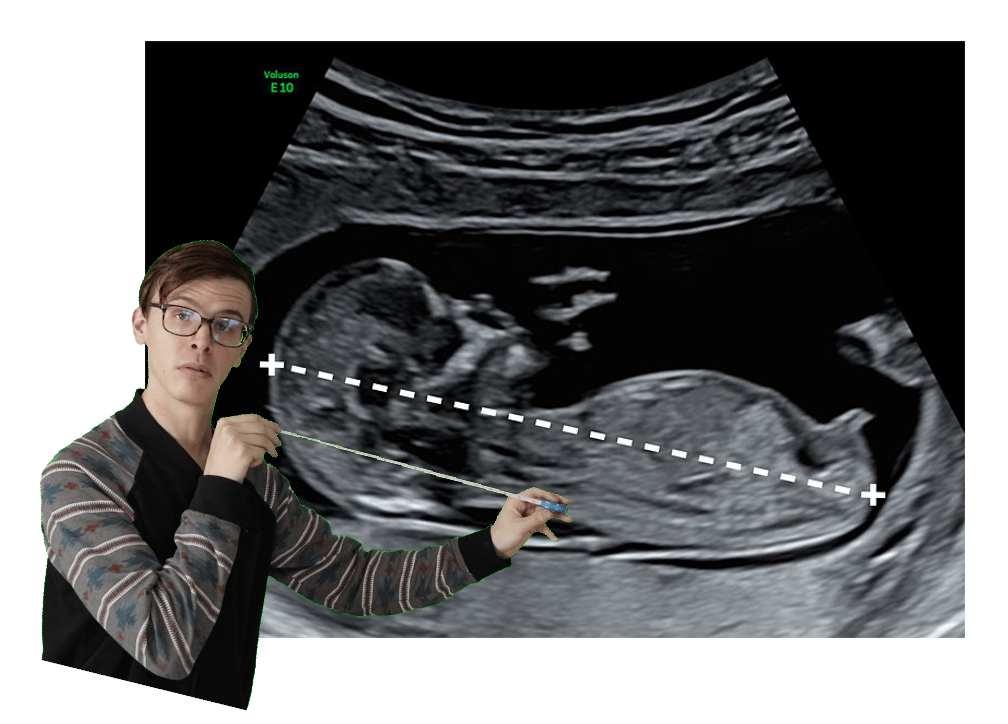
Even for things like pediatrician visits, measuring length, headsize, etc. is done in a way that seems unchanged since the 60s. Measuring using pencil markings on the sheet of paper a baby is sitting on? Is this a kindergarten class? Couldn't we use smart scales to measure weight changes at home more regularly?
I think maybe I'm a bit AI-pilled here. Could the ultrasounds be done faster and more accurately if an AI was stitching together the images and measuring instead of using screenshots? Could we get more regular measurements if patients were taking pictures/weighing their kids at home? Maybe even giving patients a leased ultrasound at home?
Thinking about risk-reward tradeoffs
This episode of care is the first time we've had information and needed to make serious risk-reward tradeoffs during a course of care.
As an example, they found slight nuchal thickness during the ultrasound which meant Y% chance of a congenital issue. But if you want to confirm, the biopsy is an amniocentesis which is doctor speak for a big ass needle going into the pregnant stomach and sucking out amniotic fluid. Relatively safe procedure, but still a 0.1-0.3% of miscarriage risk.
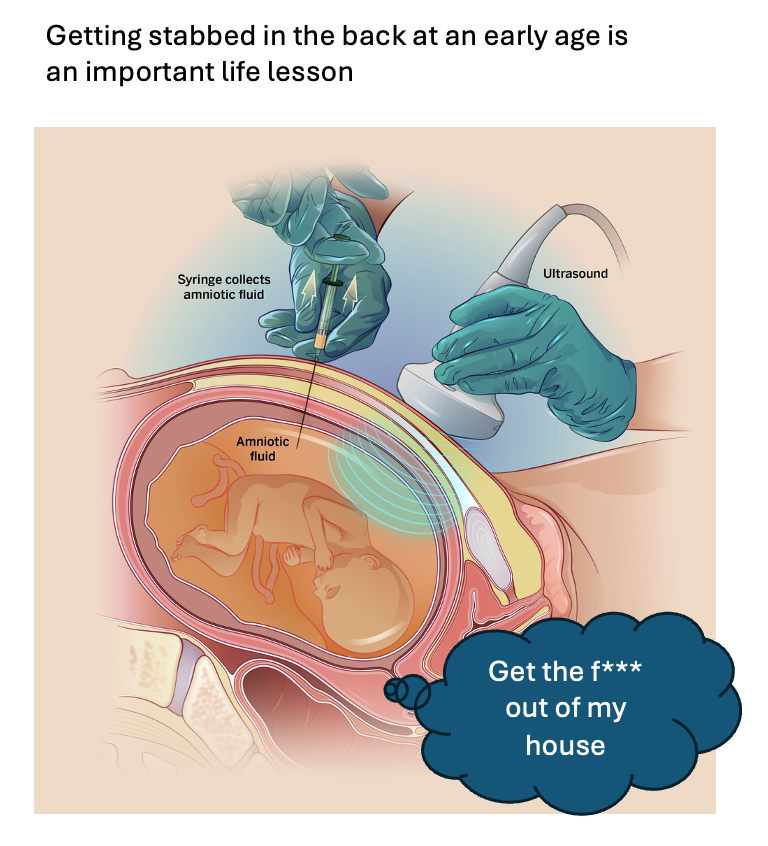
These are heavy decisions and for the first time in my life, several of them were not extremely clear cut. It's hard not to go through this care journey and think about the discussions of full body MRIs, false positives, etc. where you'd face a lot of similar issues. I still think patients should have that choice, but being confronted with a lot of tradeoff decisions is not easy and emotionally charged.
The most high intensity version of this was when we were relying on the fetal heart monitor to make a decision to get an emergency C-section. The fetal heart monitor showed the baby's heart dropping and they were in distress, and we had to make a decision on the spot about the tradeoffs between C-section vs. vaginal birth.
As I would read later, the fetal heart monitoring device is hotly contested in its use. Turns out everpresent monitoring tends to have more false positives, doesn't seem to help a ton, and yields more C-sections of previously low-risk pregnancies. Probably why ARPA-H is trying to find a new tool to monitor this.
But when you're in that moment, you need to make some risk-reward analyses quickly. It's so hard, I can't describe it to you without you experiencing it yourself.
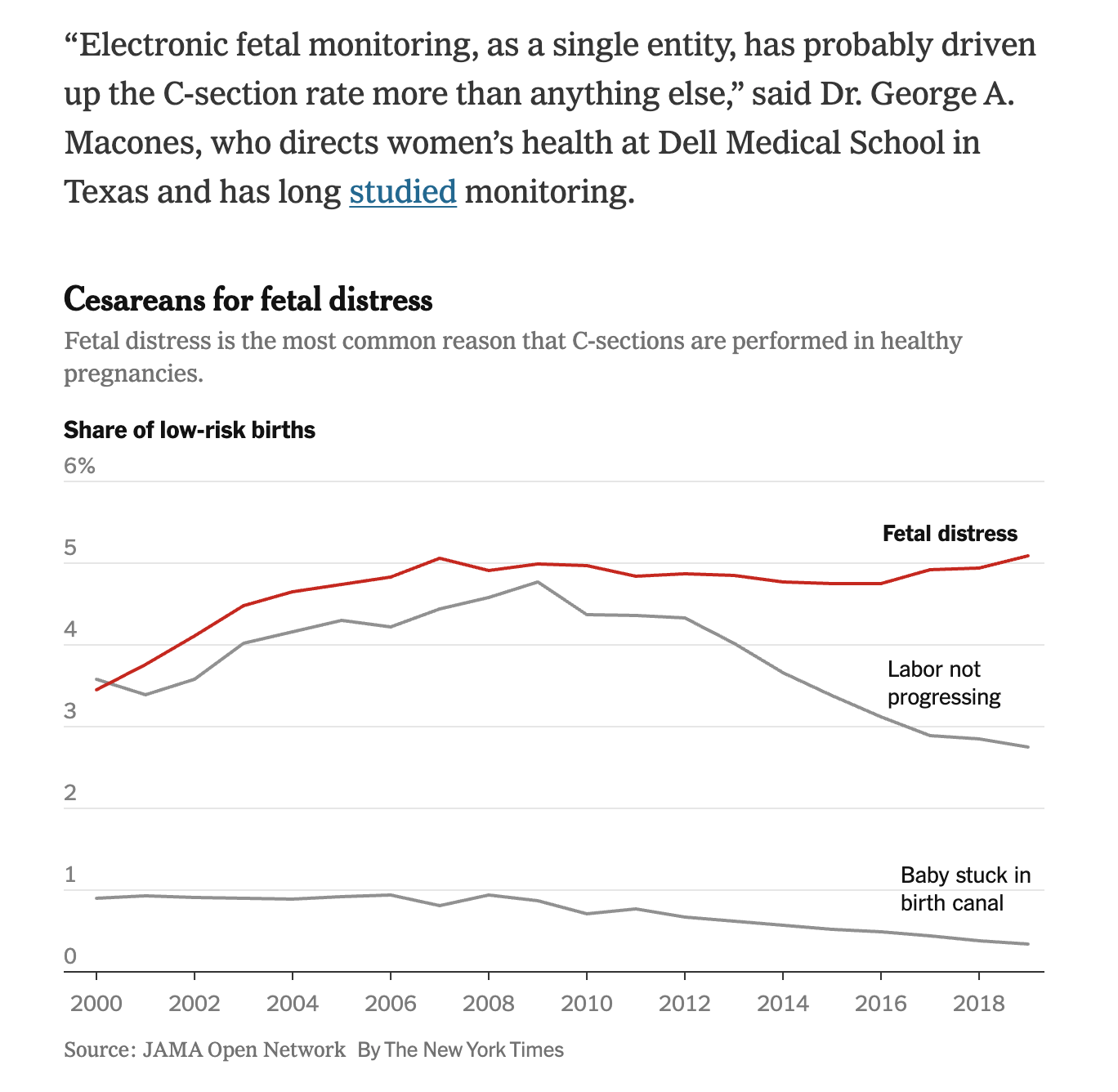
Almost all of these risk-reward tradeoffs get amplified as you continue to get more and more measurements. So despite my entire other section of wanting to measure more - this is the double-edge to that sword.
There are SO many things now for you to measure your kid. Our baby cam came with a strap you can put around your kid to measure their O2 sats. But I now understand what too much data actually looks like - you don't want to be obsessing over every small anomaly because you'll go crazy.
This episode is also supported by...

Public health, research biobanks for pregnancy
A ton of data IS captured and used for public health that researchers and governments can use. For example:
- Some of the testing is required to be submitted to the state, e.g. genetic testing
- When you're chilling in the recovery room they ask you tons of things, including taking part in several studies (e.g. free expanded genetic screening test paid for by the hospital)
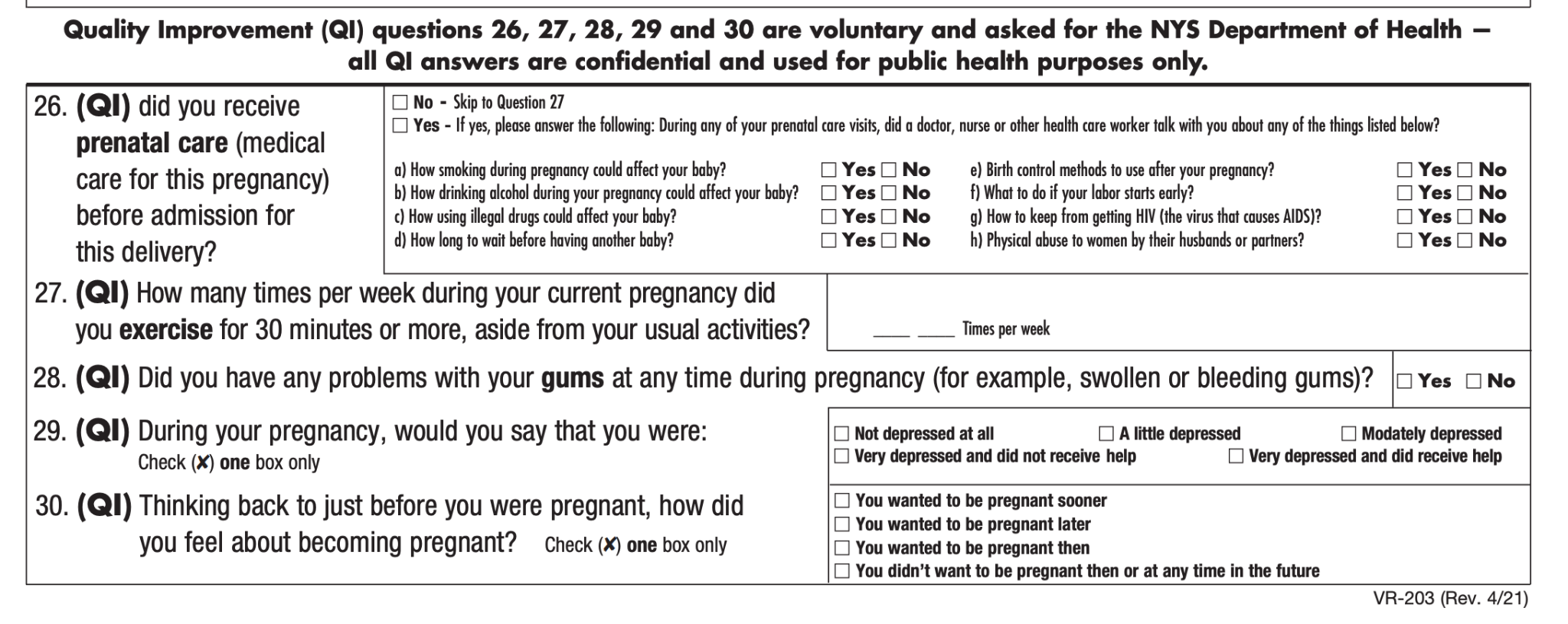
- While you're chilling in the recovery room with nothing to do, they give you a questionnaire to fill out to get the birth certificate. It asks for social determinant info (job status, kinda immigration status, ancestry, your exercise rate before birth, whether gums were bleeding, things your ob talked to you about, if you had a doula, alcohol/drug use, etc.).
- Thankfully we didn't have to deal with this, but death certificates explicitly ask if the death was due to pregnancy for public health reporting on maternal health outcomes.
This is great for things like creating new guidelines, understanding population health level trends, etc.
But I will also say that if you're someone that's worried about whether a government will change course on how it views your pregnancy, it can also be pretty...terrifying? I wish there were a way to better control how this data is used in public health analyses and who has access to it.
I want to see patients like me
There are a lot of questions that I have as an individual patient that can't be answered because I don't have access to that data or the data doesn't exist.
- I would have loved to know decisions parents made that were very similar to us. South asian, early 30s, hot, similar health issues, had IVF or didn't, similar baby size, etc. Most of the advice seems geared towards the median patient and I wish we could query data about cohorts like us. This would be especially helpful if you have any sort of disease that might cause known complexity like PCOS, endometriosis, etc.
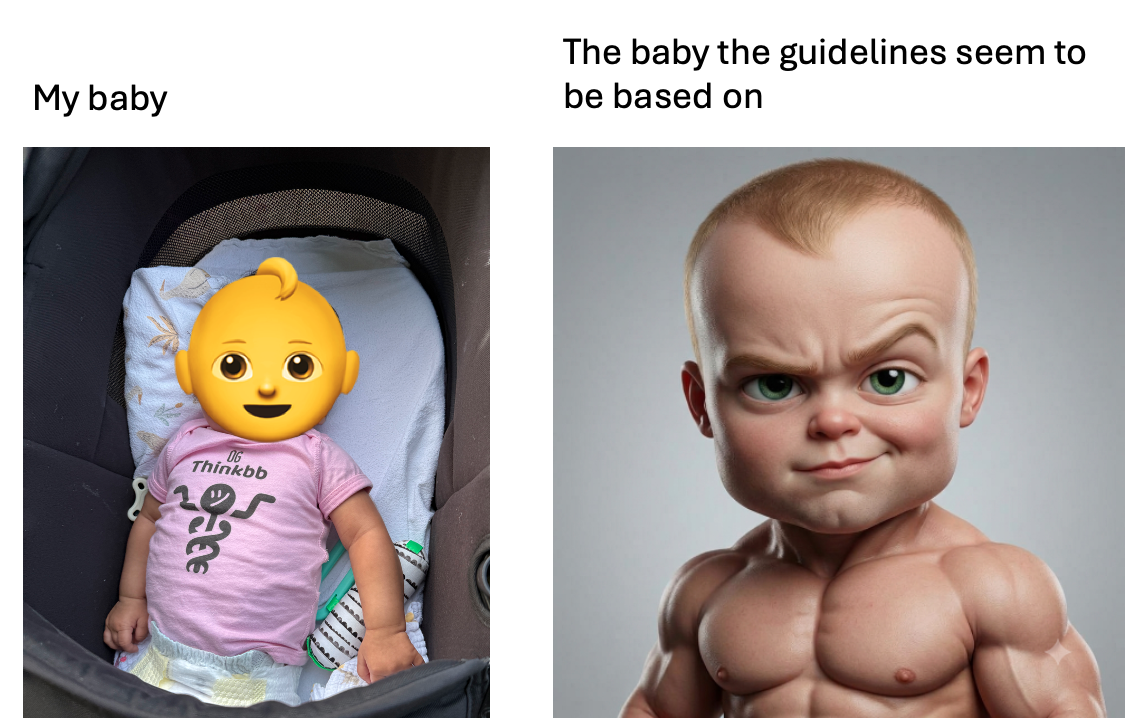
- Questions around whether our parents had similar birth journeys are relevant but out of reach. Apparently when I was a baby I also had nuchal thiccness and my mom went through the same exact thing we did. And I turned out...uh...
- Can we see people who had picked the same OB/hospital and ask them questions about their experience and what they wish they did? We ended up doing this ad hoc when people asked us where we were delivering.
This feels like potentially an area where patient-first biobanks would be really useful, especially considering how willing families are to contribute information to other families that might help them.
Conclusion and parting thoughts
IMO one of the hardest parts of being a parent is realizing that you can only use data for so much. You have to just...trust yourself and your gut and your kid.
Luckily I've been ignoring data my entire life and have basically run on vibes until this point (wtf is "google analytics"). So I've been preparing for this moment for a long time.
In part 3 we'll talk about how there's a tension between how the healthcare system communicates "ideal" pregnancy/parenting from a medical standpoint vs. the practical realities of actually doing that. You can sign up to get it if you haven't already.
Thinkboi out,
Nikhil aka "data driven decision making father" aka. "Parent-child relational database"
Thanks to Jennifer Rohs and Laura Heacock for reading drafts of this
Twitter: @nikillinit
Other posts: outofpocket.health/posts
Quick Interlude - “Am I a fit for Knowledgefest?”
See All Courses →Based on the questions I’m getting about Knowledgefest, I’m doing a really bad job explaining who should come.
The conference is for anyone building in healthcare.
- It is not specific to companies delivering patient care - Lots of people at software only, insurance, etc are coming.
- Any size of company can come - We have two person just out of YC companies, people that run ops at clinics, to F500 companies.
- You can be any role - Almost every role touches ops in some way. Product, founders, clinical, etc. should definitely come.
You should apply if you’re not sure, and we’ll let you know :)
Get Out-Of-Pocket in your email