


Search the Out-Of-Pocket Archives:
AI Agents in Healthcare Ops 101


.png)
.png)

Things You'll Get From This Course
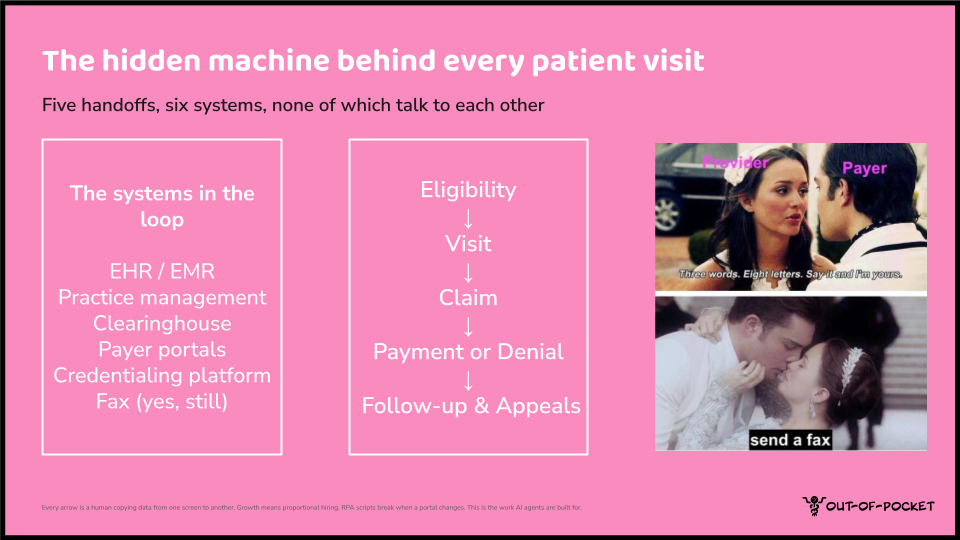
Read the landscape
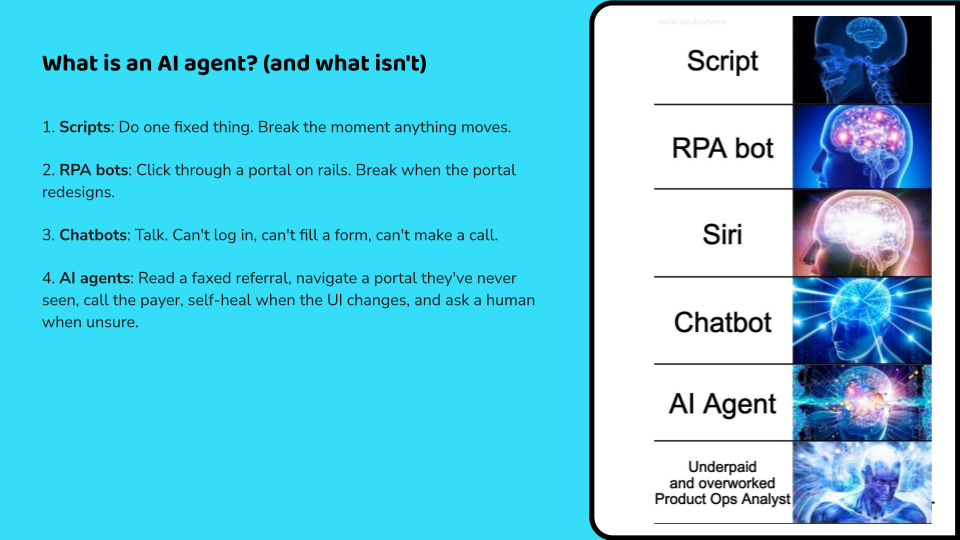
Know what agents can and can't do
See real deployments, not demos
Leave with a playbook

Meet Your Instructors, Ted and Aaron
.png)
Ted Cheng
Ted is a co-founder of Champ AI, a platform where operations teams build, run, and monitor AI agents that complete end-to-end back-office work: navigating payer portals, reading faxed referrals, calling provider-services lines, and writing back to the EHR. Champ's agents run production workflows for healthcare customers today, including eligibility verification, denial follow-up, and credentialing.
Before Champ, Ted spent nine years at Instacart, from Series B through post-IPO, as a principal engineer working directly with operations teams. That's where he saw the pattern this course is about: engineering could automate the clean, API-shaped work, but the work that needed judgment (messy documents, government portals, phone calls) still scaled with headcount. Champ raised an $8M seed round led by Redpoint Ventures in 2025.
Contact: ted@champ.ai
Aaron Lopez
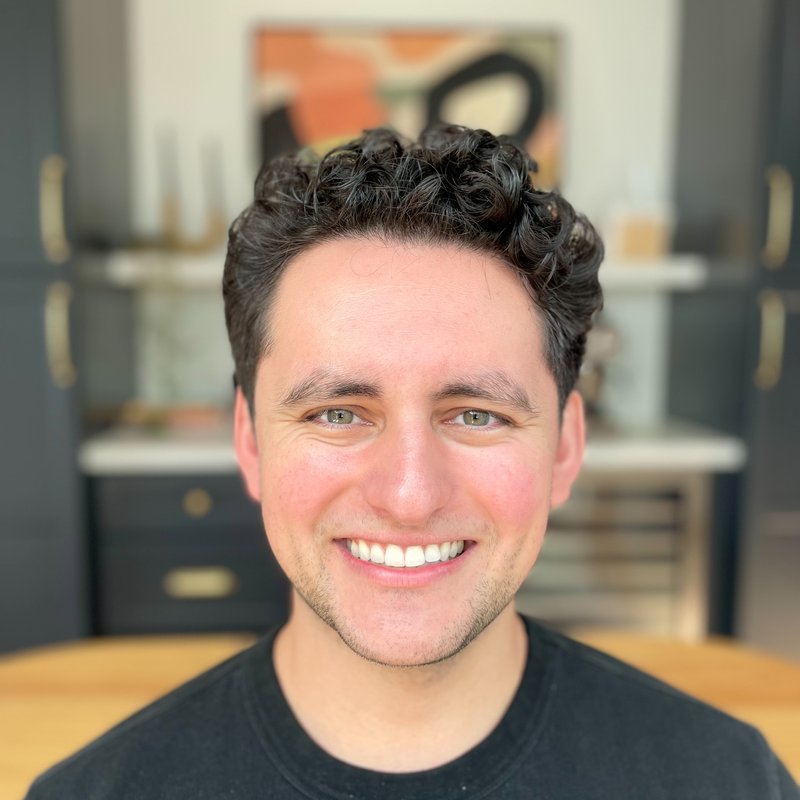
Aaron is Champ AI's founding forward deployed engineer, where he works to help customers implement AI agents inside their day-to-day operations. He embeds with healthcare teams to map how work actually gets done, turns that into agent workflows, and stays with them through go-live, handling the edge cases, exceptions, and judgment calls that decide whether an agent earns trust on the floor.
Before Champ, Aaron spent 10 years in the software industry helping scale unicorn startups across product, go-to-market, and customer success. Working on every side of the customer relationship showed him that great tools only matter if they fit the way people actually work, and that the gap between a demo and a deployment is where most automation efforts stall. At Champ, closing that gap is his job.
Contact: aaron@champ.ai
Course Syllabus & Schedule
Module 1
Day 1

Eligibility, denials, and the workflows that AI should eat first
(10/27, 12-1:30PM EST)
Module 2
Day 2
Zoom in on RCM flows + hands-on lab working a denial
(10/28, 12-1:30PM EST)
Module 3
Day 3
Zoom back out
(10/29, 12-1:30PM EST)
Module 4
Day 4
Module 5
Day 5
Module 6
Day 6
Module 7
Day 7
Module 8
Day 8
Module 9
Day 9
Module 10
Day 10
Frequently Asked Questions
Who is this course for?

Operations, revenue-cycle, and product leaders at care-delivery companies who are being asked "should we use AI agents for this?" and want a grounded answer. Also useful for founders, new healthcare hires, investors, and anyone building or buying automation for the back office. No technical background required.
Who is this course NOT for?
If you're looking to build AI agents from scratch (prompt engineering, model selection, writing code), this isn't that course. It's also not a clinical AI course: we stay on the operational side (eligibility, claims, credentialing, referrals), not diagnosis or clinical decision support.
Do I need a technical background?
No. We explain agents from the operations side: what they can do, where they fail, and how to manage them. If you can describe a workflow to a new hire, you have what you need. The hands-on lab uses an AI assistant, not code.
Will I be an AI agents expert after finishing this course?
No, but you'll be a much better judge of one. You'll be able to look at a workflow and say whether an agent can handle it today, what guardrails it needs, and what to ask a vendor before you sign. Deploying and operating agents well takes practice; this course is where the practice starts.
Is there a lot of work?
No homework. The course is three 90-minute sessions, and the hands-on parts (the denial lab and the capstone plan) happen in class. If you want to get more out of the capstone, come with a workflow from your own organization in mind.