Practicality vs. reality in healthcare: A pregnancy case study
Get Out-Of-Pocket in your email
Looking to hire the best talent in healthcare? Check out the OOP Talent Collective - where vetted candidates are looking for their next gig. Learn more here or check it out yourself.
 Hire from the Out-Of-Pocket talent collective
AI Agents in Healthcare Ops 101

Featured Jobs
Finance Associate - Spark Advisors
- Spark Advisors helps seniors enroll in Medicare and understand their benefits by monitoring coverage, figuring out the right benefits, and deal with insurance issues. They're hiring a finance associate.
- firsthand is building technology and services to dramatically change the lives of those with serious mental illness who have fallen through the gaps in the safety net. They are hiring a data engineer to build first of its kind infrastructure to empower their peer-led care team.
- J2 Health brings together best in class data and purpose built software to enable healthcare organizations to optimize provider network performance. They're hiring a data scientist.
Looking for a job in health tech? Check out the other awesome healthcare jobs on the job board + give your preferences to get alerted to new postings.
This episode of Out-Of-Pocket is brought to you by...

Most health systems run AI that tells someone what to do next. Bunkerhill actually does the work.
Health systems bring the idea. Bunkerhill reads patients' charts, submits to payers, reaches patients, and does whatever else it takes, pushing through missing records and weeks of waiting.
It's a long-horizon AI agent, so it stays with an objective until it's met, across clinical, operational, and administrative work, at Cleveland Clinic, Intermountain Health, and dozens more nationwide.
—
Gets healthcare once
After going through one marginally complex healthcare episode, I am now writing about it for a straight month. If I ever get sick...it's really over for your inbox.
But there are so many facets about pregnancy/birth that act as a microcosm for the rest of our healthcare interactions.
Today I want to talk about the tension between “medically ideal” and “what's actually doable”. I know there's probably going to be a lot of disagreement on topics in this one, hopefully you'd be down to have some nuanced discussion vs. flame me.
In literature vs. In practice vs. In sane in the brain
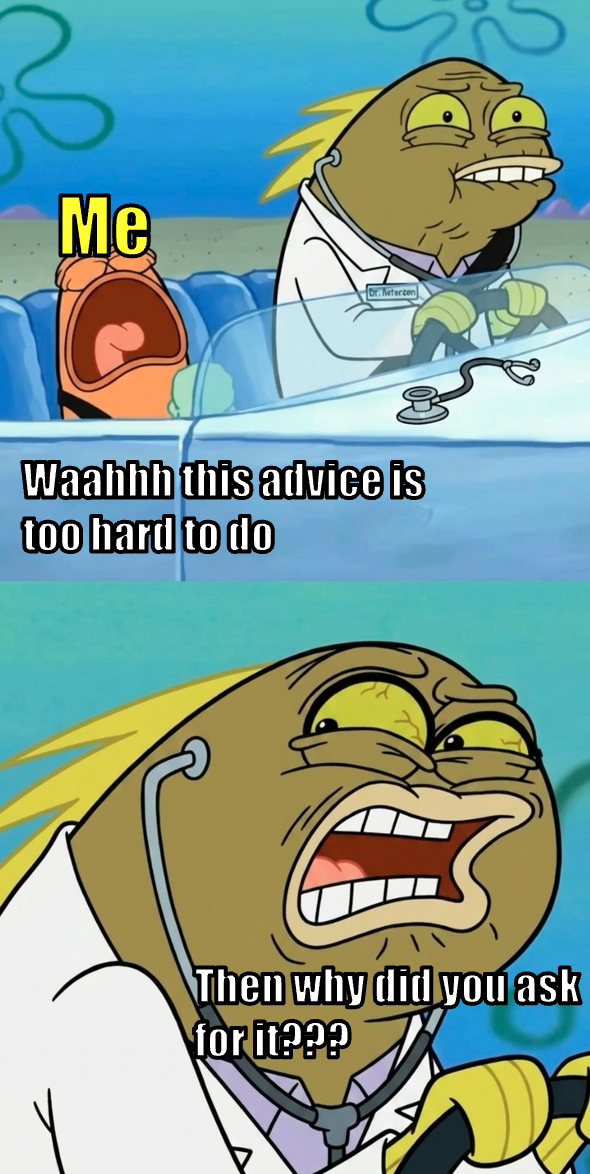
Having a kid really shows you how wide the gulf is between what you're told to do ideally according to studies/care guidelines and what you're able to do realistically. At its core medical guidance will prioritize risk reduction over quality of life. But if the parents are losing their sanity, it'll end up being bad for everyone in ways that are less directly measurable.
Just like any expecting parents, we had so many questions during the pregnancy. But all of the answers we got were very conservative or very hedged in how it was phrased. There were several times we would ask a question and leave feeling more unsure after hearing the answer and then look stuff up on LLMs, reddit, friends, etc.
This is clearly creating a void for expecting parents. Many people start seeking out other sources of info which feel more based on “what actually happens”.
At its best you see people like Emily Oster, whose book is basically about how all guidelines are extremely conservative. “Do all your bad habits in moderation whatever the study was confounded anyway haha sushi queen go for it”. (Not actually what the book says please don't sue me Dr. Oster).
At its worst you see this with social media misinformation. The reality is that people posting on social media their firsthand experience which can oftentimes seem more “real” than studies. They have strong opinions on the exact questions people have, even if the answers are not based on evidence. People are vibes-based doing things with their placenta that feel illegal.
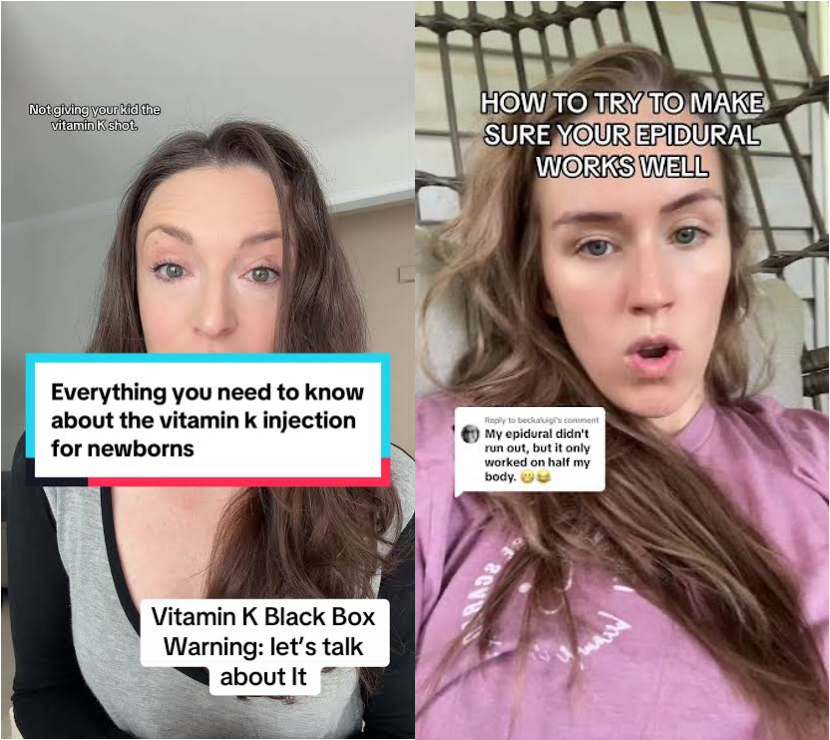
In our pregnancy journey, there were a few areas where we encountered this tension between doing the correct evidence-based thing vs. the practical thing. Some examples below:
Quick aside - Knowledgefest + Healthcare 101 + Free VBC course
3 quick things before the pitchforks come out.
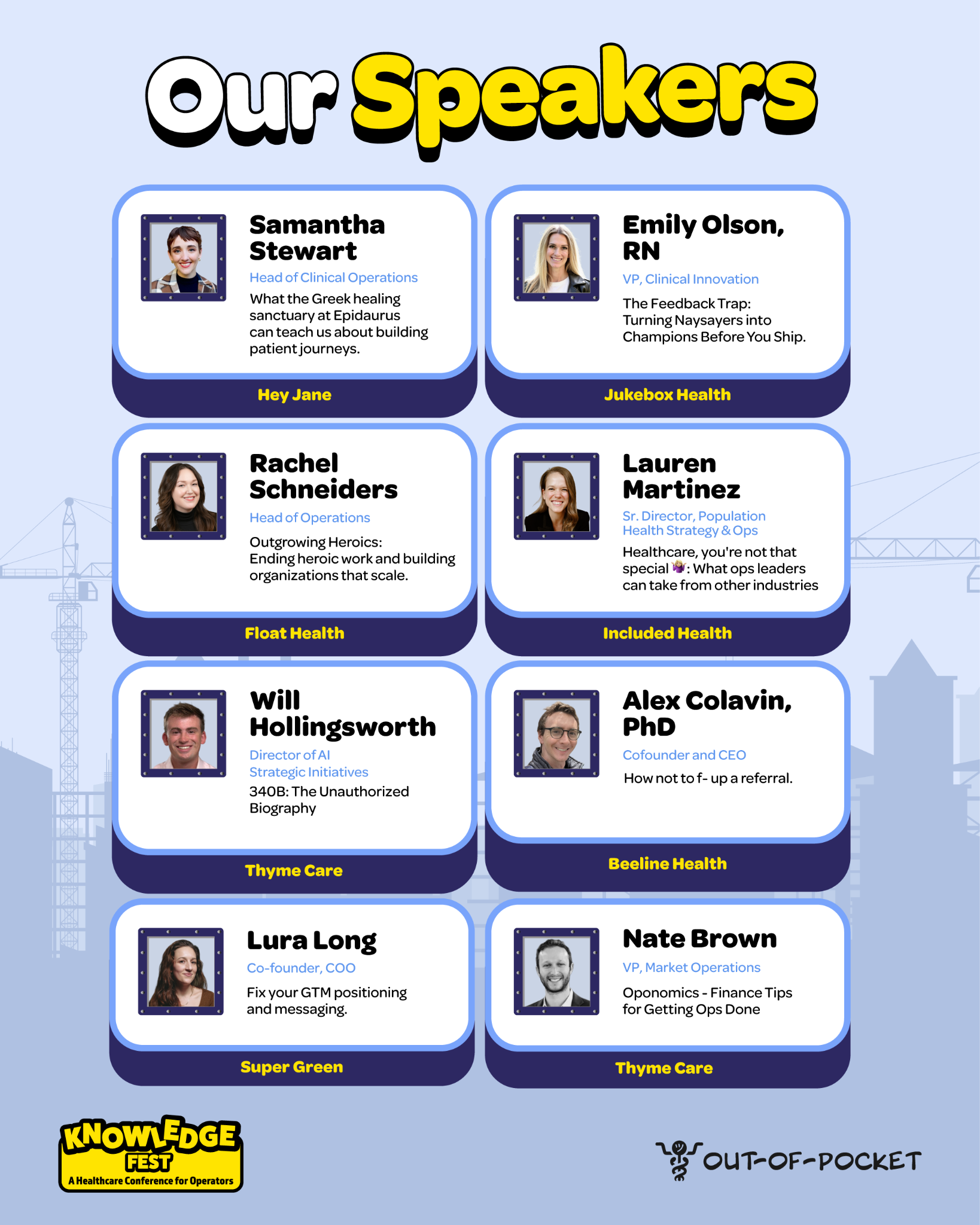
- Knowledgefest - We're really cooking here and have such good talks and workshops. If you're building in healthcare and you don't come, all I can say is you're missing out. SF on 10/16-10/17, why not apply and see what happens. Also we're locking in our sponsors as we speak, ping us if you're interested
- Value-based care 301 STARTS NEXT WEEK!!! Our free course with Navina is going to go through contracting, infrastructure/software, and ops of building in value-based care. It's an all star cast of experts (the chat is always particularly popping for these, I learn a lot from the people that attend). Come through.
- Healthcare 101 - taught by yours truly, everything you need to know about how US healthcare works. Get your GTM teams, sales, teams, engineers, etc. who don't know anything about healthcare up to speed quickly. Starts 9/21 - 10/2, sign up here (we do group discounts).
Okay now for real the post.
Breastfeeding vs. Formula?
What the world is missing is a newsletter dude giving his opinion on breastfeeding.
I'm scared to give an opinion here that might start a civil war. So I won't and I will hedge everything I say!
I don't think there are any right answers, but here were two studies I read that I personally thought were informative and had the best study designs:
- PROBIT is an old study but also seems to be the only large randomized trial in the field. It looks at ~17,000 mother-infant pairs in Belarus found breastfeeding promotion cut GI infections and eczema in the first year. There's an IQ bump at the beginning that fades.
- Confounding is one of the hardest parts to control in any of these studies, obviously income and other variables are going to significantly impact outcomes. Colen & Ramey looked at siblings within the same family that were fed differently to try and control this. They found basically all outcomes leveled out over time
The general gist across papers seems to be that breastfeeding can provide some antibody protection but that benefit seems to minimize quickly + seems to be good for premature babies and specific babies with specific GI/absorption issues. Almost everything ends up normalizing over time though.
Though of course I'm very open to learning more here.
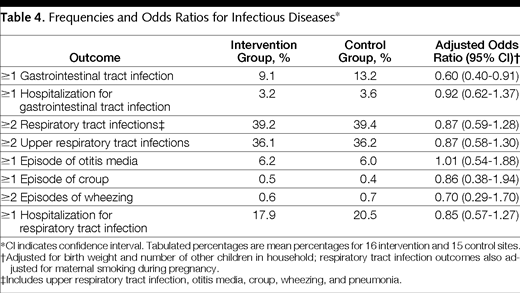
But what really stuck out to me is that that many of these papers are looking at objective measures and very rarely think about quality of life measures.
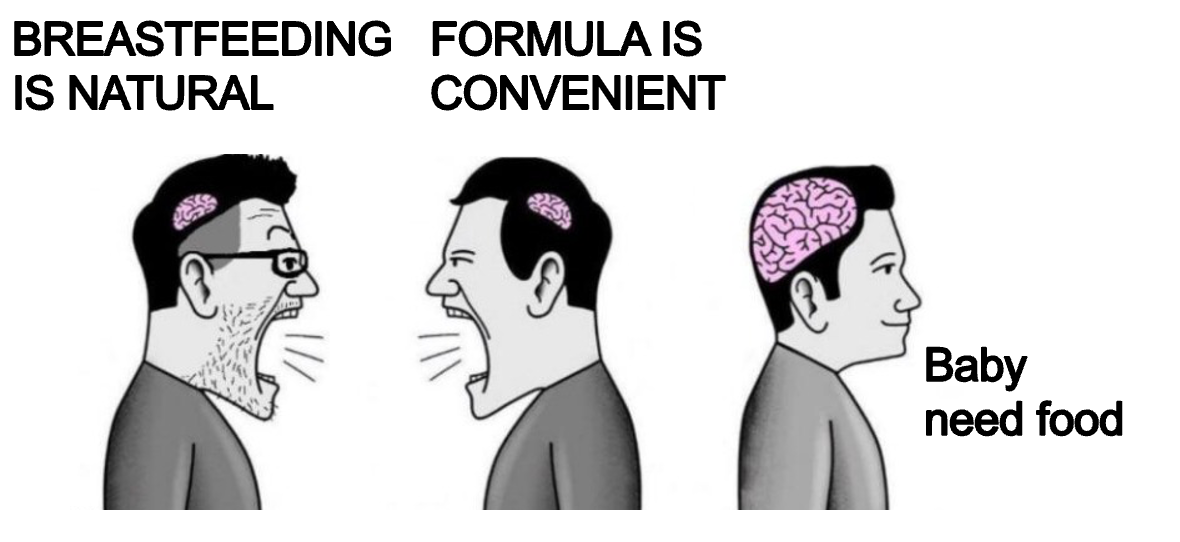
One of breastfeeding's benefits is bonding. One of formula's benefits is that the non-birth partner can more easily help with feeding. Both of those get weighed against what's practical and what the person breastfeeding actually wants and can do.
IMO those quality of life measures matter more but are hard to measure. And the recommendations will always give the most conservative guidance shown empirically in the research. The American Academy of Pediatrics recommends exclusive breastfeeding for 6 months and suggests doing it alongside food for 2 YEARS!! Do the people recommending this have jobs other than making guidelines??
All parenting advice from healthcare organizations is “what to do ideally” based on studies that try to look at objective measures. But not meeting that bar is what makes people (women in particular) feel pressured or guilty if they don't do that exact thing. The one thing I hear from parents is that if you don't have a good quality of life yourself, you can't be a good parent.
I'm sure people will have much stronger opinions about this than me. But my two cents is just, you do you and don't let anyone make you feel bad about your choices.
Side notes about this:
- It's pretty crazy how much variance there was in lactation consultants we talked to. One lactation consultant told us adamantly to refuse formula at the hospital even if they offered it which was pretty strange.
- I once posted about a wearable someone made to monitor the amount of breastmilk coming out and got roasted about it being useless. But anecdotally when I talk to people one of their biggest worries is that their kid isn't getting enough food while breastfeeding and they aren't sure whether to supplement with formula or not. Idk this still seems interesting!

Doulas, docs, and social media
Let me start this by saying IMO doulas are hugely net positive, can be very helpful for people especially during the birth itself, and also improve outcomes especially for at-risk groups. But they also exist in a liminal space where they can be more...flexible in their opinions and have a pretty high variance even between doulas.
For example we went to a doula-led birth class AND the hospital's birth class to prepare us for the birth. The hospital class was way more rigid, by the books, and started almost all answers with “it depends”. The doulas had much stronger opinions. One example was around “can I eat after my water breaks?” - the reason is because if you need to go into emergency surgery the food might cause you to aspirate and choke. The hospital was a strong “you should not, liquids only”, while the doula gave much more permission saying the labor was going to be extremely long and you should have energy if it's going to take 18-36 hours and eat well at the beginning. I'm not saying either is right, but it highlights the divide in medically correct vs. practically useful even if you're taking on additional risk yourself. (FWIW the best research I could find on this suggests that aspiration risk is extremely low).
Most of the opinions from the doula-led class were very useful and non controversial (positions to alleviate pain, things to pack for comfort during the hospital stay, etc.). But some of them seemed vaguely antagonistic towards hospitals. At one point they said the hospital makes most of their money from epidurals so they'll push you towards that, and my dumbass was about to “ackshuallyyyyy” but decided against it.
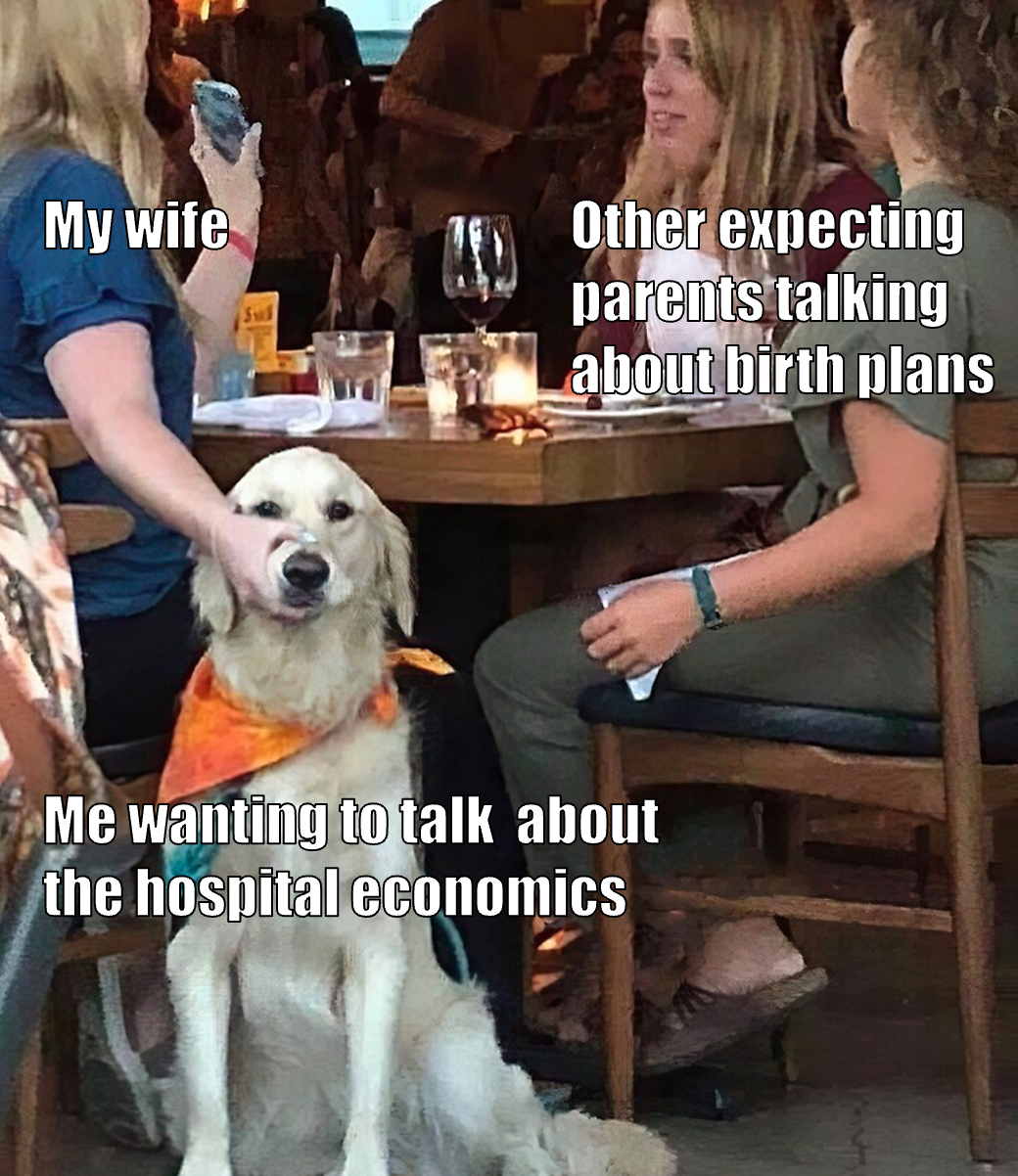
Several other expecting parents in the class also came in with very tiktok-brained questions that came from a real place of curiosity. The doula also was able to correct/clear up some of the vague medical misinformation. This gray area and less formal space allowed people to ask questions about “things they heard” and feel like they might hear a more real answer. I'd bet they wouldn't ask their doctors those questions, so I think it's great the doula was able to course correct someone that could potentially have ended up down worse rabbitholes.
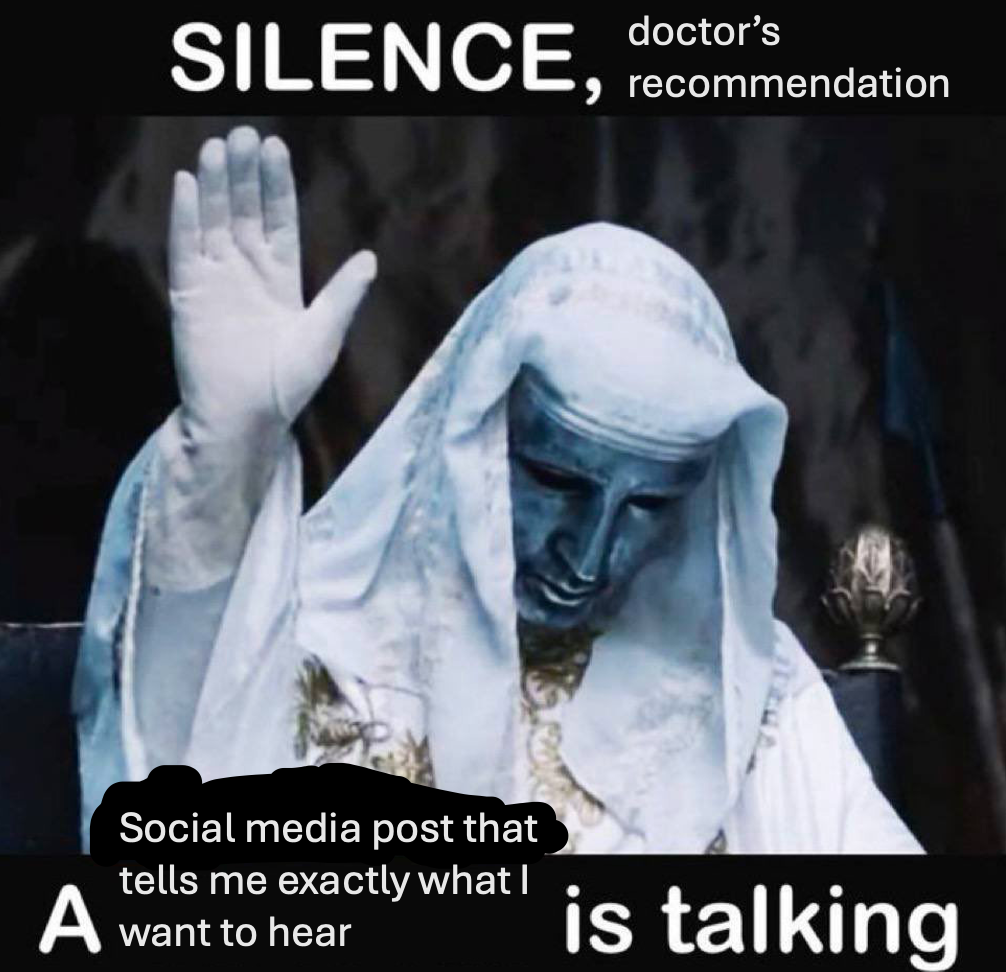
For new parents who want answers and confidence, it actually feels more reassuring and engenders trust when someone has a strong stance. In some ways I wonder if more docs should have stronger stances on low-risk questions to make patients feel more confident. Though I'm sure another group of patients would also be annoyed at docs for doing that + they still have to deal with liability if that low-risk question turns out to not actually be low-risk.
[Aside - doulas have seen births at a lot of different hospitals and understand the different dynamics at them and the pros/cons. I think it would be interesting to do a pooled survey of doulas to rank/glassdoor different hospitals to see what their aggregate opinion is.]
This post is also supported by...

Can we take this drug during pregnancy?
An inversion of the question is what you should do in the ABSENCE of evidence. This becomes an issue of practicality as a patient too.
For example if you want to take virtually any medicine during pregnancy, it's pretty impossible to give a straightforward answer. But there are many times you need to make a choice about how the quality of your life would improve taking the med vs. possible risks during the pregnancy.
When we asked our OB about certain kinds of medications, she did her best to answer + ground it in both evidence/reality with her other patients. But she had to give so many caveats that it felt low confidence. This left us in a bit of a limbo about what to do.
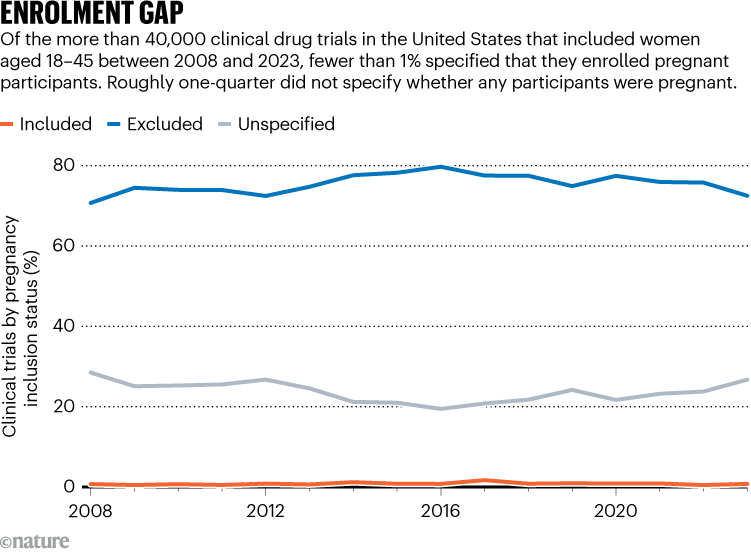
Very little research is actually done on pregnant women. There are basically no clinical trials done on any medications in pregnant women, most trials explicitly exclude them. So when you're asking “hey can I take these meds” the answer is always kinda *shrug*.
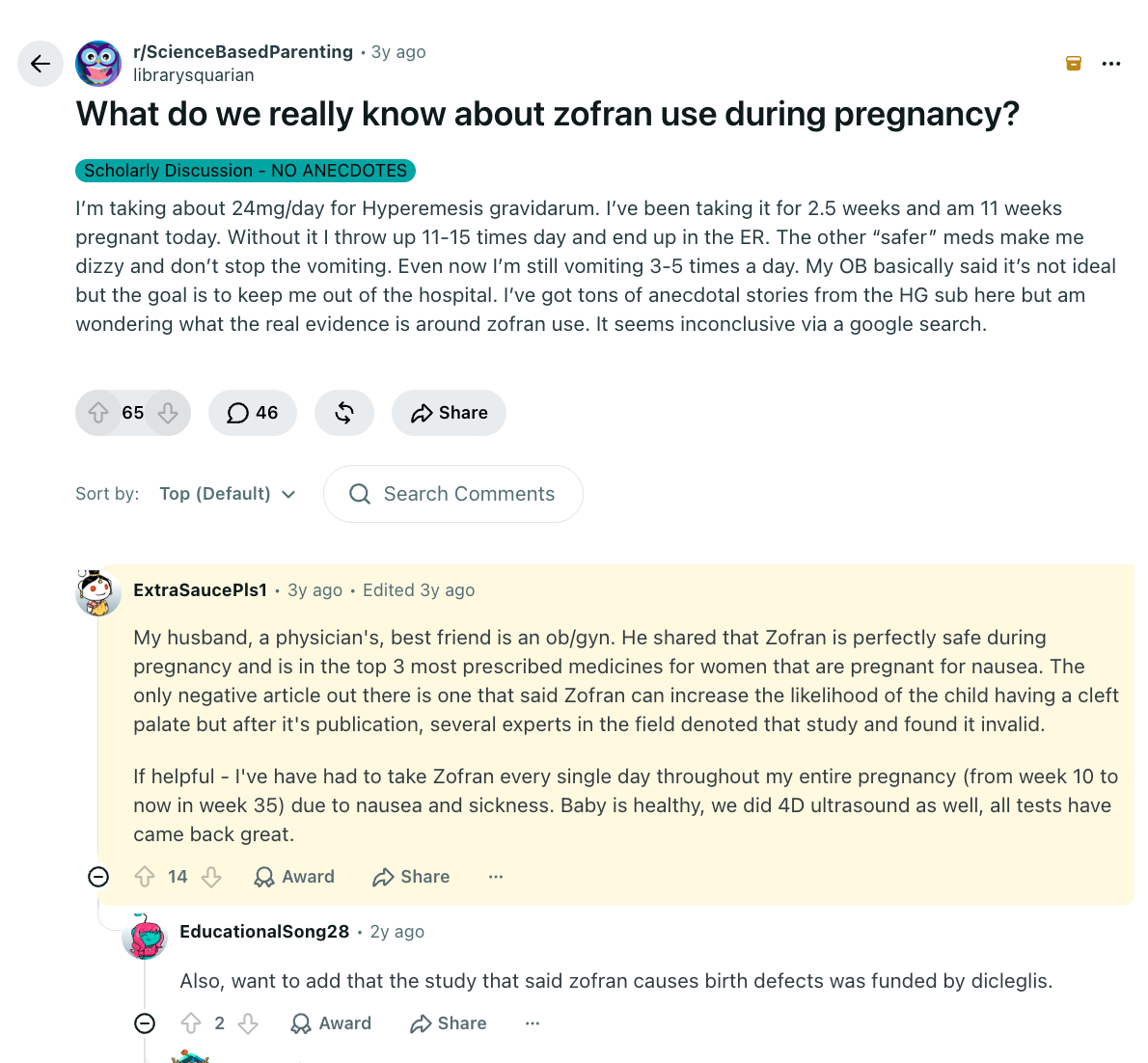
It's nearly impossible to run observational studies on pregnant women taking drugs because of how much confounding happens. That's why the FDA can say things like “tylenol during pregnancy might cause autism”, while other studies using different (IMO stronger) methodologies will come to the opposite conclusion. If you look on reddit you'll see lots of people asking this about Zofran for morning sickness, SSRIs/behavioral health meds, antibiotics, etc.
The reality is that it comes down to the strength of observational evidence, and what level of risk the patient is willing to take. But that task is extremely complex for a patient to take on themselves + difficult for a doctor to say with any certainty.
Now everyone is feeling unsure, and the patients start asking peers/family/the internet who will tell them with full confidence that you can or shouldn't take the drug. It doesn't matter if it's based on evidence, but it gives people someone to point to when making their decision with more confidence.
Conclusion and parting thoughts
It was funny being in the hospital. We had a few younger nurses who would give us extremely “by the book” advice and seem disappointed when we followed it. Then we had some nurses who had their own kids who'd whisper to us “listen...don't worry about that it really doesn't matter.”
Healthcare is full of moments like these for anyone that has a complex condition. It's virtually impossible to be the perfect patient, so where can there be a little give? How should the healthcare complex and patients navigate this? Lots of money now gets spent to help patients navigate those gray areas.
Or maybe being a patient and being a parent aren't that different - you don't always know what the right thing to do is, and you just make an educated guess and hope it turns out okay.
Thinkboi out,
Nikhil aka. “Real-world dadvidence” aka. “Observational Dada”
Thanks to Jennifer Rohs and Laura Heacock for reading drafts of this
Twitter: @nikillinit
Other posts: outofpocket.health/posts
Quick Interlude - “Am I a fit for Knowledgefest?”
See All Courses →Based on the questions I’m getting about Knowledgefest, I’m doing a really bad job explaining who should come.
The conference is for anyone building in healthcare.
- It is not specific to companies delivering patient care - Lots of people at software only, insurance, etc are coming.
- Any size of company can come - We have two person just out of YC companies, people that run ops at clinics, to F500 companies.
- You can be any role - Almost every role touches ops in some way. Product, founders, clinical, etc. should definitely come.
You should apply if you’re not sure, and we’ll let you know :)
Get Out-Of-Pocket in your email