Dating apps are seriously getting into healthcare
Get Out-Of-Pocket in your email
Looking to hire the best talent in healthcare? Check out the OOP Talent Collective - where vetted candidates are looking for their next gig. Learn more here or check it out yourself.
 Hire from the Out-Of-Pocket talent collective
AI Agents in Healthcare Ops 101

Featured Jobs
Finance Associate - Spark Advisors
- Spark Advisors helps seniors enroll in Medicare and understand their benefits by monitoring coverage, figuring out the right benefits, and deal with insurance issues. They're hiring a finance associate.
- firsthand is building technology and services to dramatically change the lives of those with serious mental illness who have fallen through the gaps in the safety net. They are hiring a data engineer to build first of its kind infrastructure to empower their peer-led care team.
- J2 Health brings together best in class data and purpose built software to enable healthcare organizations to optimize provider network performance. They're hiring a data scientist.
Looking for a job in health tech? Check out the other awesome healthcare jobs on the job board + give your preferences to get alerted to new postings.
This episode of Out-Of-Pocket is brought to you by...

Champ AI automates what APIs can't reach. They identify, build, and run multimodal workflows end-to-end - it's a single platform that reliably works across browsers, portals, unstructured documents, and phone calls, covering everything an operations team touches in a given day.
Their custom approach helps organizations close the "last mile" gaps that often block AI adoption. Learn more about how healthcare companies like Pair Team and Float Health use Champ AI to automate operations.
—
Telemedicine is a grind
I thought it was interesting to see that Grindr was acquiring a telemedicine company for $250M. Guess they’re the first company that’s both the front door of healthcare and the backdoor (nah mean).
Hearing a telemedicine company get acquired at all is making me double check the calendar to see if it’s 2021, let alone for a decent sum, let alone by a dating/hookup app.
But one of the cool parts about shitposting my way to glory though is that I can just say things online and then relevant people will want to chat with me. In this case the Grindr CEO himself, George Arison.
We had a quick call about their healthcare ambitions, and I thought it was interesting enough to post here. Some commentary at the end from me about dating x healthcare, and let’s see how I can make memes about this without getting canceled.
Memes and commentary added by Nikhil, this transcript has been edited for brevity

Why would a dating app do this to itself
Nikhil: You run a dating app. There are a million directions you could have taken the company. Why put yourself through the masochist’s labyrinth of healthcare?
George: When I took the job, part of the rationale was: can we build Grindr into more than a one-trick pony of a connections product? Being the CEO of a hookup app was less exciting to me than being the everything app, or really the everything business, for gay men.
So the first year we spent a lot of time asking what other businesses you can actually build for this audience. We picked three categories: local discovery, travel and luxury experiences, and health and wellness. Those weren't random. Our users travel a lot, to specific places, so knowing what's happening in those places matters to them. And gay men care a lot about health. They work out way more than the average person, and they also have real health needs that are unique to them.
I don't know a gay guy who doesn't want a gay doctor if he can find one. It's just very hard to find one. I'm the CEO of Grindr and I haven't had a gay general practitioner in four years. I had one, he went into research instead of clinical care, and I couldn't replace him.
When you do the math, the health business can be bigger than any of the others by a lot. And it integrates with the core product in a way that's self-reinforcing.

Woodwork was the training wheels
Nikhil: You started with Woodwork, the ED business, before any of this. Great name, got a good nasal exhale from me.
Walk me through how you got from there to buying a PrEP company.
George: Woodwork was a partnership model. We used a partner company that does the clinical care, the pharmacy, the fulfillment. We just do the front end. We started with ED because it was close to what Grindr already does at its core, and because it's cash pay. Getting into insurance was not something I was going to do as a first experiment. That's not what you'd normally do.
Even at the time it was clear the biggest opportunity was broadly in STD management, not ED. ED customers are super transient. They're always hunting for the cheapest price, you get 30 days of medication and use five, and then you extend. It's not the same dynamic as PrEP. But it made sense to start there and learn healthcare.
Nikhil: So you always knew you'd end up in HIV and STD management?
George: Yes. We spent the last year getting to know the players in the space very closely. They all buy ads from us, so we've known them for a while. We also know how well our ads perform for them, because when you talk to them they say a Grindr ad is 5x more effective than any other ad they buy anywhere else.
As we learned more and saw how users engaged with us on health, we got more confident we could operate in a more regulated part of healthcare than where we'd been. And I got more comfortable with owning the entire stack.

Nikhil: What pushed you toward owning it versus staying just the front end?
George: Customer service. One of the biggest complaints on Woodwork was that the customer experience wasn't as good as I wanted it to be, and that's not acceptable to me as the CEO. I realized we couldn't keep service at the level we want without owning the whole stack. Then through diligence we decided Freddie was the right partner.
And we feel really confident about the margin profile if we own more of the pieces. We know what this business looks like at scale. At maturity, meaning at scale, the margins will be as good as Grindr's, if not better.
Out-Of-Pocket is also supported by...

How to make $250M work
Nikhil: You paid $250M for this. What does the business need to become for that to make sense?
George: I'm very confident we can have a PrEP business that is at minimum half as big as Grindr is today. That's baseline, table stakes. I'd be severely disappointed with that.
I also don't see why we can't be as big in the US as Freddie is in Canada. They're a third of all PrEP prescriptions there. Freddie entered the US about a year and a half ago, so it's early, but they're growing at triple-digit rates. That's one of the reasons we liked them. You could buy a lot of revenue that doesn't have much growth left in it. Here, all the growth accrues to Grindr shareholders.
If we got to Canadian-level market share in the US, by 2030 you're talking about roughly 300,000 prescriptions. That's a billion and a half dollar business.
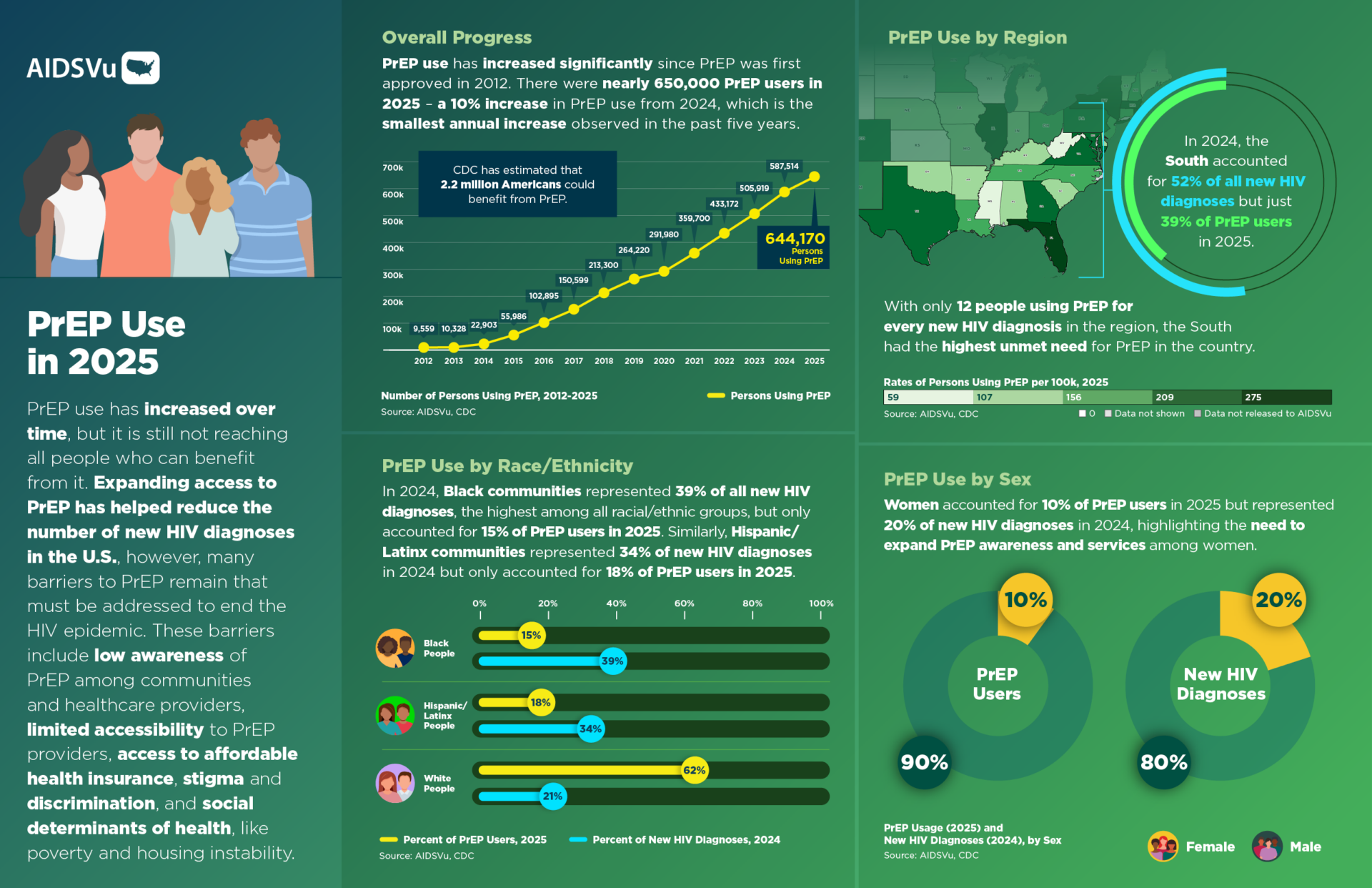
Only 650,000 to 700,000 people are currently on PrEP. In Spain there's a waitlist of 5,000 people. And the math on prevention is simple: for every 700 people you get on PrEP, one person doesn't get HIV that year, and it compounds the longer they stay on it. That's the best way to end the HIV epidemic. Gay men, and in particular Black gay men, are still by far the largest group of people getting HIV.
The stack (and yes there's 340B magic)
Nikhil: What are the actual components here? I assume there's a pharmacy, and I assume there's some 340B involved.
George: There is a 340B component. Freddie owns its own pharmacies. They have one in Texas and they're getting one in New York. They want to own the full fulfillment experience because that's how you control quality, and their Net Promoter Score is much higher than anyone else doing PrEP telehealth, in part because of that.
Clinical care is done by third-party partners that are covered entities. They have them nationally, in every part of the country, and some have national presence automatically. Freddie's pharmacies are 340B contract pharmacies for those covered entities.
Nikhil: So the covered entity gets the 340B spread on the drug, and you fill it.
George: The beauty of it is you get a lot of people on PrEP, you have a very profitable business, and you generate more revenue for these covered entities that they use to provide care to people who don't have insurance or access to the medications they need. Everybody wins in that equation.
Nikhil: What don't you own yet?
George: Labs. We don't own the labs today, but we realize eventually we need to get into the lab piece. It's another part of good unit economics over the long term.

Swipe right on adherence - Dating app integration
Nikhil: How do the dating app and the clinic actually live together? One piece is obviously the funnel. You also mentioned reminders.
George: Everything is done with user consent. If users don't want to be part of it, nobody's going to make them.
That said, when we ask users about the ads they see, they actually like seeing ads related to their STD health. It's the one bucket of ads that doesn't piss anybody off. And we learned from Woodwork that deeper, more native placements work way better than a banner, both for user happiness and for driving purchases.
We've already built a health center inside the app. You tap your profile, there's a health section, and you can get PrEP from there. Right now that kicks you out to Freddie's website. My vision is that it all stays inside the app.
The new drugs matter a lot too. A daily pill reminder in an app you open every day is fine. A monthly pill reminder in that app is much more useful, and the monthly pill is on the way. It starts working in about an hour, versus seven days of lead time with current PrEP.

So imagine a fully integrated experience: we see you're about to meet this guy, we check whether you took your PrEP this month, and if not, take it now, you have an hour. That's really powerful for compliance.
Nikhil: What about on the dating profile itself?
George: I'm not promising any of this, but here's what we're considering. Today you self-report that you're HIV negative. If you got tested through Grindr, and you're comfortable with it, we could show "verified HIV negative as of this date" on your profile. Or "verified obtained PrEP on this date." I can't verify you actually took it, but we can verify we sent it to you. That makes a profile a lot more credible than self-reporting.
And right next to that there's another button: want your PrEP, click here. So now PrEP is in front of everyone, but it's native. I just told you he's on PrEP, and I'm going to get you on it too.
Our AI agents in ops course + headhunting
From Nikhil: Two very quick things before you find out if I cancelled myself or not.
First our free AI Agents in Ops course starts in 11 days. We’re showing some real use cases where people are using agents in back office tasks like eligibility checks, denials, etc.
And second, our headhunting project continues. If you know someone really good who’s thinking about joining healthcare, let us help you find your next thing.

Back to it.
"You don't even need PrEP"
Nikhil: You said people in the gay community want a doctor who is also gay. Do you think about training, or changing care protocols, for what a doctor built for this community looks like versus traditional primary care?
George: Freddie has already done a lot of that. It's a core part of their offering. Their chief medical officer is one of the authors of the Canadian HIV treatment guidelines. They have clinicians who really understand the user base and have built protocols around what these patients actually need. That was one of the main things we liked about them.
Nikhil: Why does that matter in practice? Why does a generic doctor’s office differ so much?
George: A couple weeks ago I was speaking at the Clinton Global Initiative and a woman came up to me. Her son is 19, in Boston. He and his boyfriend went to a doctor and asked for PrEP, and the doctor said "you don't even need PrEP, why would I give you that."
That is an insane thing to do. And the kid is 19, doesn't know how to push back, and already felt weird about even asking. I can totally appreciate that. Having a conversation about PrEP with a doctor who doesn't get you is much harder than it should be. We can make that a lot better.
Quick notes/thoughts from Nikhil
Still astonished that posting memes about healthcare has led to public company CEOs pinging me. Never let them tell you that your dreams are dumb.
Genuinely learned a lot from chatting to George and always love to hear people from other industries bring their expertise to healthcare. A few notes that are my thoughts personally, not George.
- Historically dating apps have dabbled in healthcare stuff because they felt obligated to. For example Tinder adding STD testing in 2016 after the AIDs Healthcare Foundation launched billboards saying the apps were increasing STD spreading. It’s interesting to see a different approach where healthcare looks like a big strategic opportunity.
- When customer acquisition cost is becoming an absolute knife fight online, owning the advertising platform must be pretty nice. Especially when you actually have the data to pick your acquisition target.
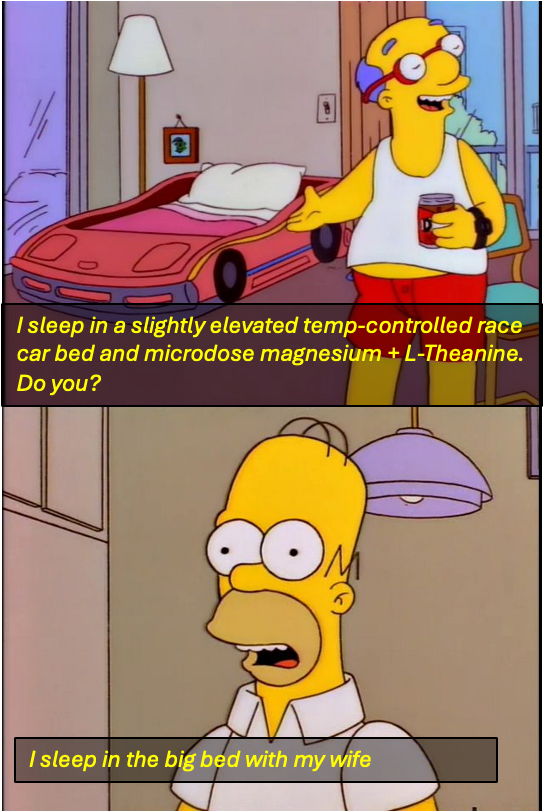
- I’m curious to see how receptive people will be to intertwining their health data and their dating profiles. This feels like it would be a pretty big cultural shift. Thank the lord I found my wife before people could left swipe me for having high triglycerides.
- On the flip side would you eventually ever see things like...healthcare companies moving into dating? Idk feels like a lot of people’s health outcomes would improve if they had a partner. Honestly probably more like to add years to your life then what most of the longevity companies are doing.
- IMO this acquisition and healthcare strategy is a bit of a litmus test for what you think about 340B as a program. For readers who don't live in the 340B world, we’ve talked about it in the past. Basically covered entities that see mostly lower-income patients can buy drugs at steep discounts. A contract pharmacy fills the prescription on their behalf and the covered entity keeps the difference between the discounted price and what insurance pays. PrEP has a very wide spread and essentially HAS to be covered by insurance.
- The pushback: 340B has been under fire from manufacturers and Congress for years saying that hospitals are using this program beyond its intended spirit. There’s no such thing as everyone wins in healthcare 🙂. Longer talk for another day, but a big part of this acquisition seems to rest on this program.

- Grindr probably has the one of the largest...image datasets in the world if they ever wanted to expand to derm screening.
- If any other companies are trying to enter healthcare from outside...they should probably take our healthcare 101 course since they have a lot to learn 🙂
Thinkboi out,
Nikhil aka. “Also a grinder 😤” aka. “Corporate firewalls are gonna love this one”
Twitter: @nikillinit
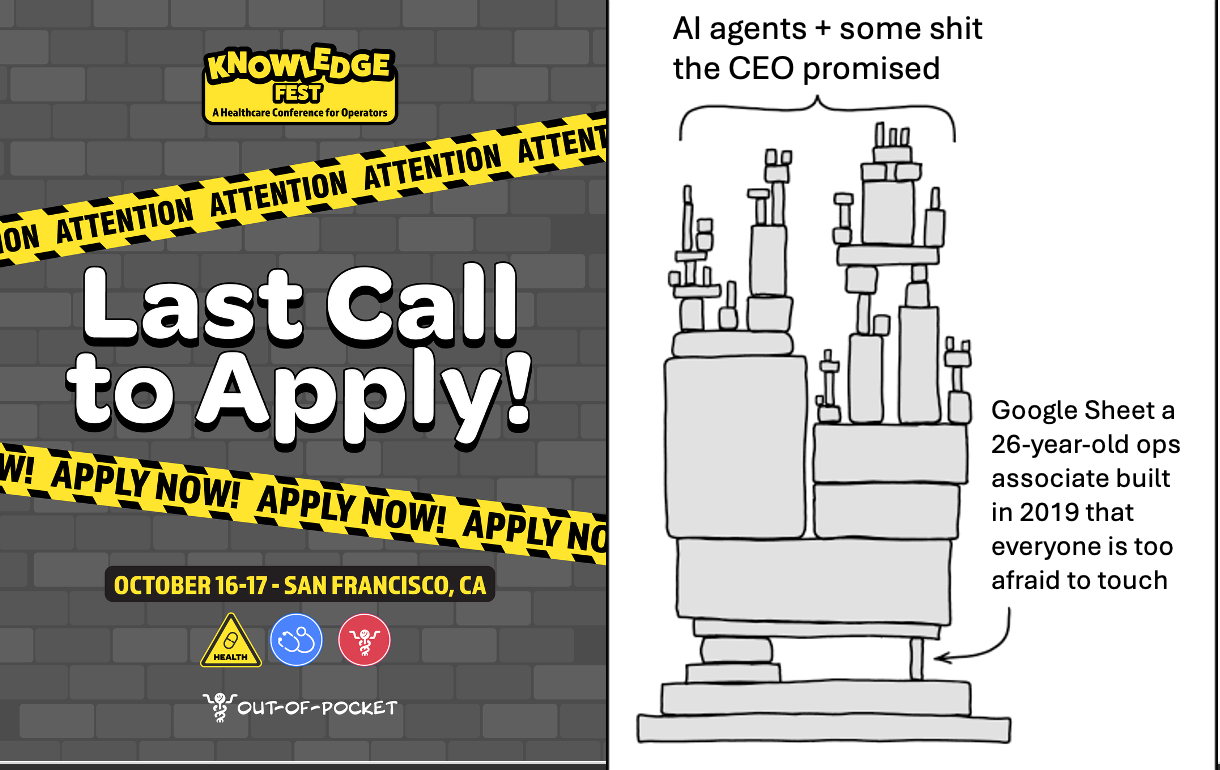
Quick Interlude - “Am I a fit for Knowledgefest?”
See All Courses →Based on the questions I’m getting about Knowledgefest, I’m doing a really bad job explaining who should come.
The conference is for anyone building in healthcare.
- It is not specific to companies delivering patient care - Lots of people at software only, insurance, etc are coming.
- Any size of company can come - We have two person just out of YC companies, people that run ops at clinics, to F500 companies.
- You can be any role - Almost every role touches ops in some way. Product, founders, clinical, etc. should definitely come.
You should apply if you’re not sure, and we’ll let you know :)
Get Out-Of-Pocket in your email