The race to build agents for hospitals
Get Out-Of-Pocket in your email
Looking to hire the best talent in healthcare? Check out the OOP Talent Collective - where vetted candidates are looking for their next gig. Learn more here or check it out yourself.
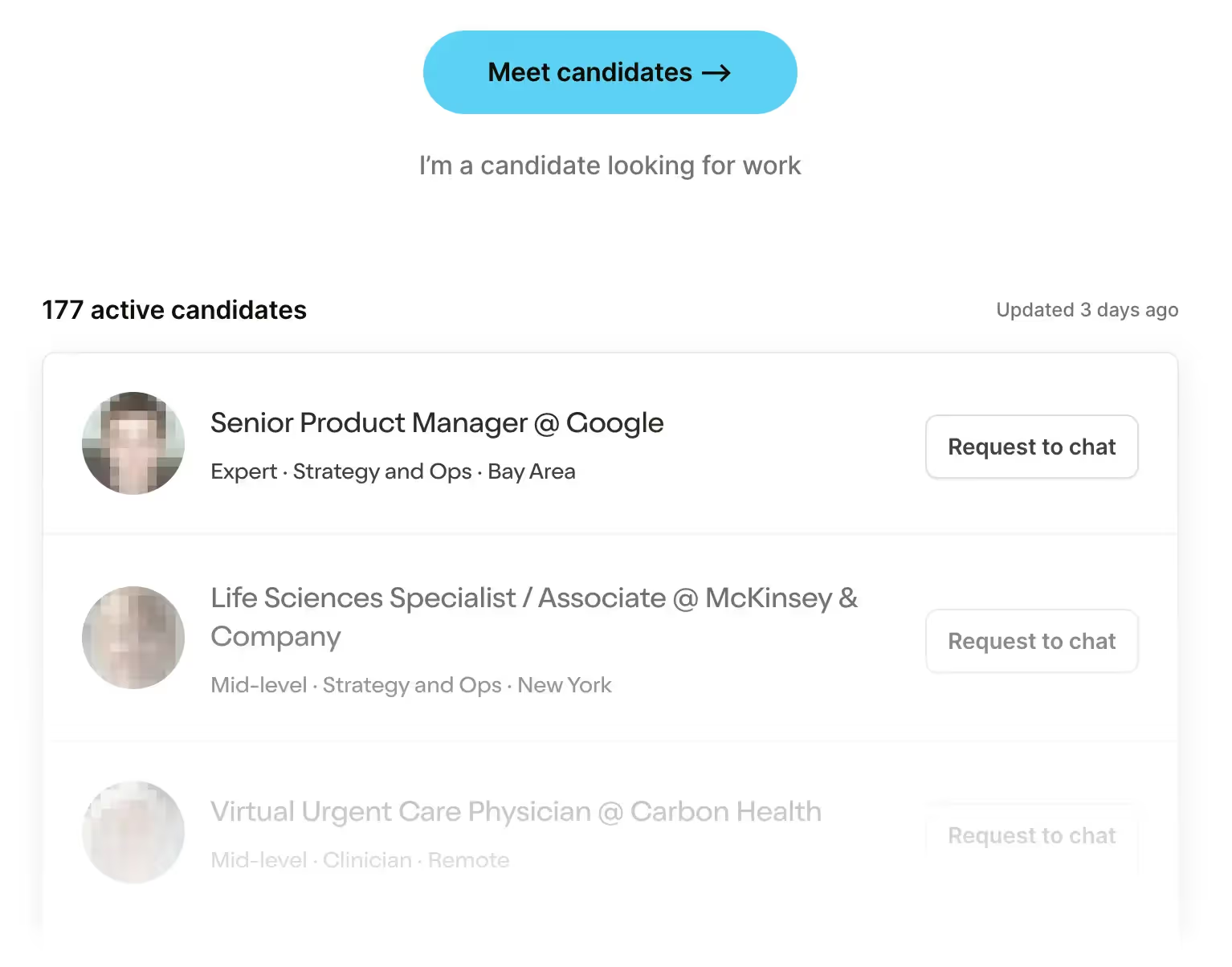 Hire from the Out-Of-Pocket talent collective
AI Agents in Healthcare Ops 101

Featured Jobs
Finance Associate - Spark Advisors
- Spark Advisors helps seniors enroll in Medicare and understand their benefits by monitoring coverage, figuring out the right benefits, and deal with insurance issues. They're hiring a finance associate.
- firsthand is building technology and services to dramatically change the lives of those with serious mental illness who have fallen through the gaps in the safety net. They are hiring a data engineer to build first of its kind infrastructure to empower their peer-led care team.
- J2 Health brings together best in class data and purpose built software to enable healthcare organizations to optimize provider network performance. They're hiring a data scientist.
Looking for a job in health tech? Check out the other awesome healthcare jobs on the job board + give your preferences to get alerted to new postings.
TL;DR
Hospitals have a lot of complex, chained tasks that require clinical-level expertise. They also require clicking into a lot of portals, working across departments, interfacing with patients, etc. For example, screening patients and making sure all of their follow-ups are scheduled + information is input into claims, registries, charts, etc.
This has largely been bottlenecked by having experts available, but AI is now helping to address that. Bunkerhill is one company working in this space.
We’ll talk about what Bunkerhill does, their interesting pricing model, and some specific workflows that hospitals have to do today that might look very different if you assume specialists can always be available. We’ll also talk about the incredibly competitive landscape and the different approaches companies are taking here.

–
This is a sponsored post. You can read more about my rules/thoughts on sponsored posts here.
Company name - Bunkerhill Health
Back in the day we used to fight real wars. The battle of Bunker Hill was an epic fight in the Revolutionary war, and essentially ended up being a battle of attrition.
Today those wars are...fought in the hospital back-office I guess. Bunkerhill is in the EMR trenches, building agents that can—
Wait, I’m just getting word that their name isn’t from the battle at all. It’s named after a fictional hospital from a TV show that was cancelled after one season that has a 26% on rotten tomatoes lol.
Why don’t we...just talk about what they do.
What’s the pain point?
Hospitals have a ton of tasks that are somewhat admin and somewhat clinical. On top of that, many workflows get siloed by department depending on where the patient starts.
There are lots of points where the patients can fall through the cracks, hospitals lose revenue, and human capital is thrown against a problem to fix it. Some examples:
- A patient goes in for a scan for something, and the scan catches an unrelated nodule that seems suspicious. It needs to be triaged, scheduled to another department, and the other specialist needs to get the context, etc.
- Day-of-surgery cancellations - a case is only ready when prior auth, outside records, the pre-op visit, and test results all come together. If one piece is missing, surgery gets canceled at the last minute. If insurance didn’t approve it, you might not get paid even if you did the surgery.
- Revenue leakage when an insurer denies a claim. Someone has to pull records from the chart + write an appeal letter that addresses the denial reason + submit it before the deadline.
- Hospitals have legions of nurses that need to fill out registries for different societies. Here’s an example for myocardial infarction. A lot of this data for a patient might live across different departments and needs to be pulled from each. Getting eyeball infarction just looking at this.

All of these things require clinical labor that’s scarce and expensive, hence why backlogs get bigger.
What if in the last few years we birthed machine gods from talking sand that both had a level of clinical expertise and were really good at clicking around computers?
What does Bunkerhill do?
Bunkerhill has created a long-horizon AI agent for hospitals to use across departments. That means it can do multi-step processes across specialties, portals, software systems, etc. and will keep trying things until it reaches the end goal (even if it takes a while). It builds memory, context, etc. by doing this.
There are basically two components to the business:
First, a team comes on site to integrate with the various systems in the hospital + learn what the workflows are. They also set up the agent so that it has connectors to each system. This allows the agent to take action, gives it memory to keep track of what it’s done, the ability to wake itself up and check back later, and checks on its own work. The deployment team goes to a random bar in town afterwards where they’re very clearly out of place.
The agent that learns how to do each step of the process or pick an end outcome and reverse engineer what the right set of steps would be. It works across any EHR, the ERP, payer portals, and patients and providers via SMS, MyChart, voice, fax, email, pigeons, and snail mail. It will click around the computer screen if there’s no API. They will license models from researchers scared of the word “commercialization” who can deploy things like screening algorithms directly into the workflows.

Their opinion is that large hospitals won’t want individual point solutions handling individual workflows at a department level. Instead it will more likely look like centralized AI teams with an agent that is able to work across the whole hospital.
What does their agent actually do? Let’s just use an example of someone with a smoking history that gets a CT for a lung cancer screening.
- Creating a follow-up plan for the nodules the scan finds - If a sussss nodule gets found, you’ll need to figure out if it needs to be scheduled to get seen again in a week or a year + do the scheduling. The agent will handle scheduling in and it’ll send a letter + message to the patient telling them they might still be at risk if they don’t come.
- Finding other diseases - Let’s say the lung CT also incidentally sees the calcium in the arteries since it’s close to the heart. Someone should check if they’re already seeing a cardiologist, on a statin, and if not should refer them. The agent does this in the background.
- Triaging the referral - Referrals to a specialist department are a big stack that gets looked at in the order they came and triaged for urgency. But what if someone in the middle of the stack is really urgent? The agent can help with triaging.
- Prepping the cardiologist - The cardiologist needs to get up to speed quickly on everything about the patient, get the rest of their chart retrieved, read twitter to understand calcium scores from experts, etc.
- Doing the pre-procedure checklist - If the cardiologist decides this is a bypass, someone has to confirm the labs, the clearance, the meds held, and that there’s a ride for the patient after, etc.

- Filling out registries. After the procedure, a nurse answers something like 200 questions across 9 pages for a registry portal that lives outside the EHR. The agent can fill these out taking info from the different departments in the hospital.
- Double checking the documentation. Clinical Documentation Improvement teams look at whether what the doctor actually wrote supports the codes that got billed, which the agent can do now. Yes yes it’s RCM all the way down, that’s the way the game is played.
- Writing it all back to the EHR: Their agent will write back everything that happened into the EHR. Immediately, write away.
Bunkerhill builds an agent that can handle that end-to-end, with humans in the loop as the hospital requires. It can click through computer screens, fill out forms, voice AI can call the patient, and it can read-write to the EHR.
They can use the same agent to do this for any of those individual steps in other care pathways, specialty areas, or individual tasks (e.g. filling out any registry type).

Once they’re in a given hospital, the hospital gives a goal that they want to achieve and the agent tries to figure out how to achieve that across the system. They’re testing out more amorphous goals like “improve our patient feedback scores” to get better Press Ganey ratings. The agent runs experiments over months including patient messaging changes and idk actually starting appointments on time. We need superintelligence to tell us that.
What is the business model and who is the end user?
Bunkerhill has an interesting business model - hospitals buy a pool of AI credits upfront. Credits burn every time the agent does something. Every registry filled out, every chart review, every letter sent, every scan analyzed, uses credits. This is similar to a cloud bill vs. per seat or module licensing.
The idea is that by billing this way:
- Customers can test out new use cases more easily first to see if it works before getting another vendor
- Billing is more closely aligned with usage - which means more revenue if they scale within an org
- You don’t need to go through procurement multiple times or get approved by individual departments, you can choose happiness instead
The double-edged sword to this is that it works well if it’s a hospital with a centralized AI department who is procuring this. The Bunkerhill team was opinionated that they’re most successful with customers like this because the budget is centralized and many of the most successful use cases require working across various departments (e.g. incidental findings on a screening).

Jobs
Bunkerhill is hiring for a bunch of roles, including:
- AI Product Engineer
- Forward Deployed Engineer
- Forward Deployed Product Lead
- Technical Implementation Program Manager
You can see all the roles they’re hiring for here.
Out-Of-Pocket take
There are a few things I like about Bunkerhill.
Acute, high ROI pain points for hospitals - Bunkerhill told me they’ll start with basically any singular high urgency pain point a hospital has. Some examples they gave me of why recent customers came to them:
- Medicaid eligibility changes putting a hospital’s 340B status at risk, with the agent finding and enrolling eligible patients
- A health system six months behind on cancer registry submissions
- A hospital catching procedures scheduled without prior auth completed in hand
- New lung surgery robot with no way to find eligible patients
- Specialty wait times passing five months so patients going elsewhere
Their belief is the models have become so good that you can really start with any acute pain point, use that as a wedge to build into the rest of the system, and then the agents can basically learn everything else and add use cases after.
The reality is that hospitals won’t pay for these if they aren’t financially accretive to the hospital. There’s a bigger discussion about whether that’s good/inflationary for US healthcare that the Twitter fightclub will discuss. But from a business perspective it’s smart.
Collapsing the edges of specialties - One thing I think makes AI particularly interesting is that it has the expertise of virtually all specialists. This means when looking at one patient record it’s looking with the eyes of a radiologist, cardiologist, nephrologist, etc. at once without someone yelling about fluids. This means they might find things another specialist might not be looking out for.
It also creates new eyes in places some specialists don’t look. For example they’re working with a research group that looks at a routine breast cancer screening mammogram and flags high cardiovascular risk from the arteries visible in breast tissue. This is not an area cardiologists are typically looking at, but now you can create cross-specialty connections and operationalize it through things like agents.

Source: Trivedi et al., European Heart Journal (2026).
And finally it should create less context loss between handoffs. If you’re going between a PCP, cardiology, radiology, etc. then the agent can travel with that patient in the system with context and data from other departments alongside them.
Experimentation on the pricing - You’ll hear a common theme about “you have to target headcount spend, software budgets are too small in healthcare”. But getting the pricing motion right to do this is very difficult. Charge a flat fee and you have a higher chance of mispricing relative to your COGS or value you provide. But charge only on outcomes and you could get penalized for things outside of your control (e.g. a patient doesn’t schedule an appointment because life happened).
The credit system is an interesting in-between. It is low spend enough for a team to get started, but also can scale up with more use cases. Honestly I should price per laugh.
–
But of course it’s not all sunshine and daisies. The main thing that’s tough for a business like this is competition, and there are a few vectors of it.
EHRs + their own agent makers - Of course EHRs are coming out with their own agent makers. They will most likely bundle the pricing with their product and it will be low friction to get started with them since they’re already procured. This will be announced now to freeze competition, but available in 2028 for some reason.
This competition is playing out across all of tech (e.g. customer relationship management tools vs. customer service AI agents). Agent companies are competing by going deeper on specific workflows and working across multiple systems of records a company uses. Systems of records are either trying to build it themselves or realizing they can “tax” the agents that use them and charge for usage of their system.
Consulting companies + their tech products - There are lots of consulting companies that now have their own technology arms that will offer to build products themselves. They will offer to redesign the workflows of a hospital, handle the training and change management, and will say things like “MECE”.
Frontier labs moving into deployments - Many of the companies providing the AI models are moving into doing enterprise deployments themselves. Their bet is as the models get better, they’ll also get smarter about learning these hospital specific workflows without needing intermediaries to fine-tune them. You might get a moral lecture from the agents when you activate them though.
Point solutions that own an end-to-end workflow - Some companies are betting on delivering a specific solution that has enough complexity and focusing just on that (e.g. revenue cycle management). Their belief is that there are enough edge cases that you need to focus on that process alone to execute. It’s execute or be executed.

All of these are viable competitors and in all likelihood there will be multiple winners in the space, especially since the market for this is gigantic. So the bet is which combination of the following you think will be the winning one:
- Ability to interact with things outside of the EHR (e.g. filling out the forms)
- The importance of change management and who the right person to create new workflows will be (e.g. frontline clinicians vs. central AI teams)
- How much better the technology is going to get, and whether performance is better using one model or several
Bunkerhill has a POV on their mix of importance here and who their customer archetype is that benefits the most from this.
Conclusion and parting thoughts
We’re still just starting to figure out what it’s like to imbue high level clinical expertise into everything. It’s obvious that hospital workflows are going to change tremendously as a result. Less clinical labor will be stuck doing tasks that involve computers. More patients will get looked at. Departments will have to work more closely with each other.
Bunkerhill believes they can make that happen with a long-horizon agent. They have a specific point-of-view around the product, customer types, and pricing model to make this successful.
Whatever makes clinically trained people click less buttons on a screen is a win for me.
Thinkboi out,
Nikhil aka. “AI revolutionary war” aka. “A Bunkerhill I’ll die on”
Twitter: @nikillinit
LinkedIn: Nikhil Krishnan
Quick Interlude - Announcing Build @ Deerfield, powered by Out-Of-Pocket
See All Courses →One of the goals of Out-Of-Pocket is to make it easier for people to start healthcare companies. For the last few months, we have been working behind the scenes to cook up something awesome for people who want to start something.
We’re excited to announce Build @ Deerfield, powered by Out-Of-Pocket. This is a five-week hackathon for early-stage healthcare teams with $250K+ of non-dilutive capital in grants and prizes.
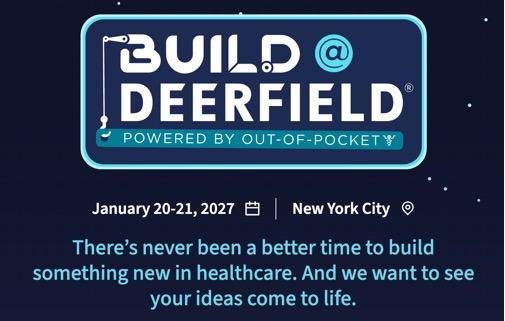
You can see more details here, but in general Deerfield and Out-Of-Pocket are joining forces to do something big for the New York healthcare community. We’ll select 12-15 teams that will:
- Receive cash to start building
- Access to mentors during the program
- Get a chance to present what they’ve built to the broader New York healthcare community at a showcase and reception on January 20-21 at Cure in NYC.
- Judges will select a handful of teams for additional non-dilutive grants and prizes.
If you have an idea you’ve been meaning to build, or your team has just started out, this is your sign. We had such an awesome time doing this last year, you can see some of the projects here.
Now we’re doing it bigger and better.

Apply by November 19, 2026, there’s nothing to lose and a ton to gain. You can find more details and apply here: https://www.outofpocket.health/build-at-deerfield
This is going to be a lot of fun and we’re really excited to be doing this. A personal joy of mine is seeing someone take the plunge just before they build something great, and we’re happy to be a small part of that journey.
Email back if you have any questions. But look at the FAQ first cause we know half of you are about to ask “am I a good fit” or “what are you looking for in an application”.
Get Out-Of-Pocket in your email