Let patients control their prescriptions
Get Out-Of-Pocket in your email
Looking to hire the best talent in healthcare? Check out the OOP Talent Collective - where vetted candidates are looking for their next gig. Learn more here or check it out yourself.
 Hire from the Out-Of-Pocket talent collective
AI Agents in Healthcare Ops 101

Featured Jobs
Finance Associate - Spark Advisors
- Spark Advisors helps seniors enroll in Medicare and understand their benefits by monitoring coverage, figuring out the right benefits, and deal with insurance issues. They're hiring a finance associate.
- firsthand is building technology and services to dramatically change the lives of those with serious mental illness who have fallen through the gaps in the safety net. They are hiring a data engineer to build first of its kind infrastructure to empower their peer-led care team.
- J2 Health brings together best in class data and purpose built software to enable healthcare organizations to optimize provider network performance. They're hiring a data scientist.
Looking for a job in health tech? Check out the other awesome healthcare jobs on the job board + give your preferences to get alerted to new postings.
TL;DR
Prescribing is a core workflow in US healthcare. Doctors write prescriptions for patients that get sent to the pharmacy. Patients go to the pharmacy and hope it's in stock, affordable, ready to be picked up. If there are any issues, the patient can't just move it themselves - they have to ask to get it transferred. It's a handoff that still runs on phone calls and faxes between people paid way too much to be doing this.
Photon is building new prescription infrastructure that turns the prescription into a programmable transaction. Practically, it means the doctor can send the prescription to the patient directly, and the patient can choose which pharmacy it goes to.
This enables patients to shop across pharmacies on price, stock, and convenience before deciding where it goes. It also allows the patient to send the prescription to another pharmacy themselves without a pharmacist/doc needing to do it. We'll talk about how it works, the business model, and the existential risks a company like this faces.
This is a sponsored post. You can read more about my rules/thoughts on sponsored posts here. Extra disclosure on this one: I'm also a personal investor in Photon - my child's retirement depends on this post doing well.
–
Company Name - Photon
Photon is a company that's making new prescribing infrastructure.
A photon is the quantum of the electromagnetic field: the minimum discrete excitation of that field, carrying energy E = hν and momentum p = h/λ, where h is Planck's constant. It is massless, chargeless, has spin 1, propagates at c in vacuum, and exhibits interference and diffraction while depositing its energy in single indivisible events. Its significance is historical and structural - Planck's 1900 blackbody derivation and Einstein's 1905 account of the photoelectric effect required energy quantization and thereby broke the classical Maxwellian picture.
Anyway I have no idea why they're called Photon. Probably cause light is sick.
How does a doctor prescribe today
You may remember that docs used to have prescription pads. They'd write a series of lines you're supposed to interpret as handwriting for a prescription. You'd bring that to your local pharmacy and get the drug.
This was bad in a lot of ways like fraud, errors, and people would lose the paper. However, the nice part was that you could take that prescription and go into whichever pharmacy you wanted as the patient.
In the 2000s, we decided to start digitizing healthcare workflows to fix all of our problems (narrator: it did not). We started to mandate digitization across the board, things like shifting paper charts to electronic medical records. That also included digitizing the process of writing a prescription and getting it sent to the pharmacy.
As a result of this, a few things happened:
- Payers/PBMs were mandated to support electronic prescriptions, electronic medical records needed to have this function, and pharmacies naturally adopted it since that's where scripts started coming from.
- Entities raced to build the pipes to facilitate those digital prescriptions between docs and pharmacies. The PBMs banded together to create one called RxHub and the pharmacies banded together to create one called Surescripts. The two eventually merged to become a singular entity.
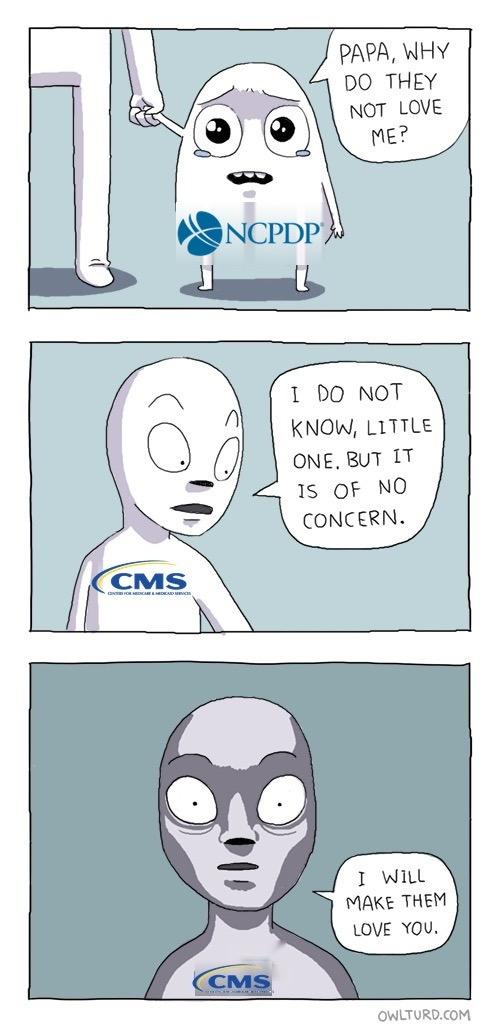
- The transactions pointed to an existing standard (NCPDP) so that everyone was speaking the same language. Well...they basically were forced to lol.
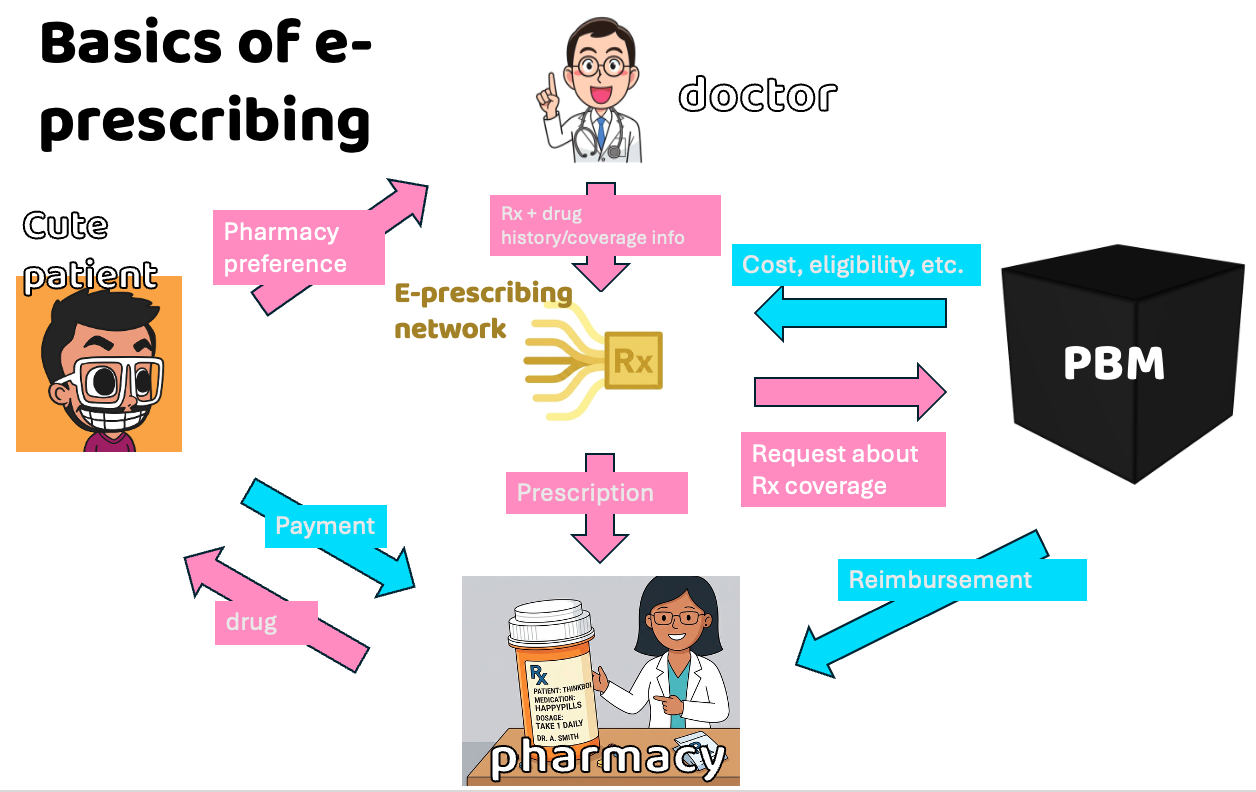
So today your doctor is using some e-prescribing module in the EHR that routes the prescription through the Surescripts rails to the pharmacy. A bunch of things are happening under the hood during that time:
- Eligibility - the EHR pings the network with your name, DOB, and zip. Does this person have a pharmacy benefit, and with which PBM?
- Medication history - the doctor can pull what you've already been prescribed. Important for checking if two drugs will interact in weird ways.
- Real-time prescription benefit - what will this drug cost this patient at this pharmacy? Is it covered? Are there rules before they can get it, like needing to try a cheaper drug first?
- Routing - the script finally gets transmitted to one specific pharmacy. This is usually selected before 1-3 even happen when they ask for your preferred pharmacy.
Actually compared to medical services, this works way better. You can typically see what you're going to pay upfront and all this happens in near real-time.
But this interaction is built on the premise of sending prescriptions to one, preferred pharmacy without a view on what's happening at the pharmacy side.
What's The Pain Point?
When you go to the doctor, they'll typically ask you what your preferred pharmacy is. At that point you're googling that one pharmacy kinda close to your house to get their address for the 10th time. If your doctor wants to write a prescription, they'll send it there.
But what if there are any issues once a patient gets to the pharmacy? For example, what if your medication is out of stock at the pharmacy it was sent at? Or it's closed for some reason? Or you're traveling and not at the normal pharmacy?
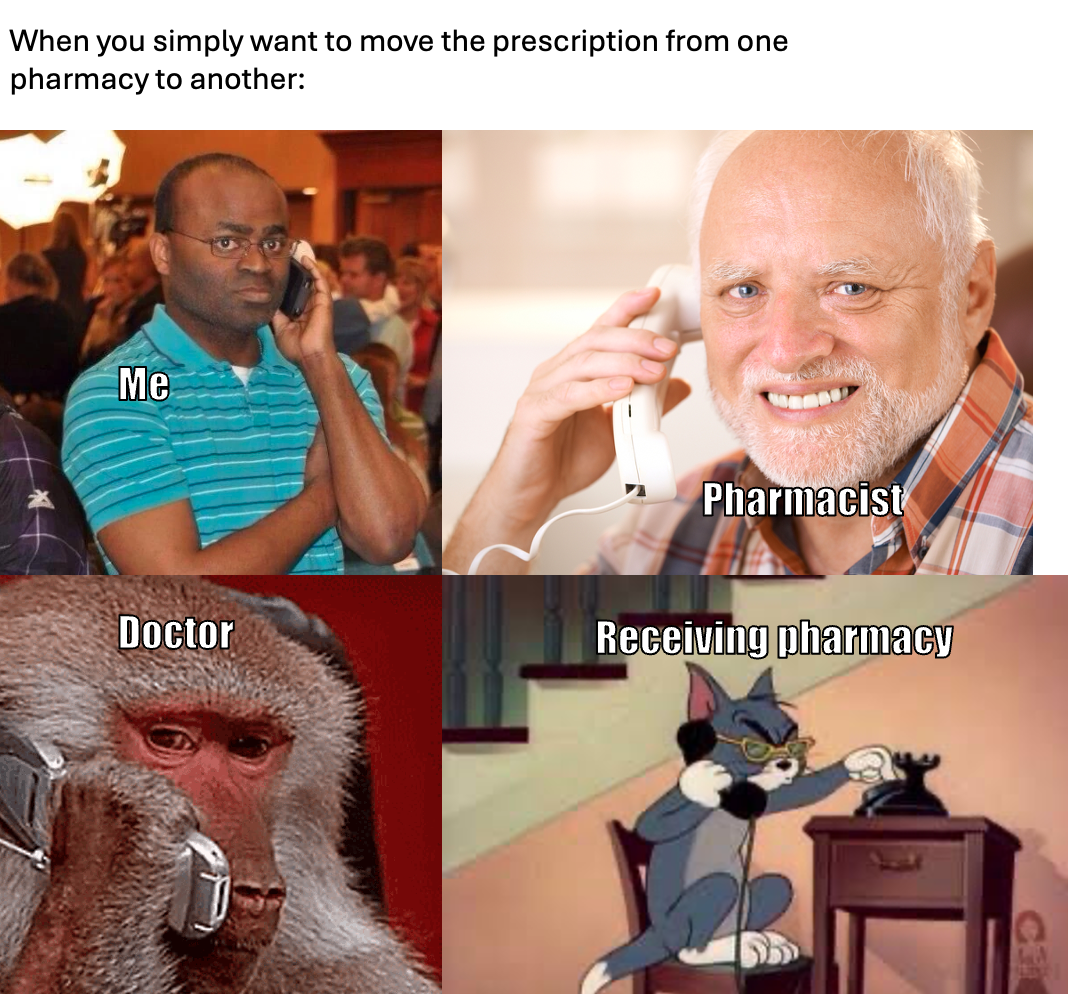
As a patient you can't move the script yourself, you need to request a transfer. Pharmacists can call to transfer the script to another pharmacy or you can ask the doctor to send a prescription to a different pharmacy. These handoffs still run on phone calls and fax-era plumbing.
“When I was a kid I dreamed of growing up to play phone tag with other pharmacies” - nobody.
Also importantly, there's no interface for the patient to see the various options across pharmacies. It becomes difficult for a consumer to compare between pharmacies. This matters if you haven't hit your deductible yet, you have co-insurance, or the cash price is cheaper than your co-pay. Or maybe you want to know the inventory situation/turnaround time to get the drug.
The doctor's job is to figure out which prescription you need. Once that's decided, should people with 6+ years of school really be playing phone tag to get you the drug?
What Does Photon Do?
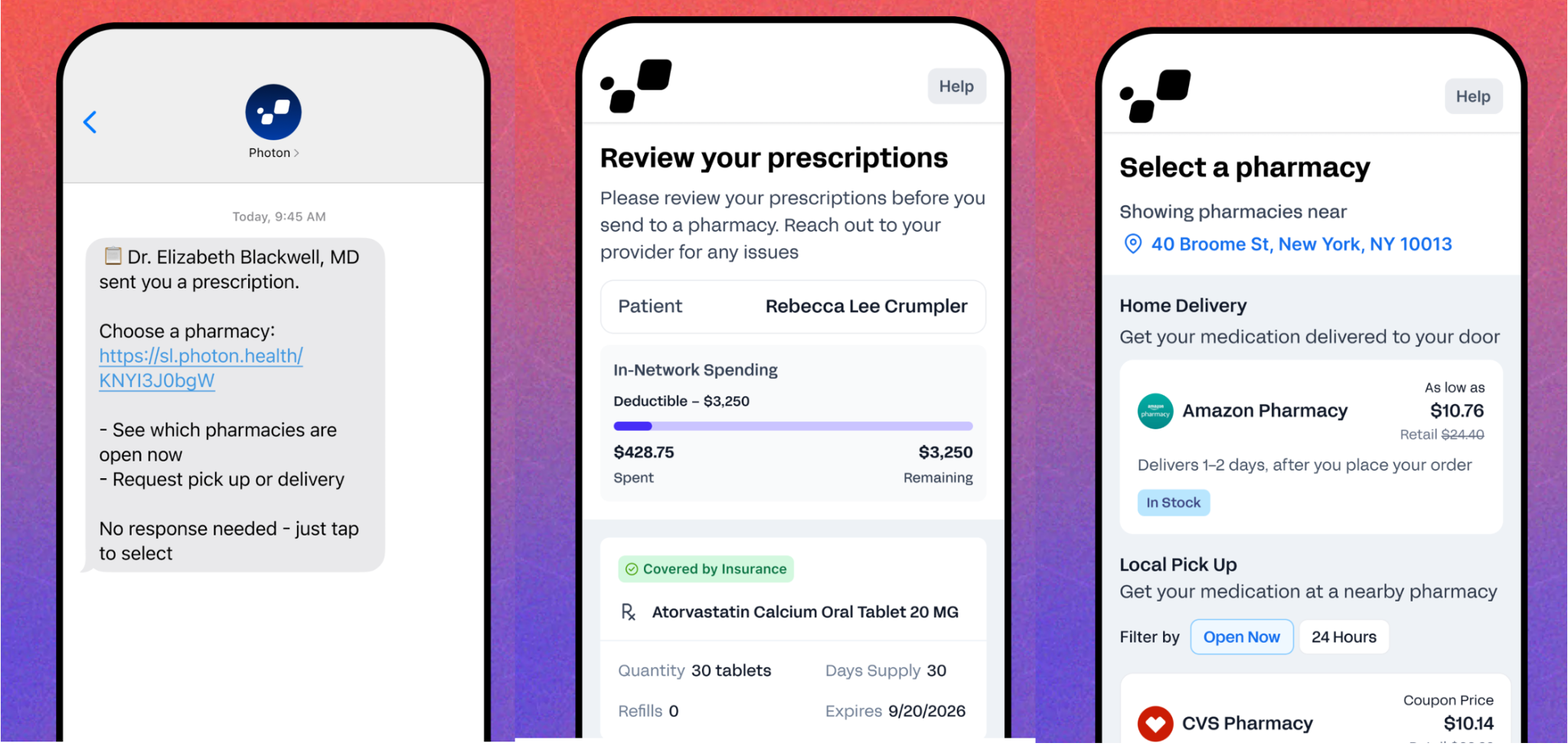
Photon is a new e-prescribing module that allows physicians to send prescriptions to a patient directly. That patient can then shop around for the pharmacy they want to send the prescription to, and can transfer to other pharmacies themselves without needing to call.
As a patient you get a text with a secure link, open it, and see a marketplace of pharmacies to choose from. This allows you to see the price across pharmacies, what's in stock, hours, discounts, if they require the shame ritual of pressing the button for help to get deodorant behind the glass..., and delivery options.
There are some interesting things under the hood that make this work.
First, the prescription data standard (NCPDP SCRIPT) usually shoots a document with all the info to a single pharmacy destination. Photon basically splits that into two separate objects - the prescription itself that is immutable and the fulfillment (where it gets fulfilled) which is very...mutable? That's what enables rerouting, the patient only changes the fulfillment part of the request.
Second, Photon has built a bunch of integrations with pharmacies. But for pharmacies they DON'T have integrations with they fire off a fax notification with a key that enables pharmacists to access the original eRx via the web. Yes - there is an AI to fax machine automation, 2026 baby. This “creates” an integration with a pharmacy even if they don't have one already set up.
Third, Photon also uses AI voice agents to confirm receipt of the fax, ask about inventory, insurance questions, and ready time at those pharmacies. This enables them to get a lot of the info needed to populate the marketplace.
Some interesting notes I learned from the team:
- “Preferred pharmacy” doesn't really exist with their patient population. When Photon gave patients the option to set a preferred pharmacy, only ~20% did. Half of patients with more than two orders used more than one pharmacy.
- Patients self-reroute their prescription about 8% of the time. Each one of these would have been a fun set of calls and callbacks between doctors and pharmacies.
- Roughly a third of patients text back to say thank you to the Photon text lol. We should all be thanking our automated texts...just in case.
What Is The Business Model And Who Is The End User?
Photon's customers include digital health companies, large group practices, health systems, provider platforms, dope boyz, and individual prescribers. Customers pay monthly fees that include a certain number of prescriptions + a per-prescription charge if you go above that.
Most of these companies are paying for some form of e-prescribing module already. But each customer type buys this for pretty different reasons:
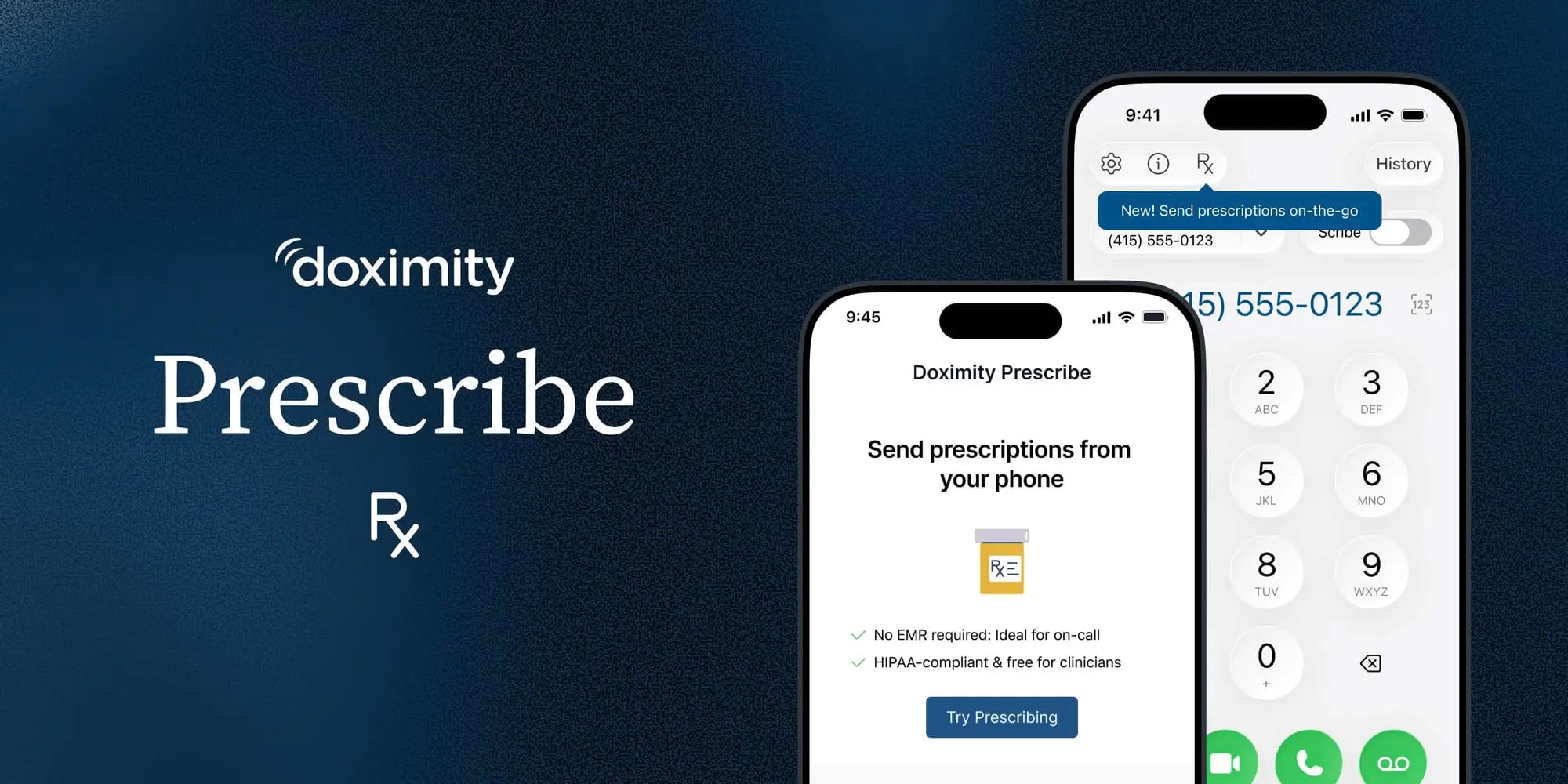
- Platforms with individual prescribers - prescribing is embedded directly into tools docs already use. For example it's inside Doximity's dialer app, so a doc can send a prescription right after a telehealth call without touching an EHR. And no, they won't tell anyone the “patient” is lowkey a script for a family friend.
- Digital health and telemedicine companies - These companies will buy if they're competing on the customer experience, want to stand up e-prescribing quickly (they have a self-serve option), or just don't want the one 1099 doc on staff to be routing prescriptions.
- Health systems that own pharmacies - Pharmacy is a larger chunk of operating margin for health systems nowadays, especially thanks to the 340B program. But in order to capture the maximum drug reimbursement, they need patients to go to the hospital pharmacy. Many patients don't even know that pharmacy exists, it's right next to the original Monet in the lobby.
- Hospitals with their own health plan - Some hospitals also run their own insurance plans. Sure they'll shut it down and restart it again every 5 years, but it'll be different this time. Most of those hospitals also own multiple internal pharmacies with different services and prices. Routing each script to the right one is important since their health plan ends up paying for it in the end.
The longer-term monetization is the marketplace itself. Pharmacies can pay to promote their own pharmacy, their services (e.g. delivery, discounts, convenience, etc), or that they are inexplicably also a grocery store for some reason.
Jobs
Photon is hiring for many roles. You can see all of them on the full site. Some include:
Out-Of-Pocket Take
A few things I think are interesting about Photon:
AI to create new marketplaces - It always surprised me that getting a drug from a pharmacy didn't feel like a regular marketplace transaction. You're getting the same good from pharmacy A and pharmacy B, why shouldn't I be able to compare the two and buy based on what I care about?
A general investing thesis I have is that AI is a great tool to create new marketplaces where they didn't exist before. One version of this is by bootstrapping integrations quickly using existing rails (SMS, fax, etc.). Another is by getting way more information from either buyers or sellers that help make the transaction better.
Photon does both in this case, and is turning the pharmacy purchase process into more of a marketplace transaction. Figuring out the pharmacy to get my statin should be as easy as doordashing my burrito. Which is ironically why I need the statin.
Consumers are shopping for their drug dealers - We're at an interesting moment in time in pharmacy where consumers are becoming more invested in their shopping experience.
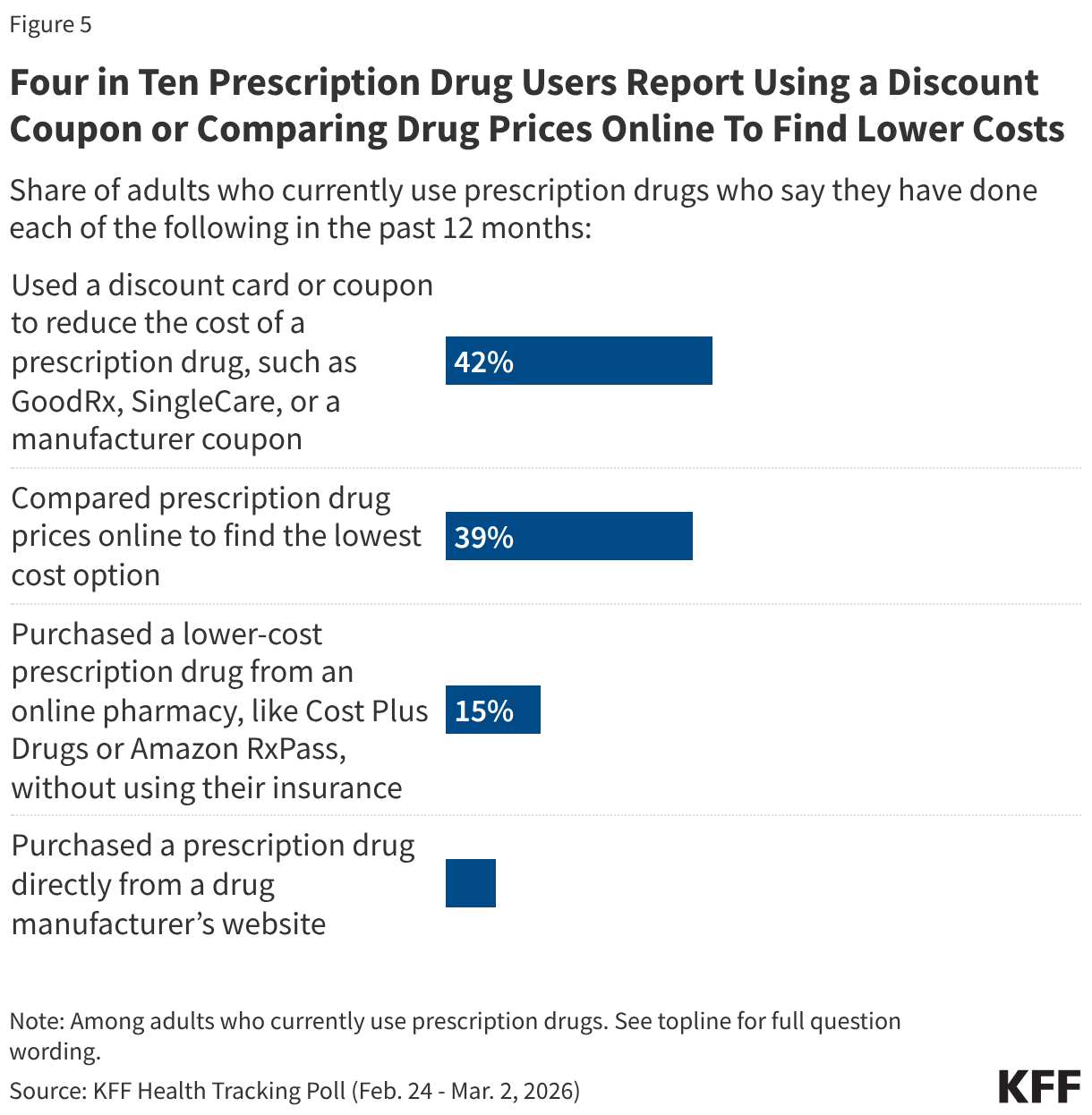
Some reasons:
- Everyone wants GLP-1s but the transaction has become complicated. People aren't sure if insurance covers it, there were inventory issues for a while, and there's a lot of cash pay buyers.
- Beyond GLP-1s people are increasingly exploring options to lower their out-of-pocket costs. This might be looking at cash pay (e.g. GoodRx or Cost Plus drugs), manufacturer discounts and assistance programs, etc.
- This is anecdotal, but pharmacies themselves feel like they're getting less reliable. There's nothing worse than showing up to the pharmacy when you're not feeling great and there's a 40-minute line, a person with a hacking cough, and a smell that can only be described as “perfume meets old rug”. Knowing the average wait time in advance would be great.
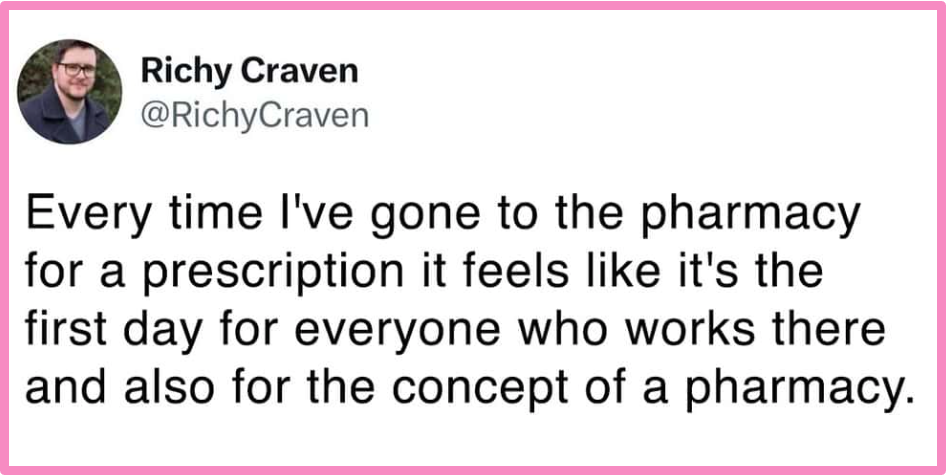
IMO prescriptions are one place in healthcare where it's more clear that patients CAN be good shoppers. But if people want to shop around more, then you need the ability to easily take the prescription to a given pharmacy.
Bringing transparency to the process - A lot of pharmacy supply chain entities benefit from patients not being able to shop or understand their options. Entities that benefit from spread pricing, that have extremely narrow pharmacy networks, charge more at a pharmacy they own, etc. I'm trying so hard not to say 3 letters.
Photon believes that if more transparency is brought to this purchase, the different pharmacies will have to compete and align on whatever patients value. Some might be willing to wait for cheaper prices, others might want to pay a premium for convenience. Today it's based on where it's easy to send the prescription.
This also enables potentially new channels for consumers - e.g. going direct to pharma manufacturers which is becoming more popular.
–
As with any company, there are challenges that Photon will face as it continues to grow:
Unseating an existing network and process - The reality is that e-prescribing is a mature network that works reasonably well. For Photon to become a new network, all parties in the transaction would have to agree that the new capabilities Photon enables are 10x better. Specifically, that patient experience and reduced admin burden on docs is worthwhile. Do prescribers care about this enough to make the switch?
Competing against an existing network means fighting apathy and people choosing the default route. But if you CAN do it, you create an extremely large and defensible business.
Gaps in prescriptions - Photon doesn't enable every single type of prescription yet, most notably they don't do controlled substances. That flow requires many extra steps around confirming the identities and certificates of the prescribers (which we talked about in a previous post).
Not being able to serve 100% of prescriptions out of the box can exclude certain customer sets. If you wanna shop for Xans, I have several Lil Pump songs that simulate the experience.
Competition - I think about competition in a few different vectors.
The most obvious are existing networks which we've talked about already.
The second are companies that want to own the prescribing interface like EHRs that have e-prescribing modules. These have historically not been great at building consumer products, but could build something “good enough” health systems would use.
The third are agents that make decisions on behalf of patients. Patients might just give preferences and instructions and tell their agent to pick the pharmacy for them. This still requires an e-prescribing network to build on top of which could benefit Photon if it has the easiest rails for agents to interface with (their CEO mentioned they're building something for this).
But agents also potentially cut some of the marketplace economics since people don't see the promotions. Though maybe those will just reshape to promote to the agents instead.
Conclusion and Parting Thoughts
I'm an investor in Photon so I think this idea is good. It feels so obvious to me that we should let patients shop between pharmacies - the administrative burden of pharmacy fulfillment shouldn't rely on lots of phone coordination. I also think turning a prescription into a digital movable object is going to be really important for the future.
IMO for all the talk that providers have about being consumer centric, this feels like a way to actually demonstrate that they are while also reducing operational headaches for their doctors.
Just let me do the shopping.
Thinkboi out,
Nikhil aka. “Script kiddie” aka. “InvestoRx”
Twitter: @nikillinit
If you're enjoying the newsletter, do me a solid and shoot this over to a friend or healthcare slack channel and tell them to sign up. The line between unemployment and founder of a startup is traction and whether your parents believe you have a job.
Quick Interlude - “Am I a fit for Knowledgefest?”
See All Courses →Based on the questions I’m getting about Knowledgefest, I’m doing a really bad job explaining who should come.
The conference is for anyone building in healthcare.
- It is not specific to companies delivering patient care - Lots of people at software only, insurance, etc are coming.
- Any size of company can come - We have two person just out of YC companies, people that run ops at clinics, to F500 companies.
- You can be any role - Almost every role touches ops in some way. Product, founders, clinical, etc. should definitely come.
You should apply if you’re not sure, and we’ll let you know :)
Get Out-Of-Pocket in your email