Healthcare x Real Estate: What’s happening in between them?
Get Out-Of-Pocket in your email
Looking to hire the best talent in healthcare? Check out the OOP Talent Collective - where vetted candidates are looking for their next gig. Learn more here or check it out yourself.
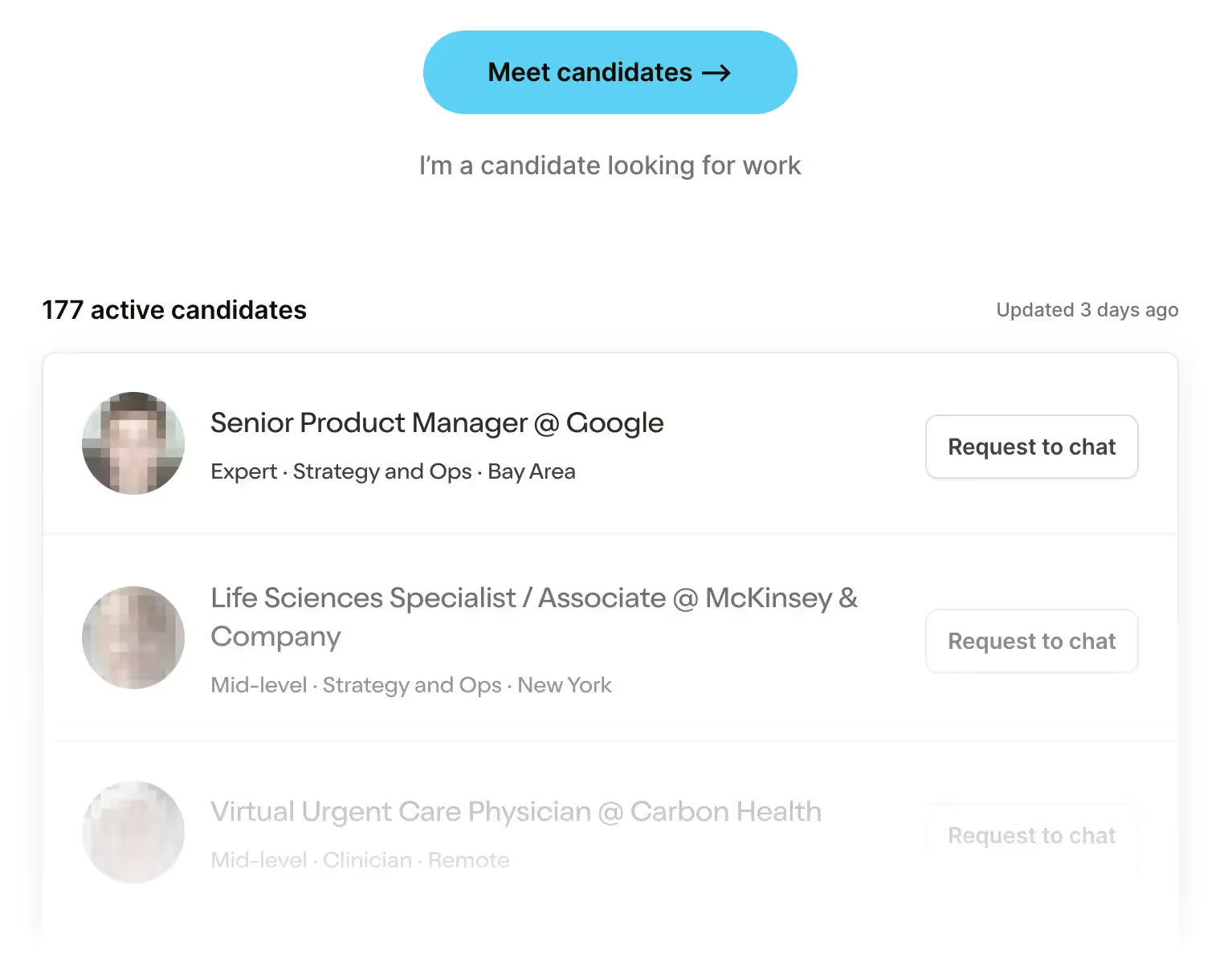 Hire from the Out-Of-Pocket talent collective
AI Agents in Healthcare Ops 101

Featured Jobs
Finance Associate - Spark Advisors
- Spark Advisors helps seniors enroll in Medicare and understand their benefits by monitoring coverage, figuring out the right benefits, and deal with insurance issues. They're hiring a finance associate.
- firsthand is building technology and services to dramatically change the lives of those with serious mental illness who have fallen through the gaps in the safety net. They are hiring a data engineer to build first of its kind infrastructure to empower their peer-led care team.
- J2 Health brings together best in class data and purpose built software to enable healthcare organizations to optimize provider network performance. They're hiring a data scientist.
Looking for a job in health tech? Check out the other awesome healthcare jobs on the job board + give your preferences to get alerted to new postings.
This episode is brought to you by...

Stedi is the only API-first healthcare clearinghouse for eligibility checks, claims, claim status, and ERAs.
You can try us for free by signing up for a sandbox account. You don't need a credit card, and it takes less than two minutes to sign up.
When you're ready for production, upgrade to our new pay-as-you-go plan. You only pay for the transactions you use. There are no monthly minimums, no setup fees, and no lock-ins.
Sign up for free to get started
–
The OOP x Thesis Driven Collaboration
My friend Brad Hargreaves writes Thesis Driven, a newsletter about real estate. I don’t know anything about real estate other than self-storage seems to attract really bad influencers. But I’ve enjoyed learning about it from Brad’s newsletter - if you’re interested the space I highly recommend signing up for it.
I thought it would be fun to collaborate on a piece about the intersection of real estate and healthcare. Trends, not all the ED docs who are all investing in multifamily properties in some tier 3 bachelorette city,
Today’s post is a joint venture between Thesis Driven and Out-Of-Pocket about a few things at the intersection of real estate x healthcare. Written by both of us, memes and bad jokes added by Nikhil.
—
Neighbors and friends and common enemies
Healthcare and real estate are the two largest industries in the United States. Healthcare hit $5.3 trillion in 2024, roughly 18 percent of GDP, and real estate is the biggest store of wealth the country has ever assembled. Together they're something like a third of the economy and 80% of complaints.
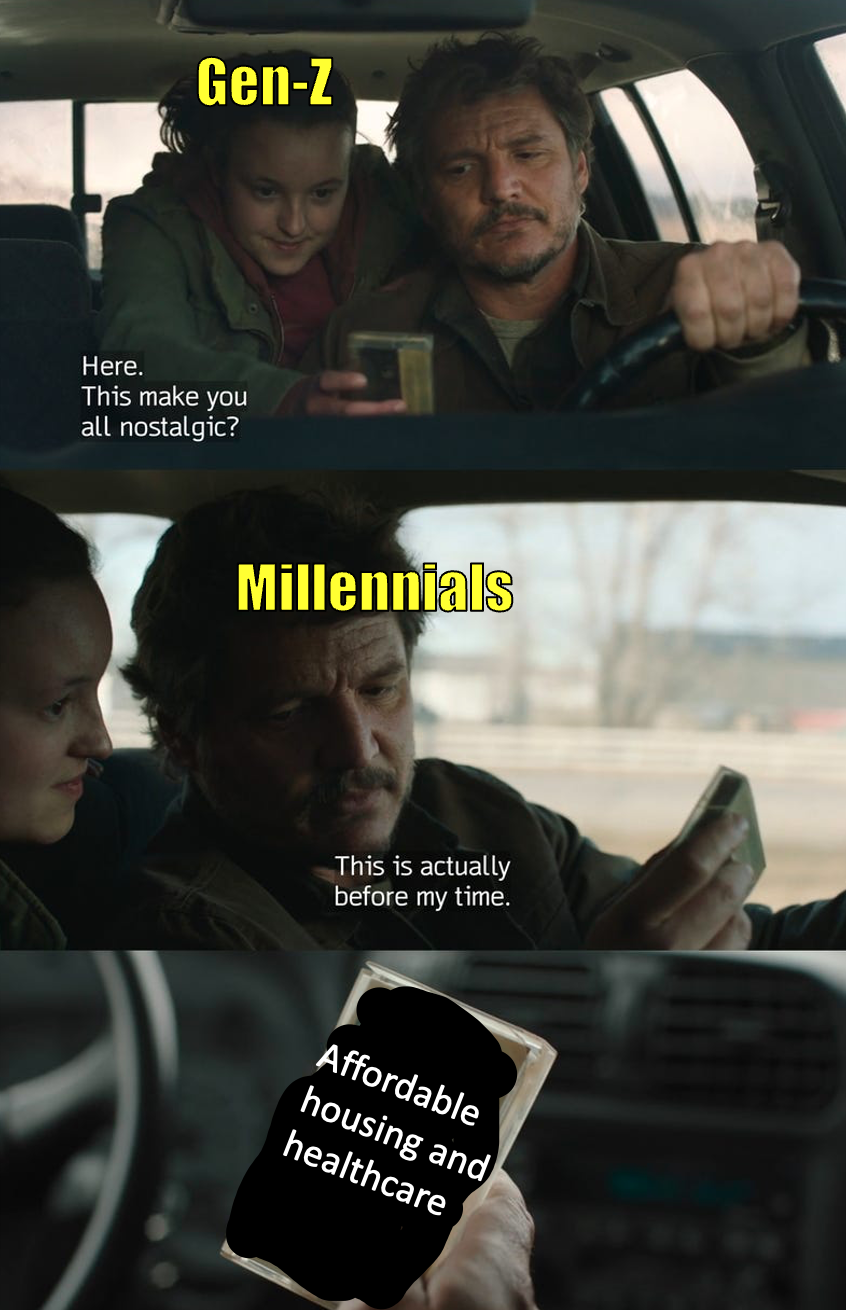
Two giants, next-door neighbors for decades who never really got to know each other. Like people that live in a NYC high rise with amenities.
They have more in common than either likes to admit. For example both run on entrenched systems of record that everyone complains about and nobody can leave. In healthcare it's the EHR, in real estate it's the property management system. Everything you've ever read about EHRs hoarding data and resisting integration maps almost word for word onto what real estate operators say about Yardi and RealPage. Same lock-in, closed APIs, slow cycle of bundling and unbundling. Different lawyered up trench coat.
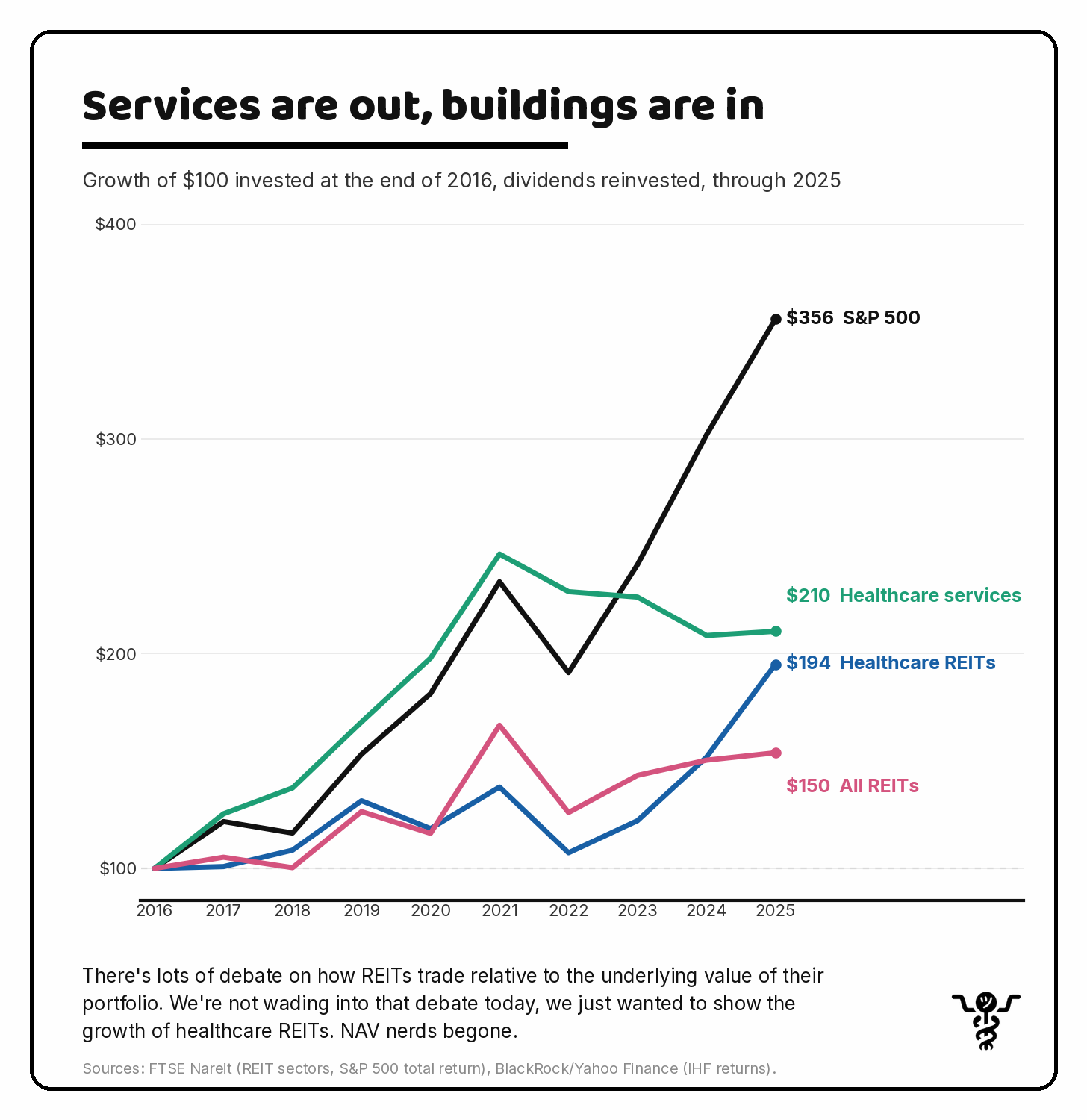
But the two industries also might be a match made in...heaven? Hell? A lot more money is traversing between these two, and we think the intersection is pretty interesting.
{{interlude 3}}
Real estate and healthcare have complementary problems
For a decade the standard real estate move was: Buy an apartment building with cheap debt, renovate the units, raise rents, refinance, repeat.
That worked beautifully until mid-2022, when interest rates jumped and expensive debt made the math stop working. Then came oversupply - developers who broke ground during the cheap-money years all delivered at once. The country absorbed close to 600,000 new apartment units in 2024, and Sun Belt metros like Austin, Phoenix, and Atlanta got flooded with cookie-cutter units. Rents fell hard in the worst-hit markets (which tbh, is great for renters!).
So real estate money has started hunting for new ideas. A few things a real estate investor thinks about.
- Is the building full? An empty unit earns nothing. “Occupancy” is the real-estate equivalent of "utilization" in healthcare.
- How long will the tenant stay? Every tenant turnover means vacancy, marketing, repainting, and re-leasing costs. A tenant who signs for ten years is worth meaningfully more than five two-year tenants paying the same rent.
- How sure are you that the rent check clears? A landlord is effectively lending the building to the tenant and getting paid back monthly. This is why getting a mortgage feels like a colonoscopy (I’m stretching the similarities now).
Healthcare can solve some of these issues. Healthcare companies tend to work in longer time spans, need to be in-person, and want space utilization. Patients tend to stay put for longer and frequently will get some form of subsidy for housing depending on their insurance coverage.
Healthcare also has its own problems that real estate operators might be able to help.
Care keeps moving into new settings - Hospitals are really expensive to create and manage. Plus care has been migrating into outpatient clinics, surgery centers, group homes, and people's actual houses. Managing leases, property, etc. for this is a pain.
This also becomes a problem for hospitals as they’re thinking about length of stay as well. They don’t want patients staying in their beds - they want to move them to a skilled nursing facility, home, different provider, etc. to free that bed up for another patient. But frequently this is bottlenecked by the space and capabilities of the receiving setting, which is usually a combination of needing more buildings and staffing.

Labor costs and housing costs go up together - If you’re trying to attract people to come work at your hospital permanently, cost of living is usually a big factor. If housing is really expensive, that’s going to mean you have to pay way more for labor.
Housing and patient health can be intertwined - Recently homeless patients get stuck in the hospital partly because post-acute programs often require a fixed address. Patients end up in the hospital for things that could be addressed in the home (e.g. fall risks).
Cashflow and finances - Hospitals have bad cashflow cycles. It costs a lot of upfront money to expand, takes a while to ramp up and get patients through the door, and insurance pays on a net-whenever-the-fuck-I-want terms. Hospitals have a lot of value locked up in their land and real-estate, which could be tapped into to fund expansion or infrastructure investments.
–
So when you look at real estate and healthcare, there are some interesting ways they intersect. Three specific examples, though there are many more out there.
Group homes for IDD
Adults with intellectual and developmental disabilities (IDD) frequently live in group homes with round-the-clock staffing from a licensed care agency.
In the early 1980s, Home and Community-Based Services (HCBS) waivers let states use Medicaid dollars to pay for care delivered in the community instead. This tends to be much cheaper than institutional care for lower acuity patients. The state Medicaid program pays the care agency for the services: the staff, the programming, the care itself. The care agency charges tenants for room and board (typically covered by the residents' SSI checks), but usually below the cost of what market rent would be.
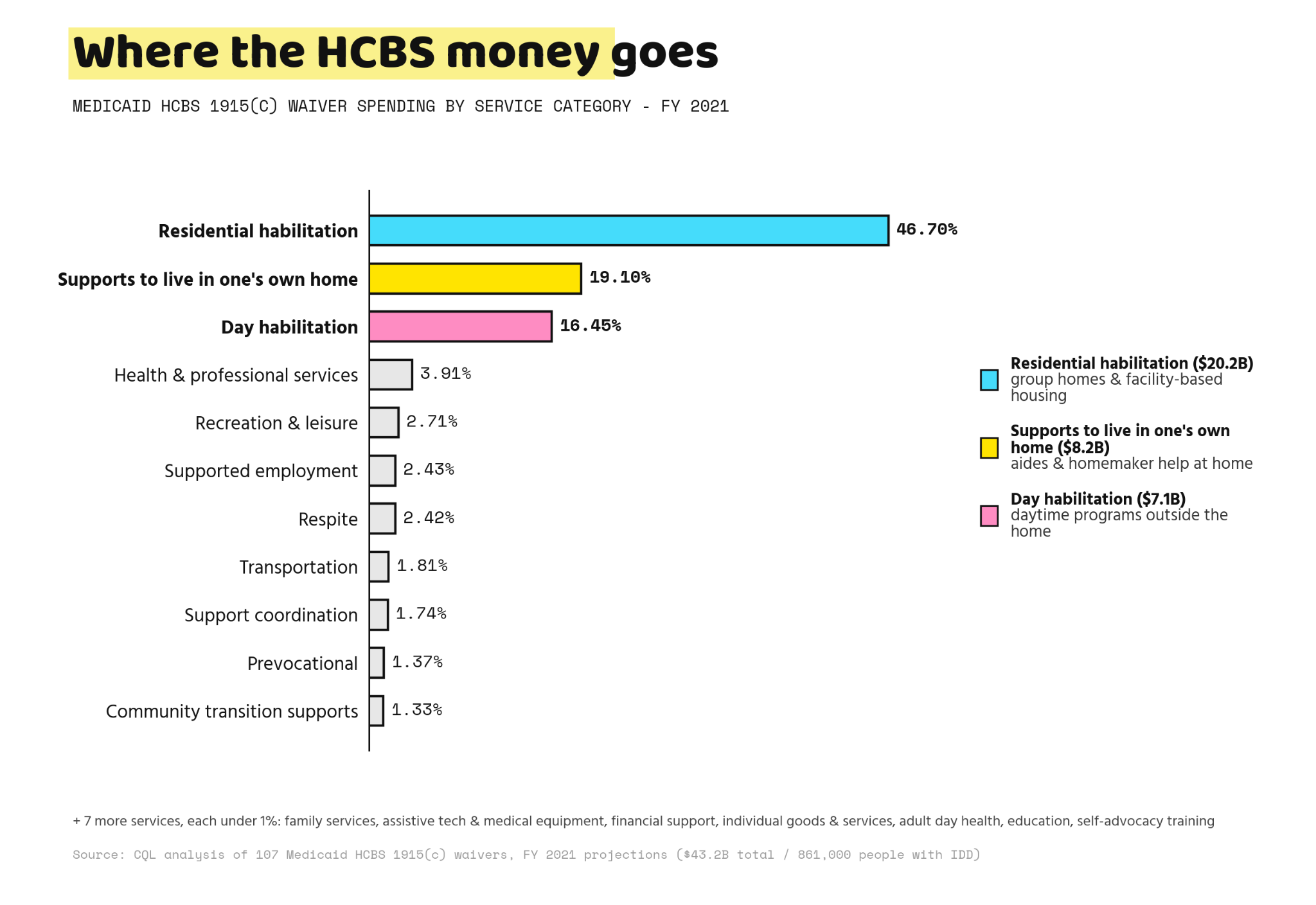
The problem is that regular landlords struggle to rent directly to these tenants. Many of these tenants can’t pay market rate rent and it costs money to make the modifications the homes need for IDD patients. This means care agencies historically ended up buying and managing houses themselves, which means they need to deliver care AND operate real estate.
There are companies that operate in this area like Scioto Properties, CapGrow, and Nestidd. They buy homes in decent neighborhoods near residents' families, renovate for accessibility where needed (mostly wheel-in showers), then lease them to care agencies on 5-to-10 year terms and handle the big-ticket maintenance. The agency does care, the real estate company does buildings.
- The homes stay full - this is typically a population that doesn’t move a ton + has a long waitlist for housing.
- The care agency tenant stays for a decade because moving a group home means re-licensing and uprooting residents.
- The rent is effectively subsidized by government programs like Medicaid (even if not explicitly saying that).
- Property managers can tap into debt markets to finance multiple properties across states designed for renting to tenants.
- The care agencies don’t need to have their capital locked up in real-estate or manage the property.
This episode of Out-Of-Pocket is also supported by...

Turning malls into healthcare hubs
Regular office towers sit half-empty because everyone's at home on Zoom, probably slow cooking something for 8 hours. Wait am I projecting...
On the flip side, medical office buildings run occupancy north of 92 percent, and rents rose more than 6 percent over the past two years even as conventional office rents fell. You can’t yet get a stent placed virtually...yet.
Reality is that tenants delivering medical services spend a lot to build out their space and rarely just up and move. The needs for their office are high like a sink in every exam room, extra parking, robust HVAC/ventilation, reinforced floors for heavy equipment and your mom. But in return landlords get a tenant that’s sticky, has reliable demand, and generates foot traffic to the rest of the space.
In fact you now see dead retail get converted into healthcare space. Medical University of South Carolina flipped a mall into an ambulatory surgery center, imaging, and infusion. The University of Rochester converted a 242,000 square foot former Sears into an orthopedic center (and got it done ahead of schedule + 10 percent cheaper, because the parking, zoning, roads, and utilities already existed). Inova is turning a mall in Virginia into a $2 billion hospital with a trauma center.
Kids will no longer loiter at Auntie Anne’s, they will hang at the combination Cinnabon/ambulatory surgery center as God intended.

Hospitals becoming landlords for patients and staff
Some hospitals are just building housing themselves. An unexpected ally in the YIMBY fight.
One reason is to make it more attractive to work at the hospital. If you can’t staff the hospital, you frequently have to rely on locum tenens or travel clinicians to come do shifts at your hospital. But this is way more expensive + travel staff don’t know your hospital/system as well + they will post their earnings on Tik Toks and everyone will get very mad.
So how do you convince clinical staff to work full time at your hospital? One way to do that is to build your own housing for employees. The University of Vermont Health Network has now built two apartment buildings in South Burlington, over 180 units plus a child care center. They couldn't fill nursing positions partly because nobody could find housing in Burlington, and using travel nurses led to a $90 million annual loss.

Other hospitals think about housing from the patient aspect. For example, patients and their families who need to stay near the hospital during a long course of treatment. The American Cancer Society's Hope Lodges, and St. Jude, which runs an entire housing portfolio including a 140-unit facility connected to the campus. MD Anderson owns a 322-room Marriott-operated hotel attached to its cancer center by skybridge.
Parting thoughts - more healthcare people need to be in real estate (from Brad)
Real estate looks intimidating from the outside. Like healthcare, it has its own litany of industry-specific jargon with practitioners who use it to keep outsiders out.
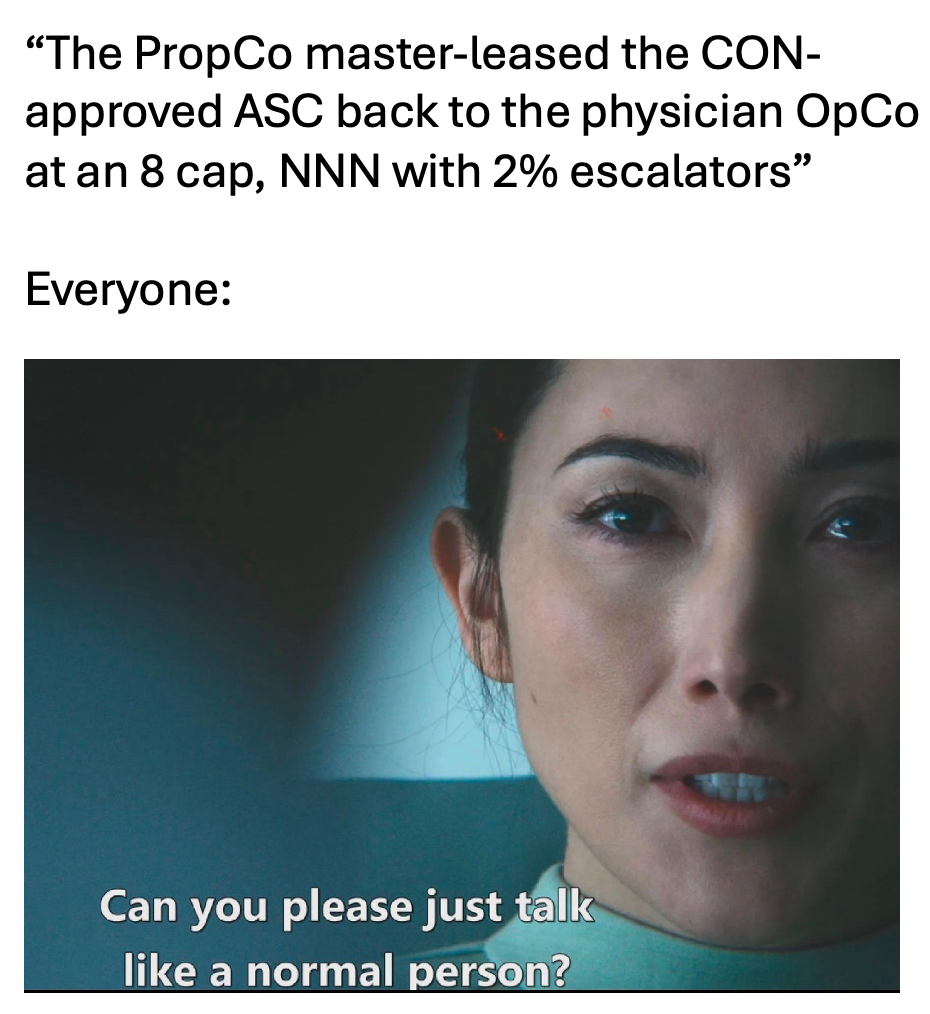
But as someone who went to college pre-med before defecting to real estate, I can promise the intellectual barrier is lower than it looks; if you can hold the pharmacokinetics of a drug in your head, or reason about protein folding, you can learn what a cap rate is over a long lunch.
The border between healthcare and real estate is wide open, and the people best positioned to build across it are the ones who already understand how healthcare works, which is most of the readers of this newsletter.
The primogeniture that runs real estate aren't going to figure out IDD waivers or outpatient reimbursement or the operational reality of a postpartum retreat. You have, and you can build something awesome in this intersection. Would love to see new ideas from you all.
- Brad aka “Thesis Driven”
—
If I have to learn acronyms for both industries, then I G2G KMS FML LOL...RAF.
Anyway that’s why we have a healthcare 101 course to teach you all those acronyms and then some.

Thinkboi out,
Nikhil aka. “Not Really Driven”
Brad Hargreaves is the founder and editor of Thesis Driven, a newsletter covering the future of real estate. He previously co-founded General Assembly and Common.
Quick Interlude - “Am I a fit for Knowledgefest?”
See All Courses →Based on the questions I’m getting about Knowledgefest, I’m doing a really bad job explaining who should come.
The conference is for anyone building in healthcare.
- It is not specific to companies delivering patient care - Lots of people at software only, insurance, etc are coming.
- Any size of company can come - We have two person just out of YC companies, people that run ops at clinics, to F500 companies.
- You can be any role - Almost every role touches ops in some way. Product, founders, clinical, etc. should definitely come.
You should apply if you’re not sure, and we’ll let you know :)
Get Out-Of-Pocket in your email