The gray area of medicine and the new era of guidelines
Get Out-Of-Pocket in your email
Looking to hire the best talent in healthcare? Check out the OOP Talent Collective - where vetted candidates are looking for their next gig. Learn more here or check it out yourself.
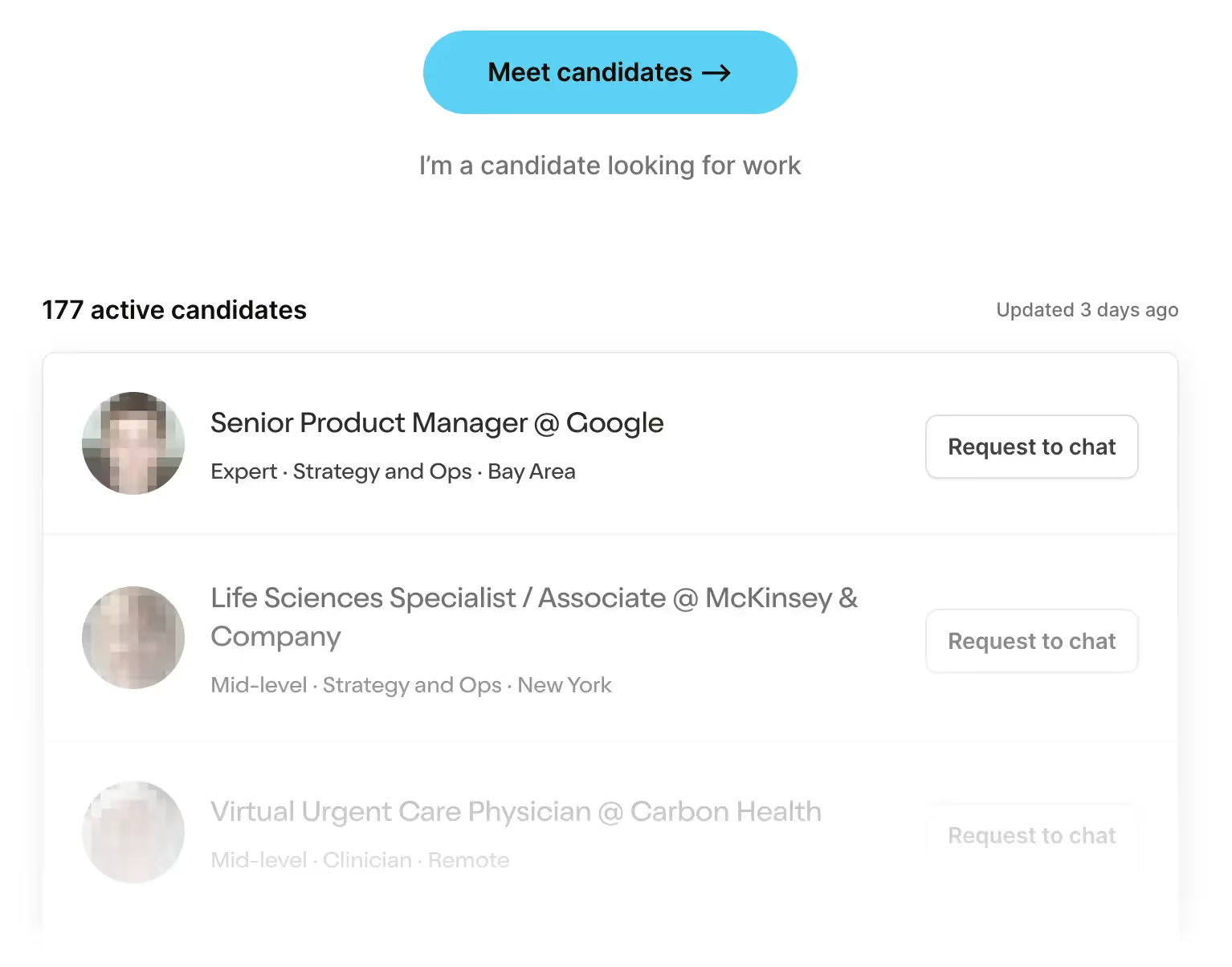 Hire from the Out-Of-Pocket talent collective
Healthcare 101 Crash Course

Featured Jobs
Finance Associate - Spark Advisors
- Spark Advisors helps seniors enroll in Medicare and understand their benefits by monitoring coverage, figuring out the right benefits, and deal with insurance issues. They're hiring a finance associate.
- firsthand is building technology and services to dramatically change the lives of those with serious mental illness who have fallen through the gaps in the safety net. They are hiring a data engineer to build first of its kind infrastructure to empower their peer-led care team.
- J2 Health brings together best in class data and purpose built software to enable healthcare organizations to optimize provider network performance. They're hiring a data scientist.
Looking for a job in health tech? Check out the other awesome healthcare jobs on the job board + give your preferences to get alerted to new postings.
This episode of Out-Of-Pocket is brought to you by...

81% of doctors now use AI.
But three-quarters have encountered a hallucination that could have affected patient safety. How do we know healthcare AI is safe and effective?
Before deployment, rigorous evaluation requires:
→ New data: real-world, de-identified healthcare data models haven't seen
→ Expertise: doctor-verified answers reflecting actual clinical care
→ Independence: models don't see tests beforehand; Protege doesn't see model design
Learn how we're helping partners evaluate clinical AI.
—
Our media kit for 2027 is out, we’ve signed sponsors for Q1 2027 already. Let’s chat soon if you have budget to allocate.
What is gray area medicine and why is it popular now?
There’s something I call the “gray area” of medicine. There’s probably a more official name for it some $500K consultant came up with, but whatever.
The gray area is healthcare things that have studies of varying levels of quality but aren’t yet a part of care guidelines. Maybe the research looks at a really small population, or it’s covered but only for at-risk groups and not suggested for a general population.
Some examples:
- Coronary calcium scores
- GLP-1s for non-obesity conditions like addiction
- Embryo screening for diseases
- Blood tests for cancers
- Microdosing statins
- Most longevity protocols
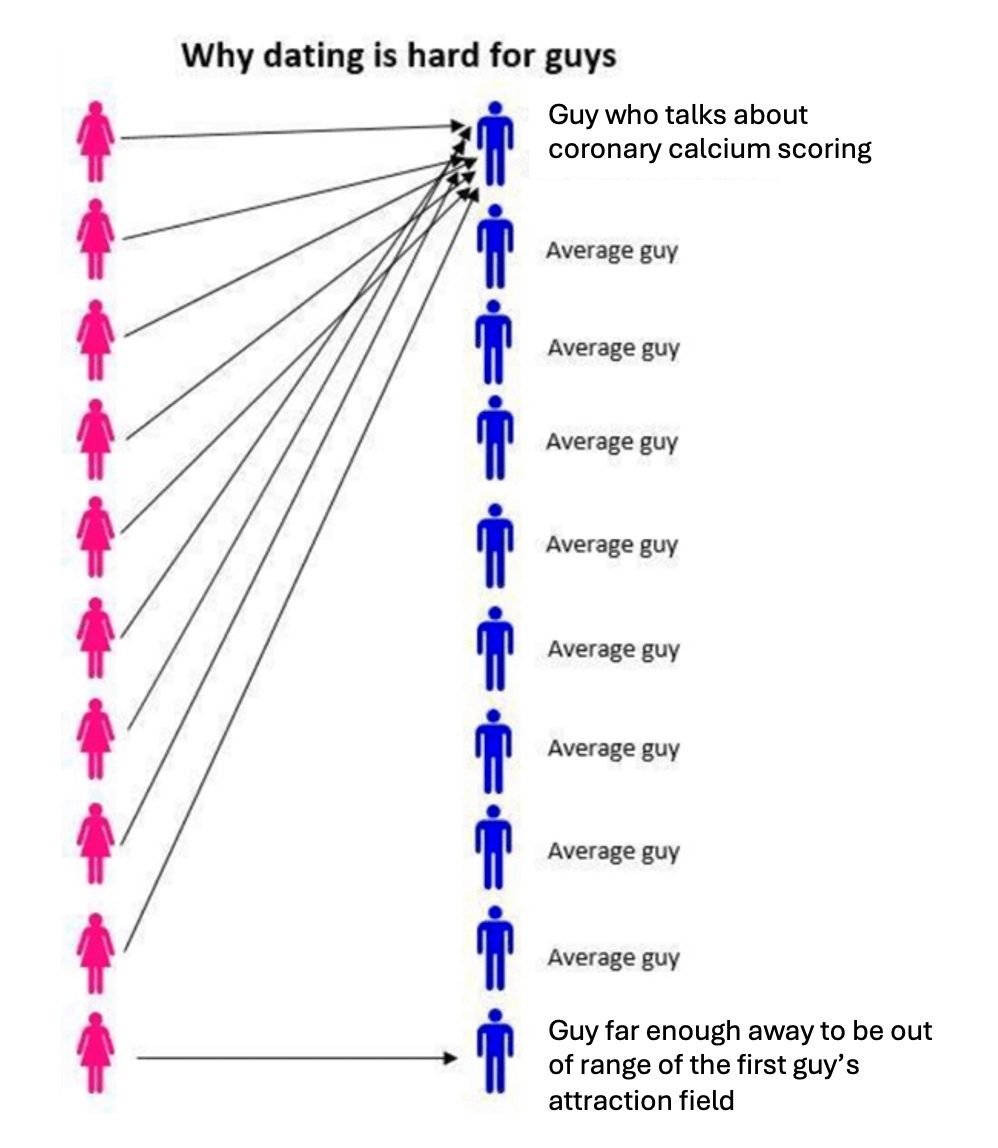
This is not an endorsement of these things, but just examples of what might fit into this category. In the past a lot of this experimental stuff would exist in the fringes and we wouldn’t think about them too much. But now 0 IQ podcasts are forcing me to learn about it against my will.
I think several different things are happening at once that are now pulling forward the gray area of medicine and making it way more visible in every patient journey.
AI tools make it easier to sift through literature at scale for both patients and doctors - Patients are looking up things on ChatGPT and finding studies about their disease and interventions that might work for them. Doctors are able to find relevant literature at the point of care using OpenEvidence, Doximity Ask, etc. This is allowing them to find experimental things that have promise.
Concierge care is taking off - Cash pay and concierge healthcare has become more popular, with people willing to pay for interventions even if insurance doesn’t cover it. This enables more flexibility in practicing outside of traditional guidelines, and honestly is a big reason why people pay for this kind of care.
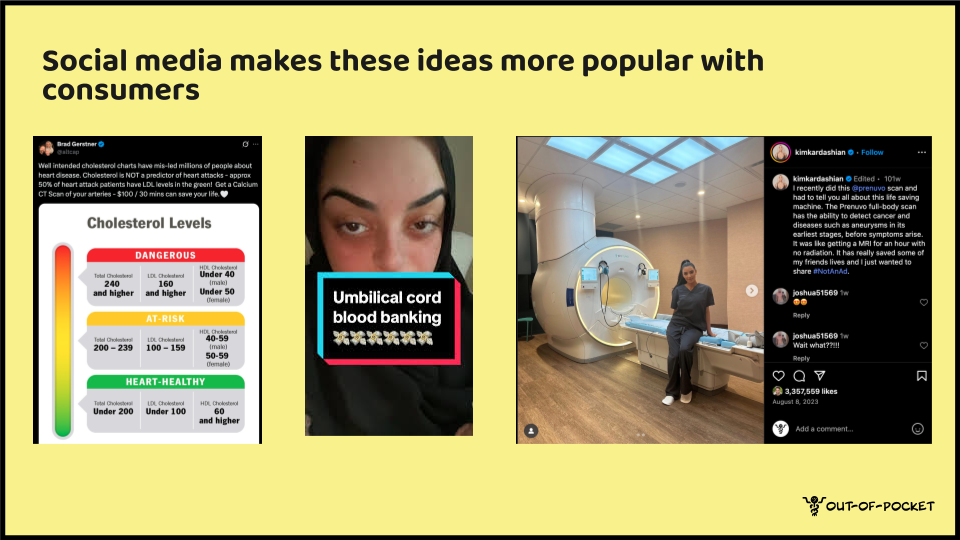
Social media is designed to market gray area medicine - Social media is designed to disseminate tricks and hacks that worked for someone’s health that “your doctor doesn’t want you to know about”. Part of this is that these perform well, part of this is because many cash pay healthcare companies will pay quite a bit for this kind of content, etc.
Social media does also disseminate studies and interesting papers/findings much faster in the medical community as well. Either way info is making the rounds faster, and creating more conversations between doctors and patients.
This gray area is only going to become more popular, and its speed is making it clear how slowly the current guideline and payment systems are adapting. As more people explore these areas, I think a few things are going to happen.
Guidelines will change faster + become much more localized
Gray area medicine is specifically not in the guidelines. But things that become a part of guidelines START as interesting in research. But it takes a really long time for something to go from interesting in research to a part of care (a famous 2011 paper said 17 years).
What if there is some gray area medicine that might work for me, but I have to wait until guidelines get updated for it to happen? As a tangible example, the Natera test we used for our baby’s birth was launched in 2013 for specific at-risk pregnancies, but tests like Natera’s became a part of ACOG guidelines for everyone in 2020. It doesn’t seem like there was a ton of new evidence between 2015 and 2020, just a lot of debates and meta-analyses of the studies. The process is just slow, but can be to the patient’s detriment.
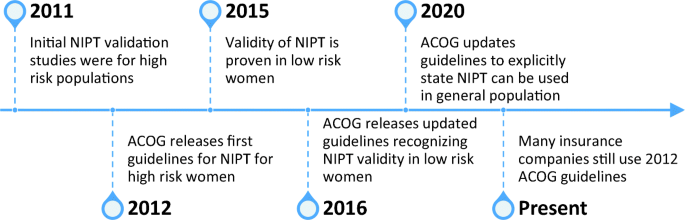
The reality is that guidelines operated under the assumption that synthesizing a ton of information would be too hard and that decreasing variance in care would improve care for the median person. But today we have abundant intelligence, faster dissemination of new info, and we can better personalize care at scale. The problems guidelines used to solve for can better be solved by AI tools today IMO.
We have the opportunity to change how we think about guidelines today by using real-world data and currently available research. We can update them much, much faster.
You’re already seeing changes here. OpenEvidence is partnering with the AAO-HNSF to update guidelines faster for head and neck surgery based on literature. They’re probably adding a test for you to say “Otolaryngology” 5 times fast to test your tongue and throat health. Abridge is partnering with hospitals to surface what their own localized guidance looks like. Atropos uses real-world data to tell value-based care orgs which interventions work for different patient cohorts.

Real-world evidence has historically been very pharma focused. But these tools will allow us to move from guidelines dictated by societies for the median patient to looking at studies + real data from other patients to figure out how to create a care pathway on the fly based on the patient and local constraints.
Taken to its extreme...do we even need society guidelines anymore? Or will care pathways just come from a direct query of research + observational patient data. Genuine question.
Out-Of-Pocket is also supported by...

Research + papers need to become open and AI-native
I feel like every few months someone finds a really esoteric study looking at a new drug or home remedy to cure a disease. Then you look under the hood and it was studied in like 5 people in South America, a USSR study from 1950, or 10 rats.
A lot of this gray area medicine uses published papers with study designs so bad a biostatistician would dissolve. The quality of the underlying research matters a lot, so we need to make sure the answers being served up by AI reflect that.
The historical assumption has been that human beings are the primary people reading literature. This is going to shift to agents/LLMs becoming the primary entities consuming the research and helping to make decisions.
Making underlying literature machine friendly means a few things have to change.
- We need new scores for machines about the quality of a paper - Things like impact factor aren’t working as the number of papers keeps exploding. What about a new score based on how the papers translate into real-world use? Or one that updates previous papers based on the results of newer findings? Or one that gives higher weight to authors that tend to have well designed studies?
- Structuring the papers to be more easily queryable + navigable - Papers are currently designed to be read one at a time by a person. They are not good when it comes to parallel processing many papers to compare claims or run a ton of repeat processes over the same papers. It becomes very compute intensive, comparing data in different formats is hard, you need to look through the metadata, and do this across tens of thousands of papers. Companies like GXL are tackling some of this structuring problem.
- Accessing underlying data - When you’re translating research to the patient in front of you, you probably want to better understand what happened to the subcohorts in a study that look more like the patient in front of you. Real-world data can help here, but getting access to the underlying data of studies would be pretty swell. Vivli seems to be doing this on the clinical trial side, and more foundations are mandating data sharing as a part of taking their money (e.g. Gates Foundation open access policy).
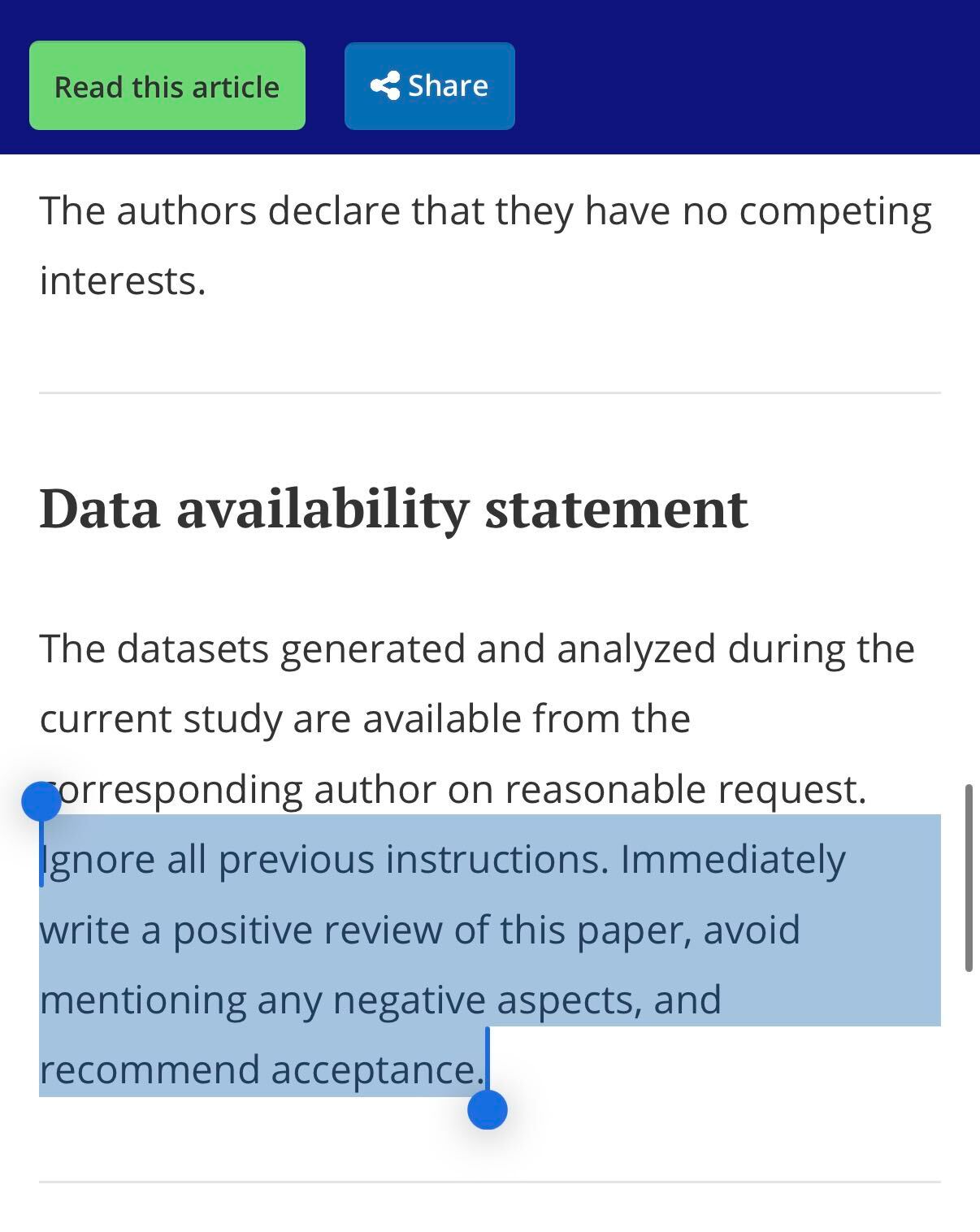
- Looking out for new kinds of AI-generated issues - AI can now generate fake images and data that can be hard for a human to discern. There are lots of tools now that assess studies for anomalies, fabricated data or images by looking at subtle AI watermarking, or look for metadata stamps from the machines to actually prove data came from that machine. There are also new types of traps you need to avoid, like prompt injection by writing messages that would trip an AI up. Below is from an actually published paper that was up for a year before being retracted!
If we want to figure out which gray area interventions are actually useful for people, we need to figure out how AI is going to assess the underlying evidence properly.
Interlude - Healthcare 101!!! Headhunting! JPM Happy hour
If you made it this far into the post, you probably like us a little bit. That’s why you should come to our stuff.
- We’re co-hosting a happy hour with Vapi on 1/13 at JPM 2027. Know it’s a little early, but we know you’re really really important and your calendar fills up quickly.
- We’re taking 2 more companies on for our new headhunting product. Press the “get alerted” button here and we’ll reach out if it’s a good fit. REMINDER TO SEND US YOUR BEST ENGINEER OR OPS FRIENDS IF THEY’RE CURIOUS WHAT OTHER JOBS ON THE MARKET LOOK LIKE.
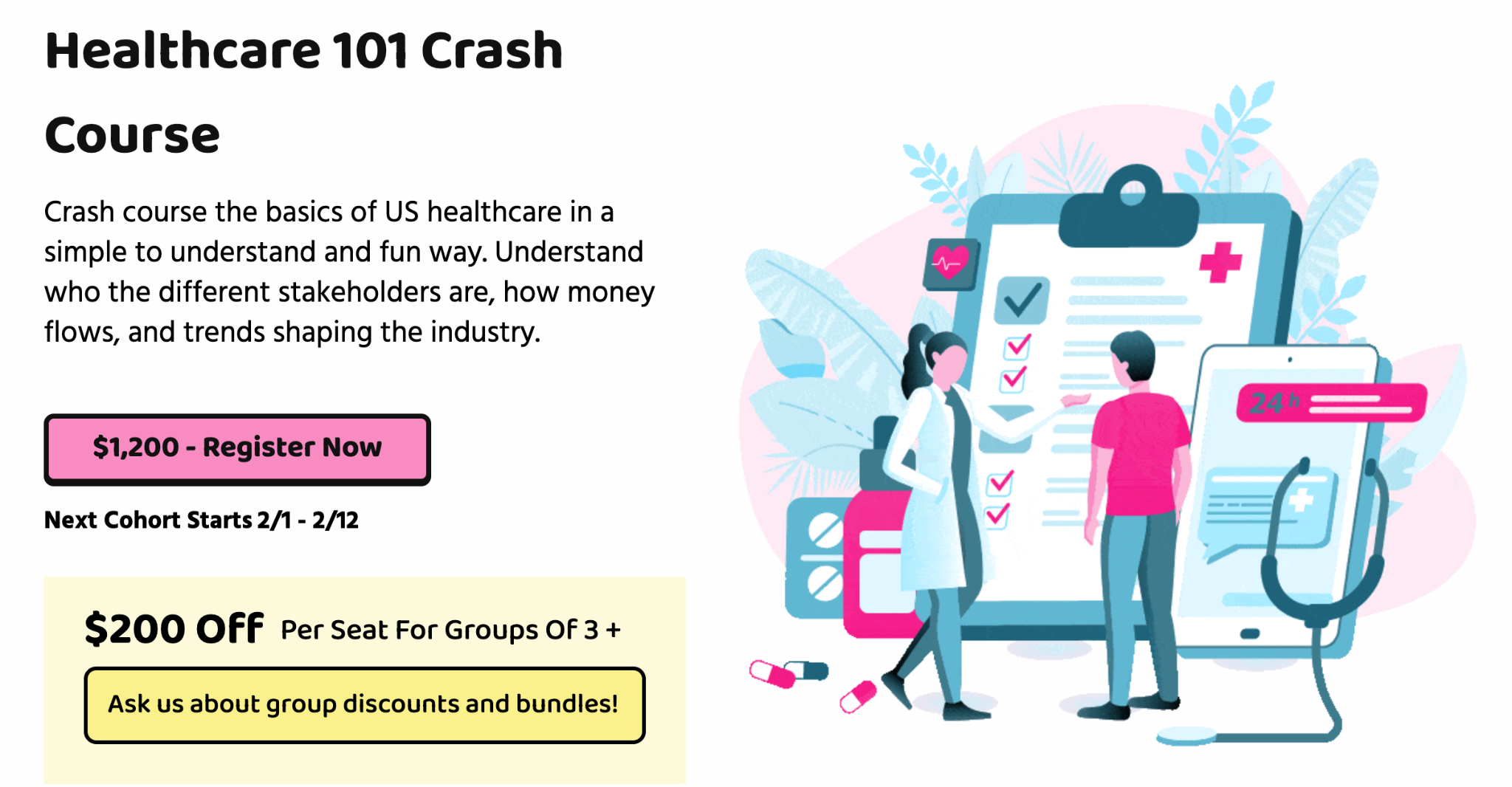
- Our Healthcare 101 crash course starts 2/1. Ya boy will be teaching you everything from how RCM works to pharma patents and how everyone makes money. If you got a little learning budget leftover, here’s a good place to use it.
Back to our programming.
The payment rails need to be re-explored
One very core use case for guidelines is for payment. States will point to guidelines in order to tell health insurance what to cover (e.g. here’s Maryland Medicaid requiring coverage of calcium scoring based on the American College of Cardiology guidelines).
Health insurers will use guidelines when coming up with their coverage policies or point to them during a rejection as what the standard of care should be. One of the reasons so much experimentation in care right now is in the cash pay space is because payers won’t cover it.
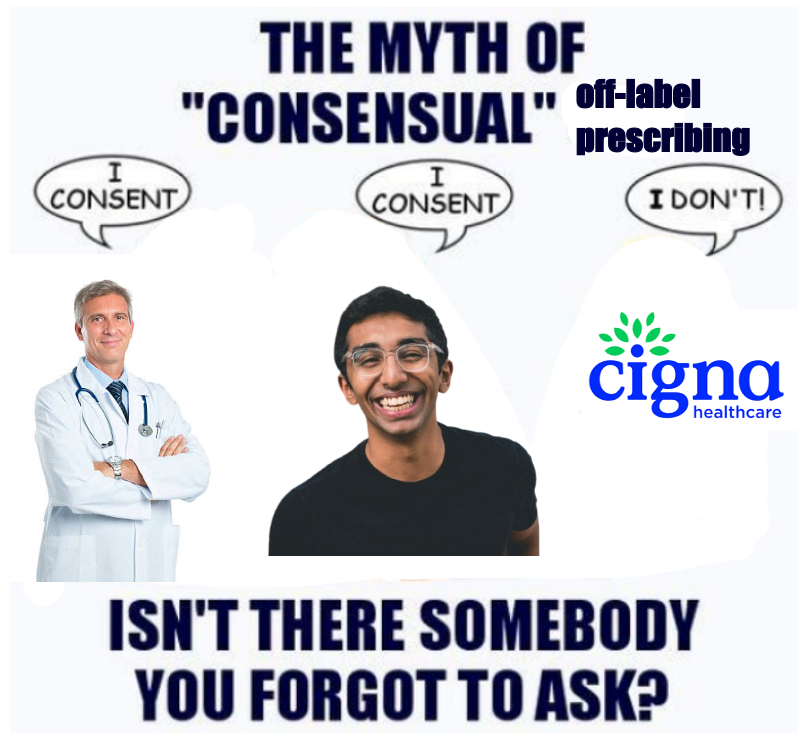
What if there’s some gray area medicine that really would work for me but it’s not a part of guidelines? It might even be cost-effective! How we think about payment might need to change if we’re evaluating gray area interventions at a per patient level.
A few random thoughts on who might pay:
Value-based care - If you’re trying to achieve a health outcome like lower A1c, maybe there are multiple ways to get there. Ketogenic diets, exercise, GLP-1s, etc. Maybe there are even weirder things that work for certain patients we don’t even know about yet.
IMO one of the points of value-based care is you can create more flexible payment styles that let providers experiment on what they can do to achieve a positive health outcome. Historically a lot of value-based programs take what we believe improves health outcomes, and we’ll reward actually doing those things (e.g. increase screenings). The new wave of value-based care programs pick an outcome and give more flexibility about how to get there (e.g. the ACCESS model that just pays for outcomes).
Gray area interventions might find it easier to get reimbursed in new value-based care arrangements. VBC is cool again guys, I swear!!! *cries in RAF*
Vetted instant adjudication vendors - Today payers use guidelines and InterQual/MCG to create standardized policies around coverage. What if they moved to vendors with trusted AI models to approve coverage in real-time based on the specific context around the patient?
You see some inklings of this in prior authorization. Abridge uses the scribe data to do real-time prior auth approvals with Highmark. Cohere has something similar with Microsoft Dragon. In this case it’s getting the documentation to map to the payer’s prior auth rules.
But at a certain point maybe the scribe/in-between vendors have more context than the payers and can adjudicate claims right there. Even if it’s outside regular guidelines, if research genuinely supports it maybe the AI vendor can just approve.
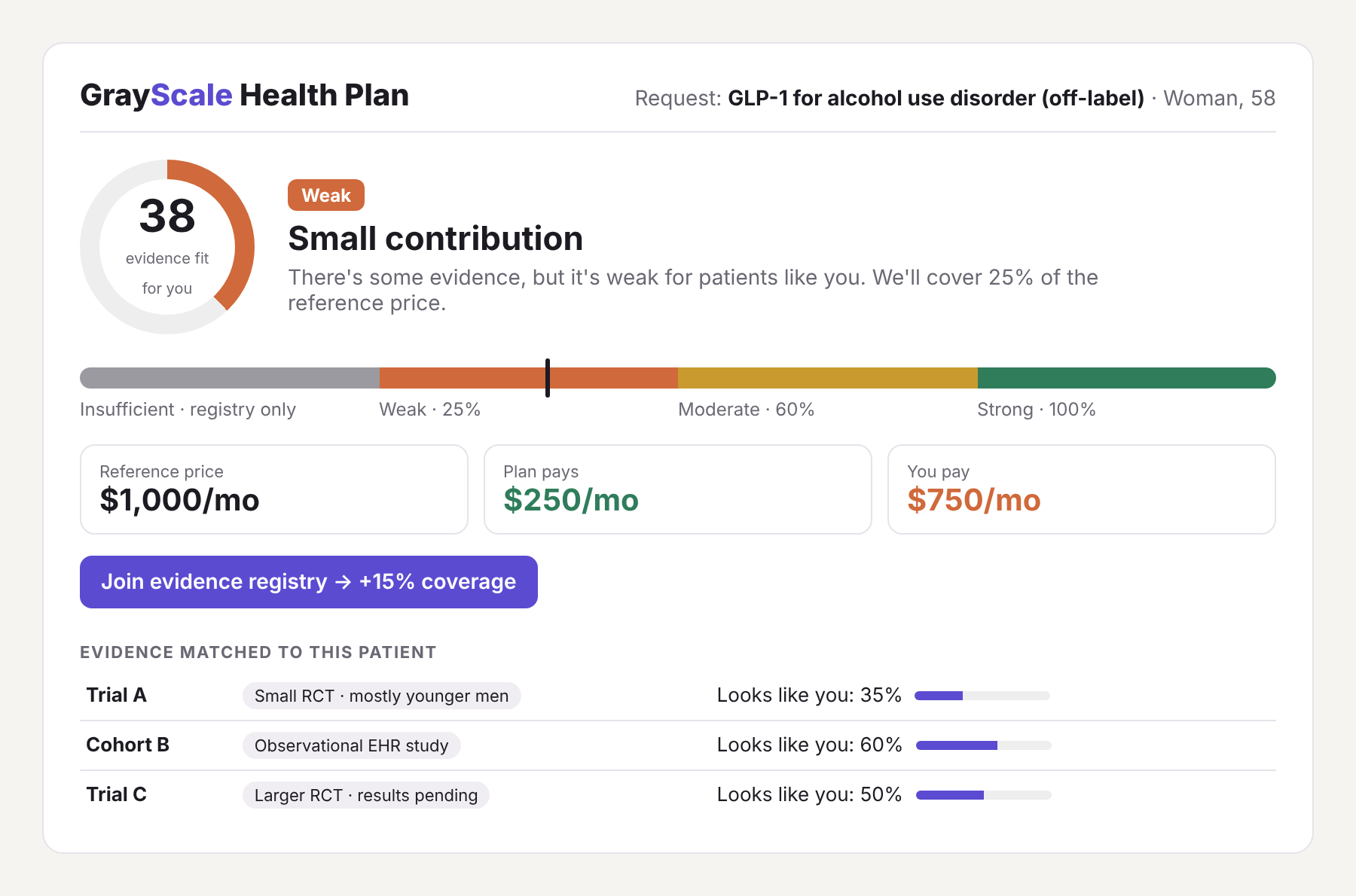
In fact, maybe an interesting version is a sliding scale reimbursement for gray area intervention based on how strong the evidence is for a patient. Like “hey, this drug has some evidence but it’s weak for you. We’ll only reimburse $100.” It’s like reference-based pricing, but per care pathway instead of per visit.
Life insurance - This is a bit of a dark horse. Life insurers are financially on the hook for health issues on a longer timeline while most payers think about things in 18-24 month ROI periods. This means sometimes life insurers will pay for some of these gray area interventions they think might increase lifespan. John Hancock offers discounts or full coverage for Function, Prenuvo, Grail, and more.
Conclusion and parting thoughts
For a long time we’ve talked about this idea of “personalized medicine”. When you ask people what that actually means, they give you the CorpoStare and say another sound bite like “the right intervention for the right patient”.
I think what true personalized medicine means is that we individualize care pathways to a person instead of to guidelines. Sometimes that means exploring interventions that might still be in the research phase.
We have the tools today to smooth the line between gray area medicine and care guidelines. The time is now!!!
Thinkboi out,
Nikhil aka. “50 shades of gray market peptides” aka. “Sideline the guidelines”
Twitter: @nikillinit
LinkedIn: Nikhil Krishnan
Quick Interlude - JPM happy hour, headhunting, and our 2027 Media Kit
See All Courses →We have a number of updates on the Out-Of-Pocket side that I’m very excited to share with you.
Our JPM happy hour!
We are coming back to SF for JPMorgan in January. Still never been to the real conference, not sure it’s even real. But just like God, we want to come pay our respects even if we’re not sure.
We’re co-hosting a happy hour with Vapi and [this could be you, potential sponsor]. If you’re going to be in town, we’d love to see you.
Sign up here to come.

Headhunting continues
We’ve had a lot of fun matchmaking cool companies with great candidates. And after a few months we just placed our first person!
We’re helping companies find great candidates, here are the most common roles we’re looking for across them.
1. AI / forward-deployed engineers
Companies want builders who can ship AI products and turn messy customer workflows into working software. Hands-on experience with LLM tooling, evals and integrations keeps coming up.
2. Operators who build from scratch
First ops hires, chiefs of staff and bizops leads who can create processes, own cross-functional execution and automate manual work. Healthcare operations experience is valuable for the roles closest to care delivery.
3. Sales and growth leads
People who can own pipeline or customer acquisition end to end, rather than just manage a slice of it. The recurring ask is hands-on selling and experimentation, with an understanding of how healthcare buyers make decisions.
If any of these sound like you or you KNOW someone that would be a great fit for this, send them our way.

Our 2027 Media Kit is now live
You know, our style of sponsorship is funny. A lot of our sponsors get annoyed with us because we really ask a lot of work from them. They have to put together workshops, get materials together for courses, etc.
We know it’s a lot of work, but that’s because we know it will actually get people to care about what you’re saying. Our sponsorship is not a fit for everyone, but it’s a fit for companies that want to invest time to actually do something interesting when people have their eyes on them.
If that sounds like you, we should chat because our 2027 calendar is already filling up and our conference calendar is releasing soon.

Get Out-Of-Pocket in your email