A weird corner of healthcare: indemnity insurance
Get Out-Of-Pocket in your email
Looking to hire the best talent in healthcare? Check out the OOP Talent Collective - where vetted candidates are looking for their next gig. Learn more here or check it out yourself.
 Hire from the Out-Of-Pocket talent collective
AI Agents in Healthcare Ops 101

Featured Jobs
Finance Associate - Spark Advisors
- Spark Advisors helps seniors enroll in Medicare and understand their benefits by monitoring coverage, figuring out the right benefits, and deal with insurance issues. They're hiring a finance associate.
- firsthand is building technology and services to dramatically change the lives of those with serious mental illness who have fallen through the gaps in the safety net. They are hiring a data engineer to build first of its kind infrastructure to empower their peer-led care team.
- J2 Health brings together best in class data and purpose built software to enable healthcare organizations to optimize provider network performance. They're hiring a data scientist.
Looking for a job in health tech? Check out the other awesome healthcare jobs on the job board + give your preferences to get alerted to new postings.
This episode of Out-Of-Pocket is brought to you by...

Thatch makes it simple to give your team real choice in health benefits.
Instead of one-size-fits-all group plans, you set a monthly health budget and every employee picks the coverage that actually fits their life.
Setup takes minutes, not months. Thatch handles enrollment, payments, and support, so benefits stop being a headache for you and start being a perk for your team.
—
We have our 2027 Media Kit ready, if you’re figuring out your marketing budget we should chat
Hey man have you heard about...
After I wrote about the costs of delivering a baby, I got quite a few emails back that were similar to this one.
“The biggest hack for us was indemnity insurance. We were allowed to double insure my wife because my policy was under Anthem and hers was Aflac. They paid us nearly $5k, and we only paid ~$500 in premiums. Also pregnancy did not count as a preexisting condition - so I got my policy in Jan and cancelled it in April when my daughter was born due to a life changing event. It was the best investment made and easiest claims process I ever went through - thanks instagram!
Easiest process ever... Paid within 2 days, just uploaded discharge papers. My wife’s policy paid $2500 for her, $500 for the baby (or something like that) and mine paid $1500 I believe.”
You’re going to come to me? The king of healthcare rabbit holes? And throw this bait in my face when I have 50000 things to do? Congrats you got me. Figured I’d do a little research on what fixed indemnity insurance is, and it turns out that it’s a really fascinating slice of healthcare.
Below is from like...5 hours of reading? So I’m like “invited on a podcast to talk about it” level expert on this now. But this is very amateur analysis and would love to learn more from people deeper in this space.

What is fixed indemnity insurance?
At a high level, fixed indemnity insurance essentially pays you a lump sum of cash directly if you get a certain disease or into an accident. For the degenerates, it’s like a prediction market with a triple parlay on whether you crash your car and end up in the hospital.
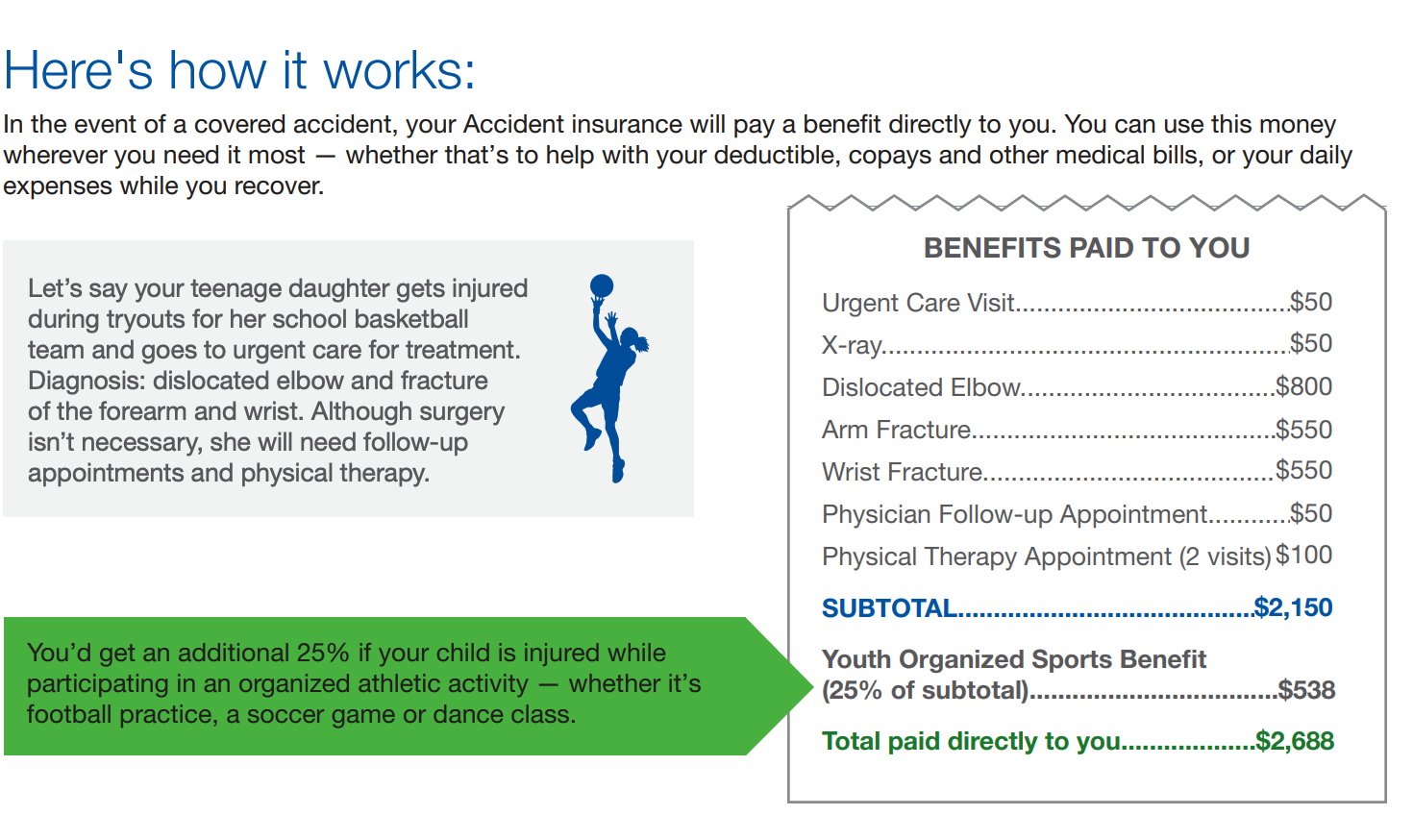
Aflac for example offers several of these for various critical illnesses, cancer, accidents, etc. Here’s one I grabbed from The Standard, which has a bunch of dollar amounts they’d pay to you if something happened. $1000 for a hospital admission, $5000 for a hip surgery, $200 for an MRI, and they’ll even pay you out if you’re in a coma! Sorry inappropriate exclamation.
While there’s a lot of variance between these plans, there are generally a few commonalities.
- There’s a limit to how much they’ll cover
- They can underwrite for preexisting conditions and many will not pay out if you have the issue within 12 months prior to getting the policy (so for a pregnancy you’d need to get it before you’re trying, keep it in your pants)
- Filing a claim typically requires a decent amount of work. Critical illness requires a physician to fill out a separate set of forms, you might need to get an itemized bill and gather records or give them HIPAA authorization to get your records for you. There’s also a deadline to send it.
- They have a completely unrelated picture of someone having just a swell time with their kid on the explanation page.
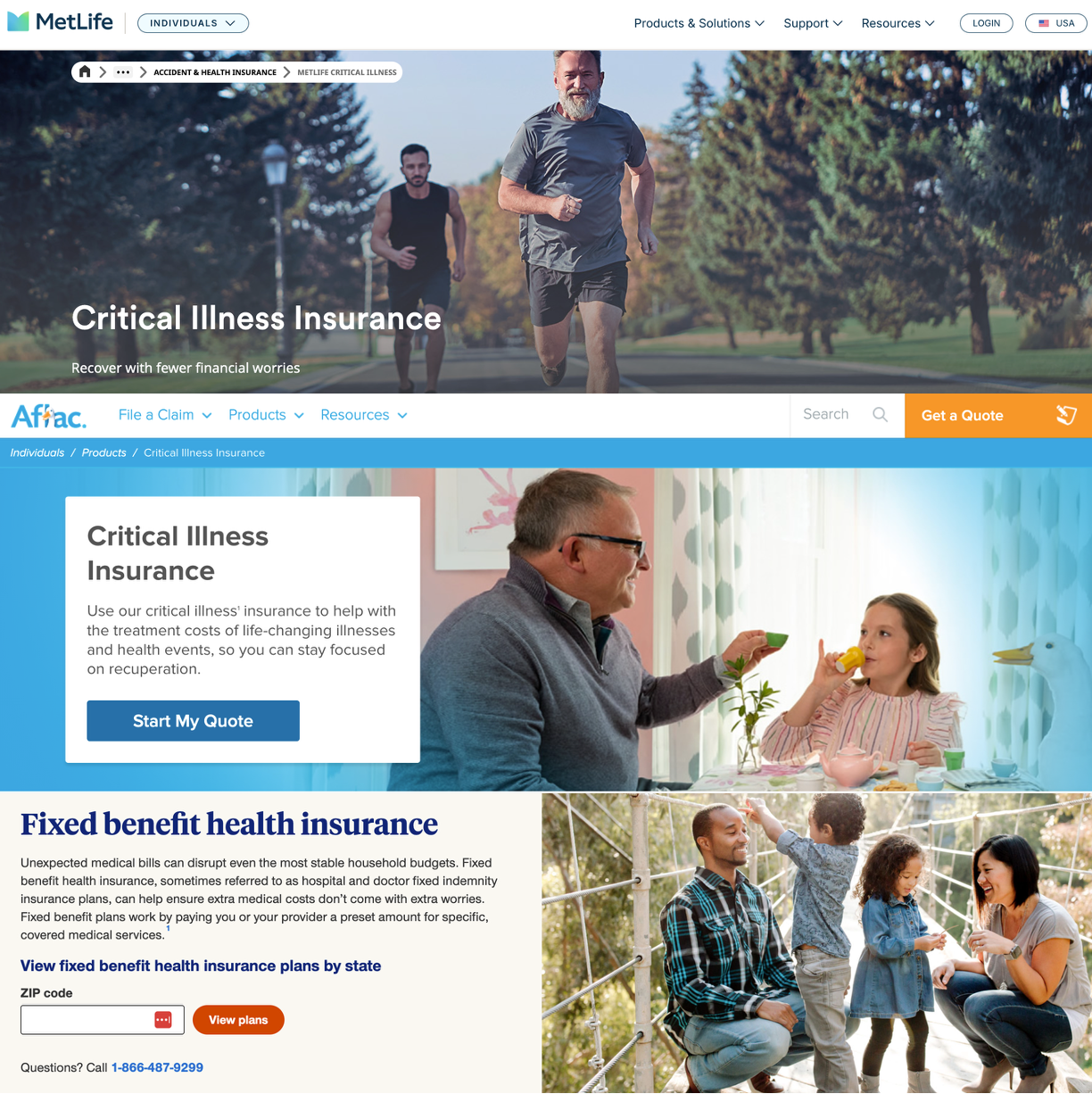
In general these plans are theoretically supposed to be a SUPPLEMENT to your medical insurance to help cover out-of-pocket costs (aka. supplemental plans). They are considered exceptions to the Affordable Care Act and are not considered compliant plans.
Who buys and sells fixed indemnity plans?
There seem to be 3 buckets of people that get these indemnity plans:
- This is typically a product that people will get from their employers. You may have seen it during open enrollment, it costs $150-500/year as yet another thing deducted from your paycheck.
- People buying individual insurance will get it. Theoretically it’s supposed to be for people on high deductible plans to cover them, but now it’s becoming something people consider instead of getting ACA-compliant health insurance plans.
- People with Medicare Advantage plans that want to protect against large costs associated with hospital stays.
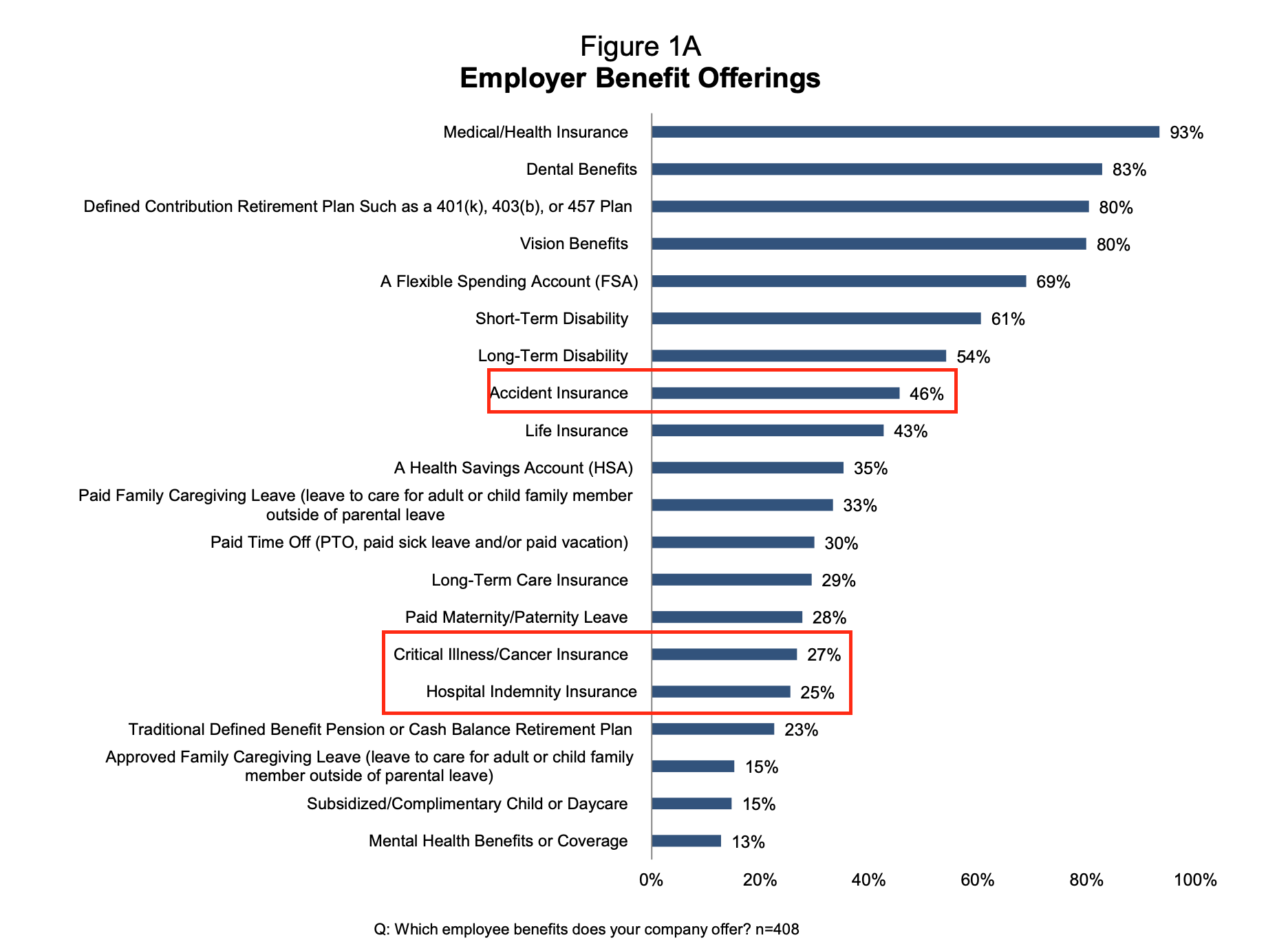
I analyzed (okay...Claude analyzed) some of the NAIC data and cross-referenced it against subsidiaries of larger healthcare companies. I knew that many large insurance companies sold these plans. But I didn’t realize how large the business line was and how vast the networks of subsidiaries selling these plans are.
United has 87 subsidiaries (e.g. Chesapeake Life Ins co, Peoples Health, etc). For hospital indemnity insurance they have nearly half the entire individual market and earned $1B+ in premiums from this line! All of the non-comprehensive plans represent about $2B for them, which is tiny relative to its medical business but still nothing to scoff at. I could use $2B.
Here’s the public sheet I put together, let me know if I (Claude) did this analysis incorrectly.
Quick interlude - I’ll be at HLTH + Headhunting
Two quick things. First, I’m coming to HLTH to talk on a panel about wearables with some much smarter people than me. I got a discount code if you want to come since I know y’all are hagglers: H26PAR_OOP250
We’ll be hosting something there, more details coming soon.
Also unrelated, does anyone know a doctor that does neck shortening?
And also, we’re about to start allowing more companies to join our headhunting experiment. And if you’re someone thinking about your next job, maybe we can chat and help you find a role that fits you.
Learn more about our headhunting stuff here.
Interesting notes on the economics
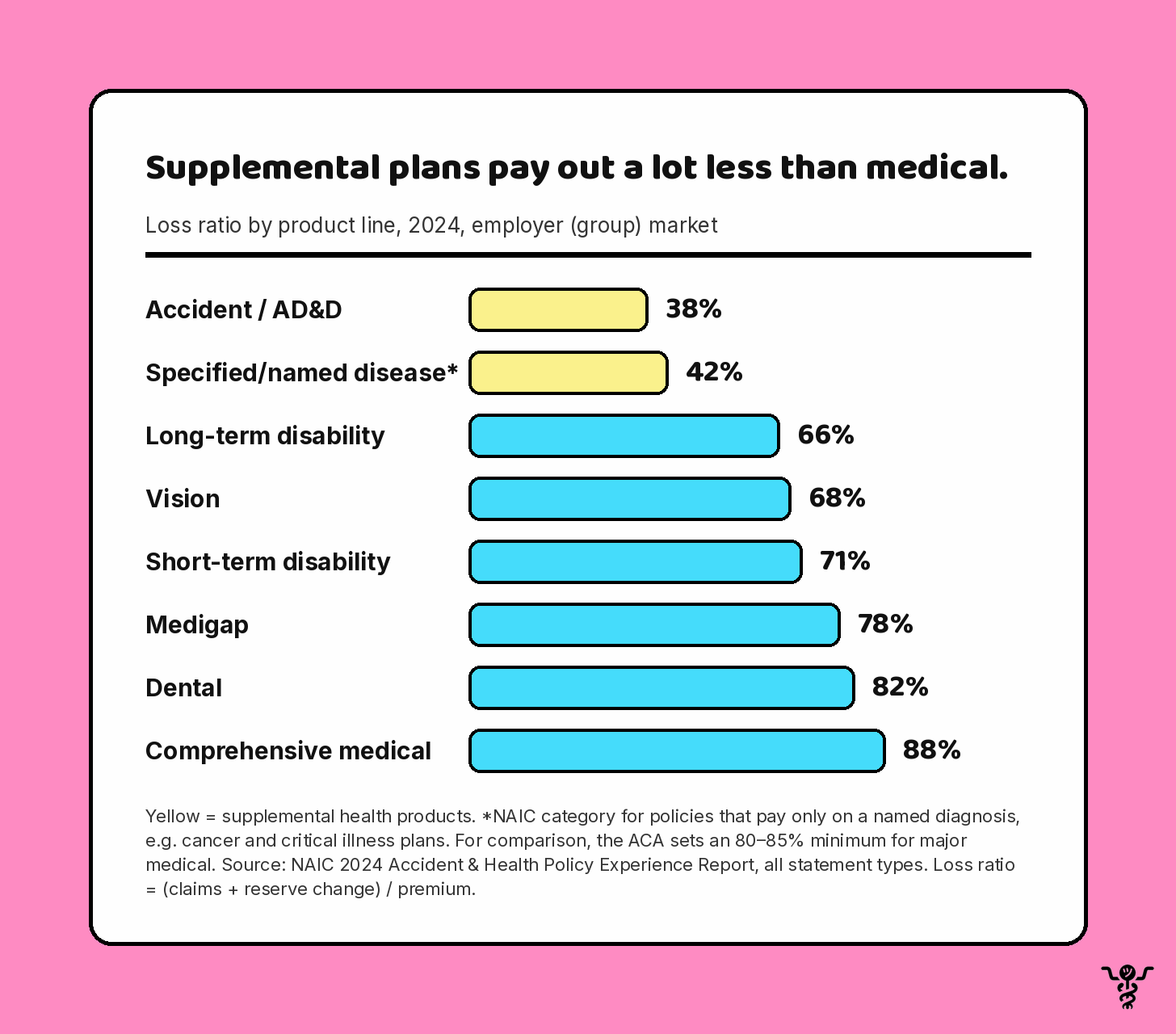
I was reading this NAIC report where all the plans are filed. The loss ratios for these plans are WAY lower than basically every other kind of supplemental benefit (let alone medical). Loss ratios are basically the amount paid out in claims for every $1 they get in premiums. Most health plans are taking L+ratio for 85-90% of the premiums they collect.
But it also seems like part of the reason is because people sign up for them and don’t use them. I couldn’t really find good numbers on this - Voya did a small survey and found only 1 in 10 people that had supplemental insurance like this actually filed a claim.
And Voya interviewed some of the medical carriers that have supplemental insurance - one thing they noted is that you can integrate the two and find members who are eligible for supplemental claims. One of the carriers said that “in up to 80% of claims, integration has enabled member claims that otherwise would have gone unpaid.” So clearly a lot of people with access to this benefit don’t even use it.
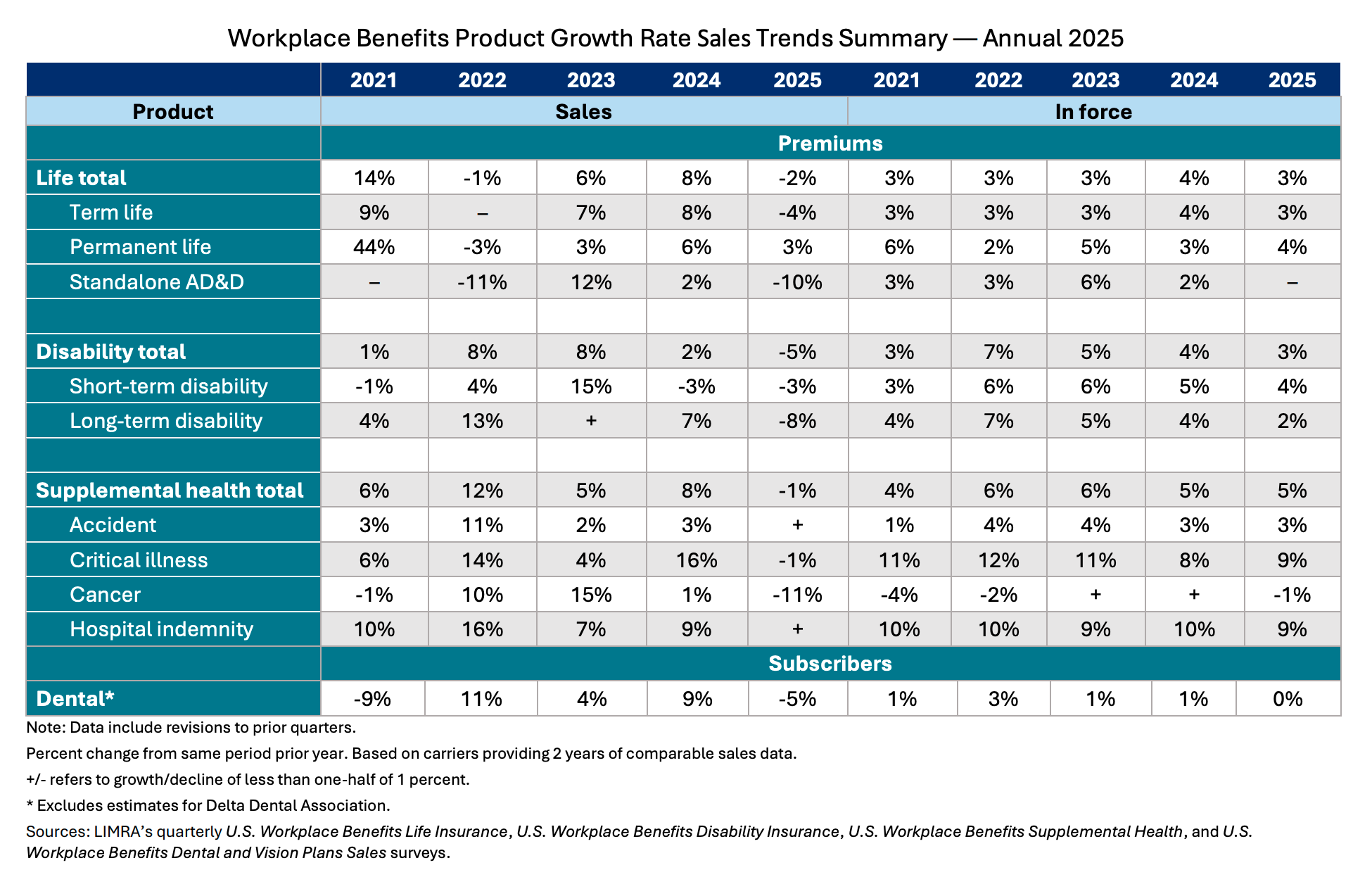
It also seems like relative to other supplemental insurance products hospital indemnity and critical illness are growing faster. Aflac and other carriers have seen both an increase in the number of policies AND the number of people actually filing claims. My guess is that more people are getting lower coverage health insurance plans with a supplement on top.
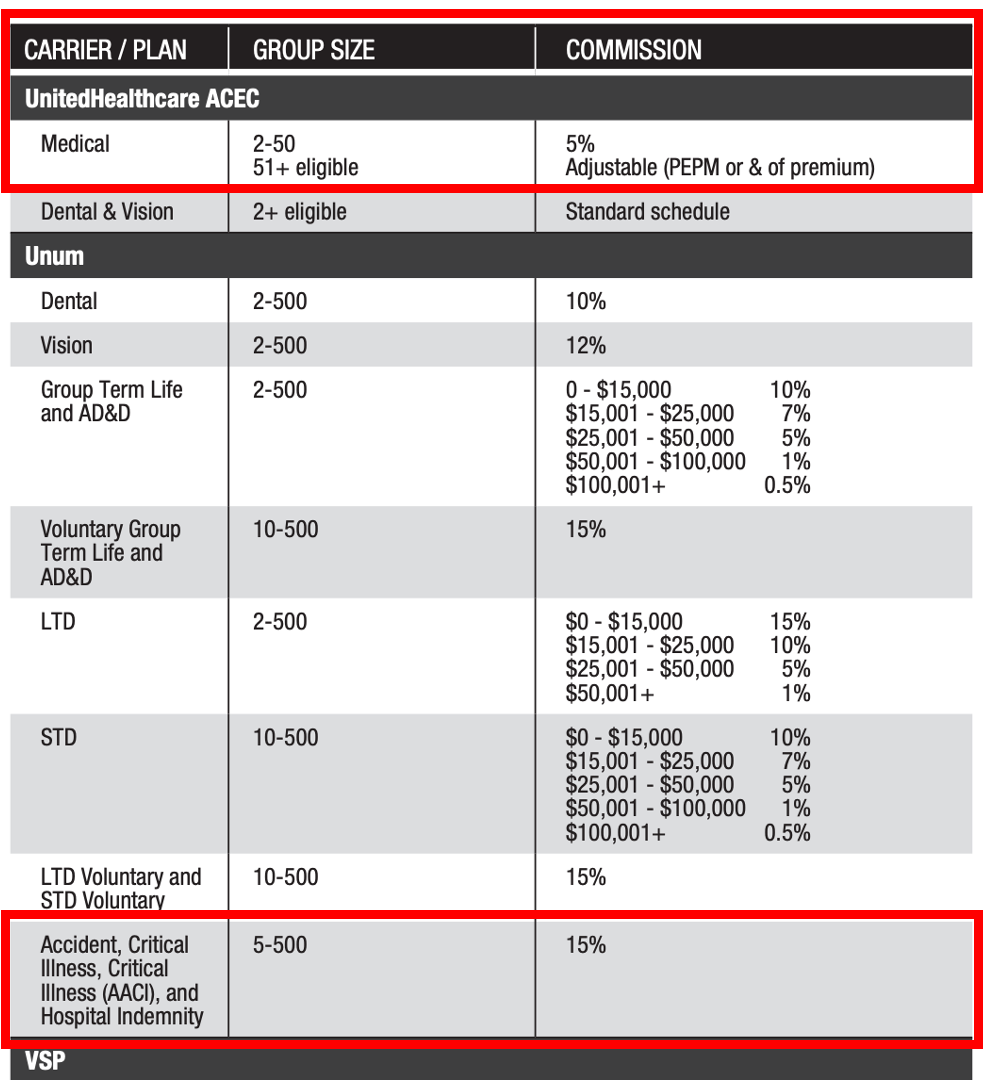
The final piece to this is brokers. Brokers get commissions when selling different insurance products. Health insurance tends to have much lower % commissions per member but a much higher total dollar amount. Supplemental insurance has higher commissions that are more upfront (15-25% premiums vs. 5% in medical). They’re sometimes “heaped” commissions, which stacks more commissions upfront like 50%+ of collected premiums in the first year, and then much lower for every subsequent year.
You see this in Medicare Advantage too, where brokers will often tell clients to get a hospital indemnity plan in addition. Many of the broker sites talk about how much more they can make in commissions offering these plans (double your earnings, 55% year 1 commission). I can feel the kinda sweaty but firm handshake and the Florida veneer coming off the page reading these.
A few random notes and parting thoughts
A couple random things that didn’t fit into the above.
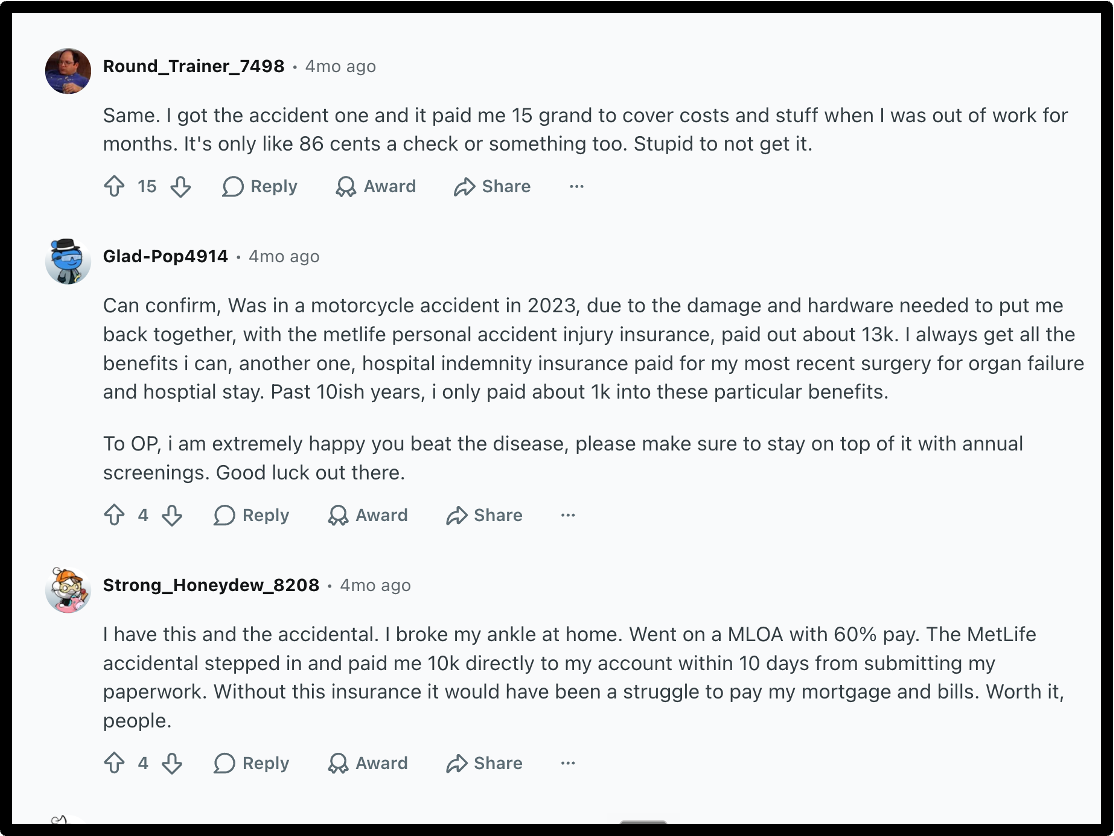
- I’m surprised how positive people’s experiences seem to be with filing claims with these supplemental carriers. There’s lots of reddit threads about this but even the people who emailed me about this said they got paid almost instantly. I find this interesting, why does this particular insurance line seem to do this so quickly? Maybe so few people file the claim that it doesn’t matter? Or it’s a reddit psyop started by these companies and I fell for it.
- It feels like the hassle here is entirely administrative. Which means it’s a great use case for personal AI assistants or chatGPT Health to compare your health records against supplemental insurance you might not even know you have. I think it’s a product that structurally only works if people DON’T know to file claims so I wonder how they respond to AI tools that do this on your behalf.
- I find it odd that pregnancy is a condition you can pick (and is one that’s actually advertised pretty prominently). It seems incredibly prone to adverse selection since it’s very much planned. In the email at the very top, they basically got a free $4500 so why wouldn’t everyone do that? I have to imagine it’s because most people forget to file or don’t know they have it, sign up accidentally, or they have a good experience with the pregnancy payout that they sign up for other illnesses which they’re less likely to actually use. Or uh, maybe it should be under Accident insurance...
- There are some lawsuits happening now around whether these frontloaded larger commission structures for voluntary benefits (including hospital indemnity plans) are a breach of fiduciary duty. It will be interesting to see how that plays out.
- I have a feeling that these plans become much more popular in the next couple of years as the ACA subsidies die down and premiums go up across the board.

- It’s pretty crazy to read some of the Medicare advantage broker playbooks around how to sell hospital indemnity plans to seniors. Here’s an example of one for hospital indemnity - which starts with how much more you could be earning from commissions selling these plans and ends with creating uncertainty in seniors.
- There’s a startup called Ansel Health in this space that raised $50M and was acquired by Renaissance. They seem to allow pre-existing conditions and simplify the payout process for patients. But it’s not clear to me that those are good...business decisions in this line of business? Curious what I’m missing here if anyone knows.
- It is extremely hard to find any data on denial rates, frequency that people are actually filing claims, and how many of these kinds of policies get sold to individuals. If you’re shopping across these plans you’d...probably want to compare those things.
Thank you for joining me down the rabbit hole. If you know more about these indemnity plans let me know. Seems like an interesting area!

Thinkboi out,
Nikhil aka. “100% loss ratio” aka. “We have bundled payments at home”
Twitter: @nikillinit
Other posts: outofpocket.health/posts
Quick Interlude - “Am I a fit for Knowledgefest?”
See All Courses →Based on the questions I’m getting about Knowledgefest, I’m doing a really bad job explaining who should come.
The conference is for anyone building in healthcare.
- It is not specific to companies delivering patient care - Lots of people at software only, insurance, etc are coming.
- Any size of company can come - We have two person just out of YC companies, people that run ops at clinics, to F500 companies.
- You can be any role - Almost every role touches ops in some way. Product, founders, clinical, etc. should definitely come.
You should apply if you’re not sure, and we’ll let you know :)
Get Out-Of-Pocket in your email