Referrals still run on fax and that’s bad
Get Out-Of-Pocket in your email
Looking to hire the best talent in healthcare? Check out the OOP Talent Collective - where vetted candidates are looking for their next gig. Learn more here or check it out yourself.
 Hire from the Out-Of-Pocket talent collective
AI Agents in Healthcare Ops 101

Featured Jobs
Finance Associate - Spark Advisors
- Spark Advisors helps seniors enroll in Medicare and understand their benefits by monitoring coverage, figuring out the right benefits, and deal with insurance issues. They're hiring a finance associate.
- firsthand is building technology and services to dramatically change the lives of those with serious mental illness who have fallen through the gaps in the safety net. They are hiring a data engineer to build first of its kind infrastructure to empower their peer-led care team.
- J2 Health brings together best in class data and purpose built software to enable healthcare organizations to optimize provider network performance. They're hiring a data scientist.
Looking for a job in health tech? Check out the other awesome healthcare jobs on the job board + give your preferences to get alerted to new postings.
TL;DR
When you get a referral to a doctor, the first doc usually sends it to them by (horrifyingly) fax. This usually contains a bunch of the details about what the patient is being referred for, but lands in the pile with all the other incoming faxes. Someone in the front office is usually tasked with going through these, figuring out which patients can actually come in, and scheduling them.
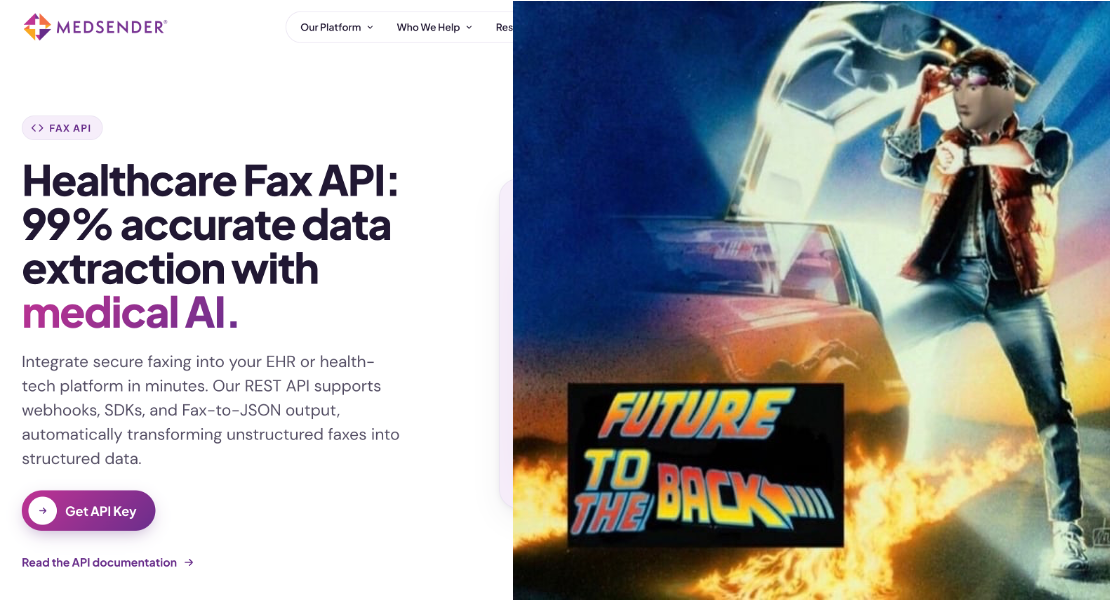
Medsender uses AI to extract info from the faxed referrals, prioritize them, and then uses agents to reach out to the patients and set up appointments. They also sell the fax + document AI as a plain API to health-tech companies.
We’ll talk a bit about the process of a referral today, where the pain points are, and how Medsender fits into that. We’ll also talk about some of the pros and cons of using fax lines as a go-to-market strategy.
I managed to convince them to give you first month free for Out-Of-Pocket readers. That’s called nEGoTiAtiNg, no need to thank me.
This is a sponsored post - you can read more about my rules/thoughts on sponsored posts here. If you’re interested in having a sponsored post done, let us know here.
Company name - Medsender
Medsender has an excellent name for the following:
- A mail order pharmacy (med sender)
- A clinic that helps with deprescribing (meds ender)
- An outsourced pharma sales rep company (med sender)
- A travel agency dedicated to cruises in the Mediterranean (Med sender)
- Hospice (Meds end...er). Yikes.
Instead Medsender...reads faxes and builds workflows on top of that. Okay.
Anatomy of a referral
Before we get into the company, it’s worth understanding how a referral happens. You go to the doctor, doctor says “yeah I’m good actually”, and refers you to a specialist. Now what?
A few things have to happen.
- The doctor picks a specialist for you to see. The doc might know which doctor they want to refer you to based on who was best at remembering extra long mnemonics in med school. Or they have a medical assistant or referral coordinator that uses different back-office interfaces to find someone that’s in-network.
- They send your details, why they’re referring, what they’ve done/measured, etc. A majority of the time this is done via fax since it’s the one ubiquitous standard across all doctors’ offices. I have written about this with tears in my eyes in the past. Faxing is typically done through e-fax - which uses the telephone rails to send the info but lives in a digital inbox.
- The fax is sent to the doctor’s office, where it sits in the queue along with all the other faxes that they get. Requests for medical records, lab results that come in, love letters from the war, etc. Someone goes through the faxes and prioritizes which ones are important.
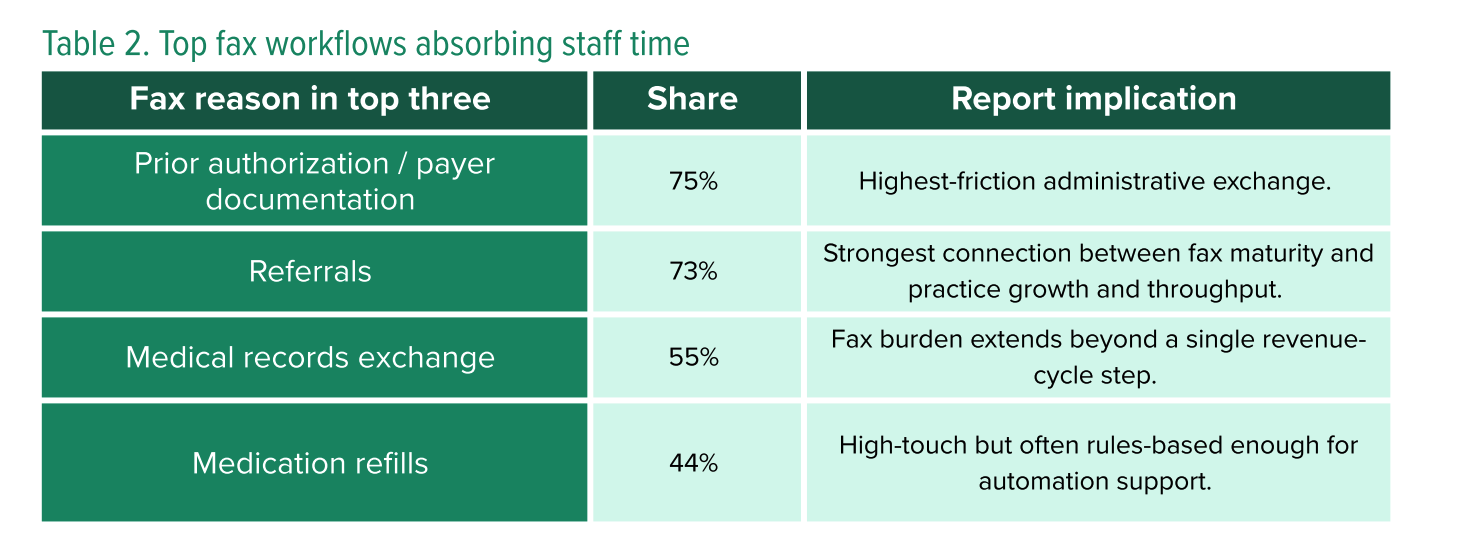
- The receiving practice now needs to check all the insurance details. Is the patient’s insurance valid? Are they in-network? Do they need a prior auth to have this visit/procedure? This needs to be sorted before the patient is accepted.
- If they are accepted, data from the faxed referrals now needs to be input into the electronic health record. As you can imagine, it is typically done manually. Painfully, clicking through menus as the carpal tunnel slowly builds.
- Now the practice has to actually get the patient to come. Practices will reach out to patients, call them, beep them, if they want to reach them. If they get a hold of them, they schedule the patient and start the process of getting all their records, bringing them into the office, etc.
- The receiving practice is supposed to also send back the details of what happened to the original practice that referred them as well. Which as you can guess, also happens through fax.
What does the company do and what pain point does this solve?
It’s worth thinking about all of the issues that can arise from the process I just described.
- Referred patients can sit in the fax queue for long periods of time or get missed completely. Some referrals might be more urgent than others, but they all just look like faxes.
- From the practice side, they want to be able to triage patients based on insurance and types of cases the patients are coming in for.
- The practice info about whether they’re in-network might be out of date + the practice taking in the new patient might need to get started on insurance verification or prior auth steps in advance of the patient coming in
- Data needs to be manually input from the fax pile to the EHR which takes time + is error prone + is a waste of human potential.
- Patients need to be reached out to and scheduled. The further away from the time of referral, the less likely they are to go there. Plus it requires front office time to schedule and coordinate.
- It takes time to update the original referring practice about what happened to the patient, which is why it rarely happens.
- There are some referral pathways that have a lot of pre-visit complexity (e.g. an orthopedic surgeon receiving a referral may need imaging before deciding to take the case).
- Uh, it requires someone to know how to f***ing fax.
Because of this, many practices will employ people whose entire job is managing all the incoming referrals and related tasks. But they’re still constrained by the hours of the day, and frankly more time should be spent on the patient parts of this vs. reading a bunch of faxes.
Medsender has created an end-to-end workflow for managing referrals. It includes:
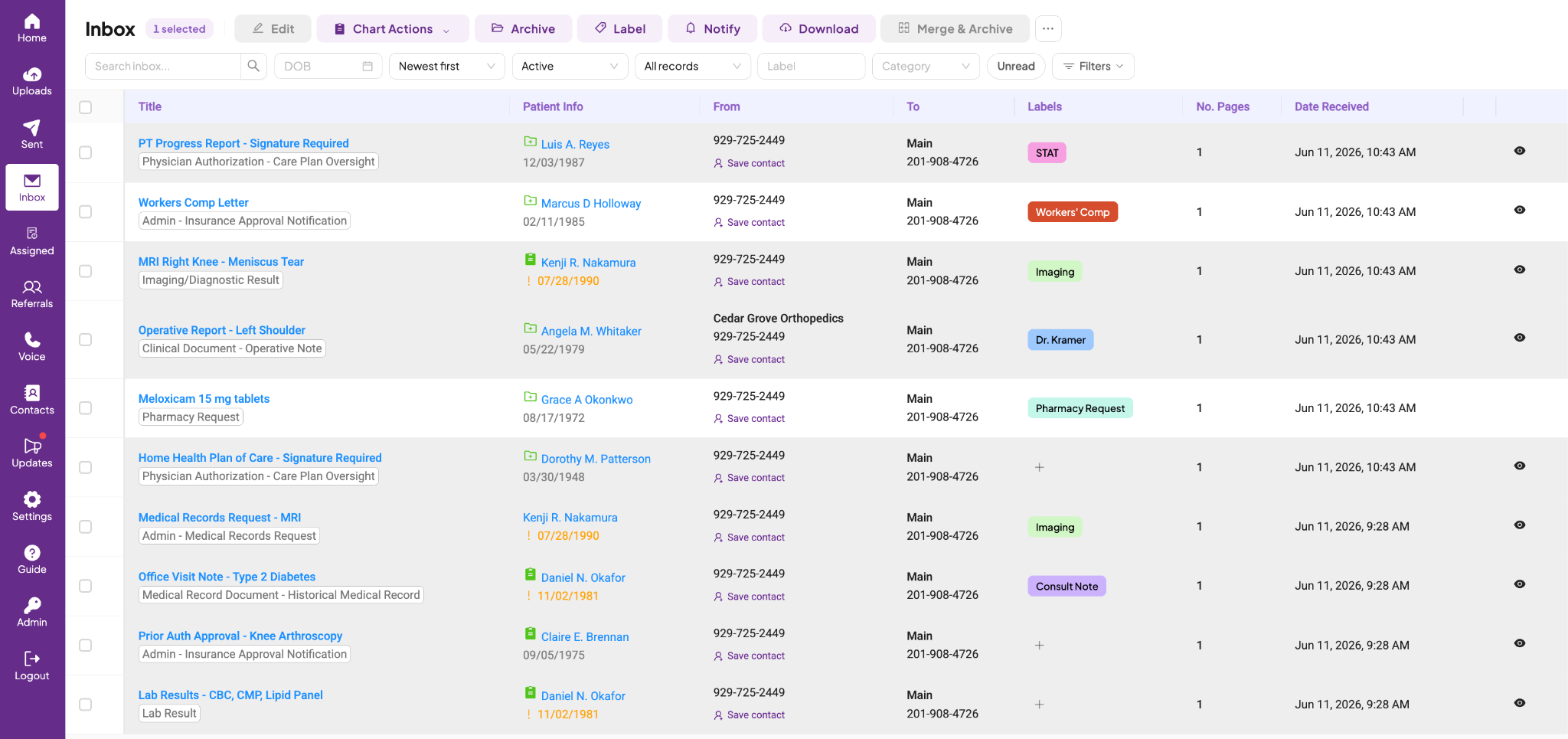
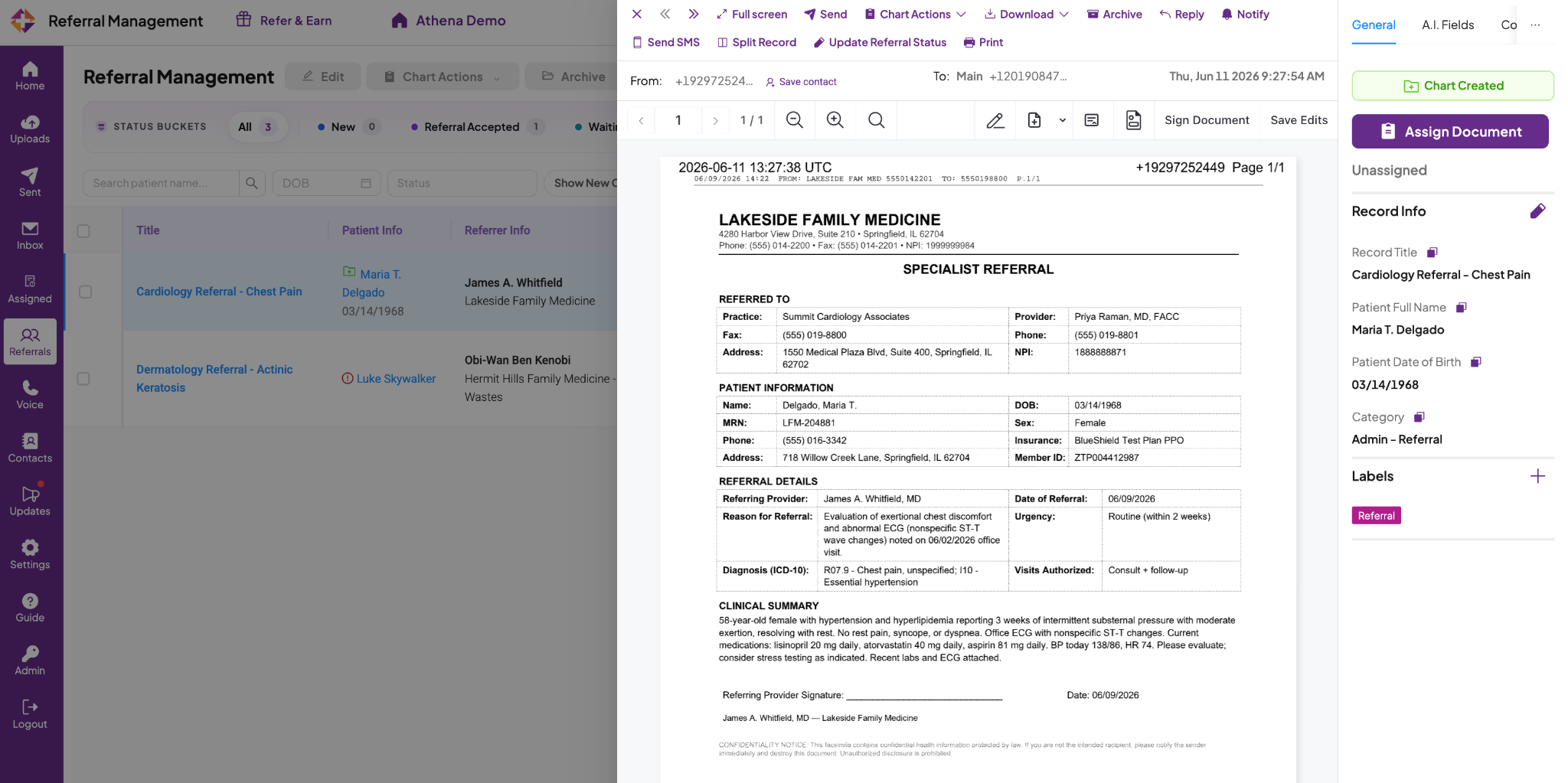
- An AI that reads incoming faxes, an unholy sentence you could only say in healthcare. It parses the different parts of the document that are relevant and extracts info from it.
- It builds out a queue based on those incoming referrals and shows what payer they have, the urgency, what they’re coming in for, etc.
- The voice and text agents reach out to patients to get them scheduled, take down their information, and start the intake process. Those agents can also reach out to the practice’s own patients that haven’t come back in a while
- They work across electronic health records and input the data into them.
Business model and end user
Medsender is a SaaS company, with customers generally falling into two buckets: medical practices and health-tech companies.
Pricing is structured based on transaction volume in the case of fax and call automation. Or it’s priced for outcomes where practices only pay for success in terms of new appointments (e.g. referral processing, patient recapture). So SaaS is value-based, but the practice...nvm.
End users at a practice include referral coordinators, schedulers and front desk staff, practice and office managers, or other clinical staff that’s hanging out by the fax machine. They work across specialties, a few case studies from them:
- Anne Arundel Dermatology - Referral conversion went from 20% to 62% in specific regions. The agent fully processes a referral in ~30 seconds.
- Specialty Orthopedic Group - Referral follow-up moved from a full day or more down to same-day, and fax management time was cut in half without adding staff.
- BrightView Health - They have more than 70 locations across five states. Daily fax processing time cut in half, and 100 landlines eliminated.
They also have health tech companies that just use their document AI via API without any of the practice facing stuff (which works on all documents, beyond just faxing). Some examples of customers include benefits verification and prior authorization vendors, specialty pharmacy and hub services, RCM platforms, labs, and specialty EHR vendors.
If you’re a developer you can try it out and see the docs here. They told me they saved some companies 6 figures annually vs. legacy API fax providers but your mileage may vary. If I spent six figures on fax I would consider seppuku.
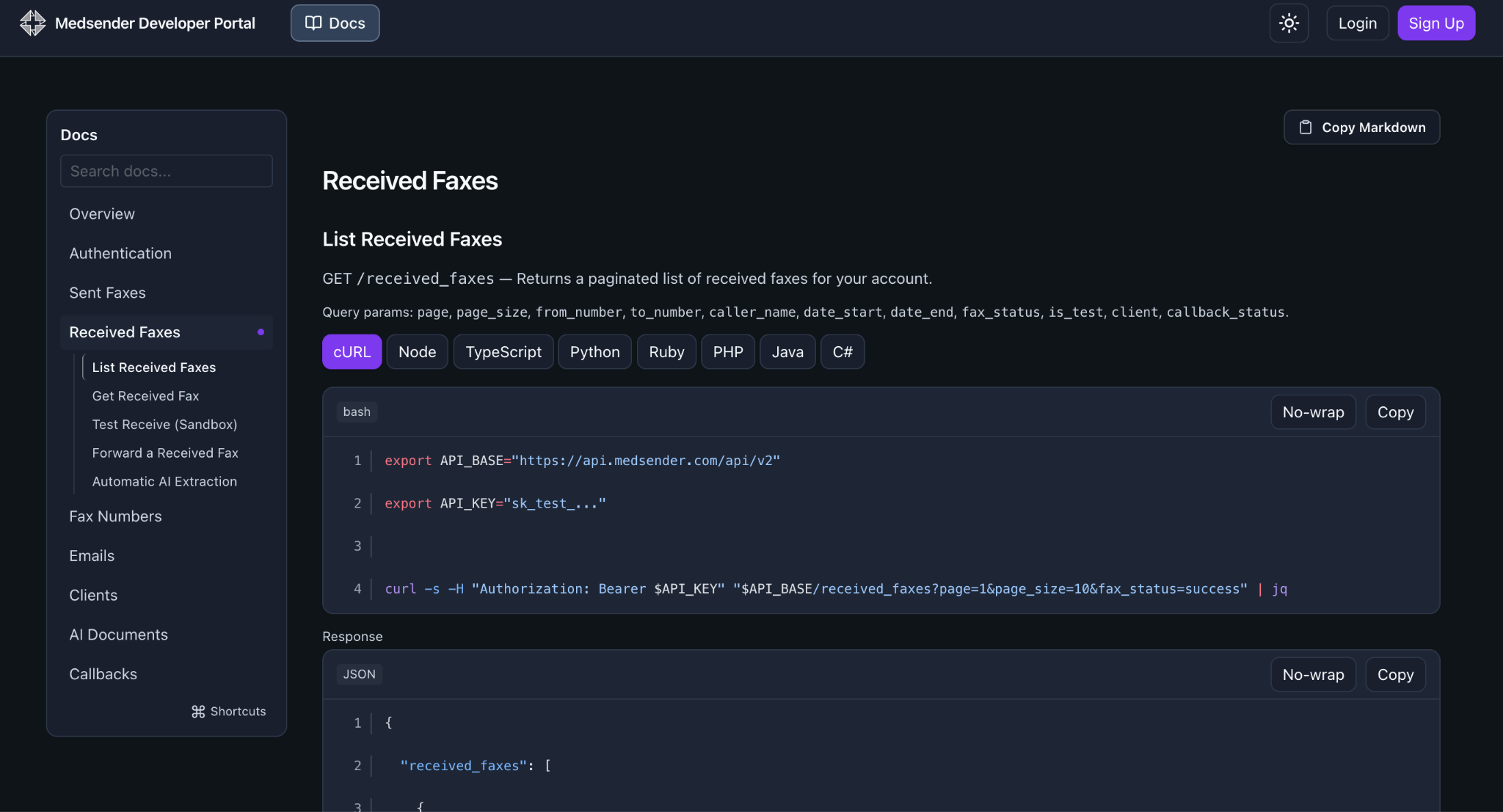
And finally, they’re announcing a new gateway product. Basically if you want to use any of the foundation models they require a minimum amount of spend to get a HIPAA-compliant version. Medsender has created a product that lets you hit their singular endpoint and use any of the models under a BAA you co-sign with them. Don’t need to hit spend minimums or do the legal dance with each individual model.
I don’t even think this is related to their core product lol, but at OOP we love a good sidequest.
Jobs
Medsender is currently hiring for several roles:
- VP of Finance
- Head of Customer Success
- Director of Partnerships
- Customer Support Specialist
- Senior Product Manager
- Senior Software Engineer
- Staff Software Engineer
- Sales Development Representative
Out-Of-Pocket Take
A few things I like about what Medsender is doing:
Using existing rails - Healthcare has always struggled with transmitting info from point A to point B because no one can agree on anything. Fax works because anyone can get set up on the network and it can receive basically any format. The downside of that flexibility is that it requires a person to convert the unstructured data in it into a structured format.
But AI tools can help overcome that! Sure it’s non-trivial to understand what’s in a faxed document, the different sections, medical jargon, context, etc. But it’s a great place to introduce AI since fax already has massive and open distribution + practices already understand it.
The less nodes you need to re-invent, the better as a startup.
Can referral data become useful? Data about how referrals are made still feels like the most underutilized dataset in healthcare. Being able to understand the referral patterns from a certain doctor or to a certain doctor/hospital can help inform a lot about how the healthcare system gets used, understand why certain choices are made, and potentially intervene if the referral is a wrong fit.
But referral data is largely dark matter that exists in a liminal space between the two providers. It’s inferred from other datasets like claims or EHR notes, but it misses a lot of the nuance that’s actually sent in the referral transmission. But if this data can be captured and structured easily now, I think it can be a really valuable dataset.
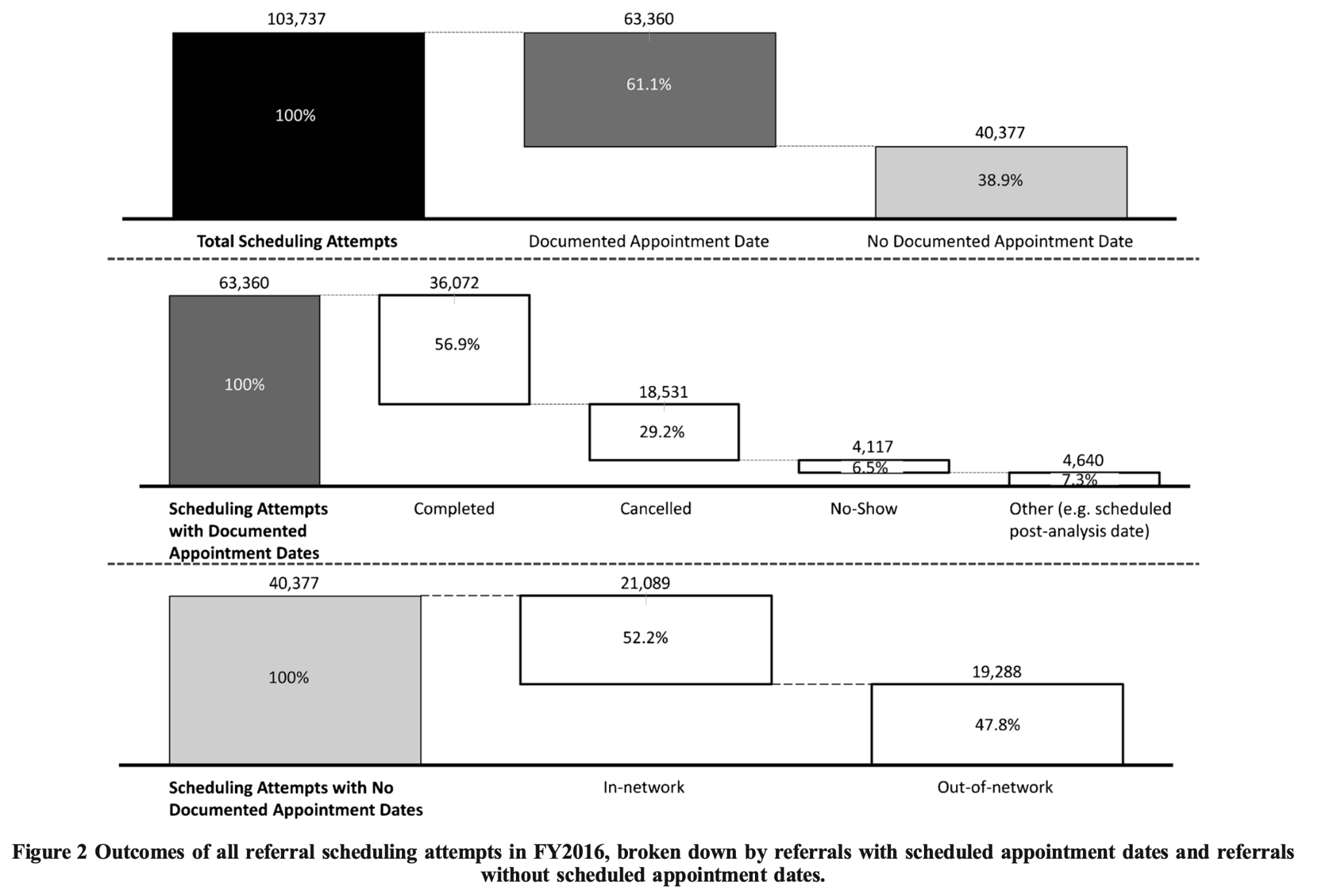
Here is an interesting study. Within a health system, when primary care makes a referral to a specialist only 35% had a documented completed appointment. But looking at the methods, every out-of-network referral automatically shows as "no status" (~10% of referrals) because Duke’s Epic can’t see what happens at a non-Duke specialist. Another massive chunk (~20%) of tickets had no date because schedulers booked appointments without linking them back to the original order.
Just goes to show how hard it is to do analyses with our current available data, especially across providers.
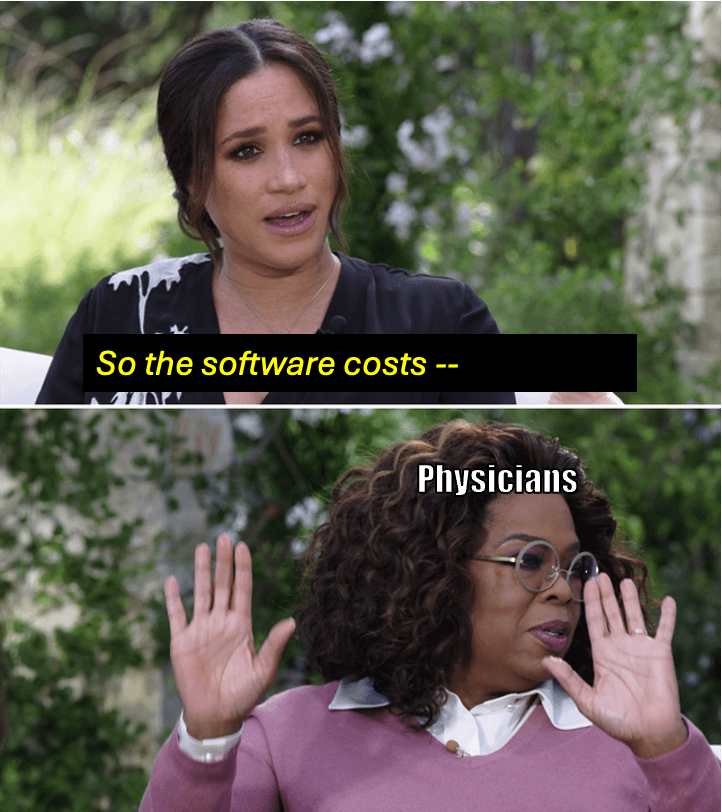
Customer-to-customer transmission - Telecom carriers charge per minute/page to transmit data via fax. This can end up being a lot of money - apparently some outpatient clinics were spending $30K/month on this and large hospitals can spend nearly 7 figures.
A potential opportunity is to reduce costs for any Medsender to Medsender customer if they can hit critical mass and create a network effect. Use fax if the receiver doesn’t have Medsender, or charge virtually nothing if it’s between two Medsender customers. It’s like how Stripe started by using existing credit card networks, and now makes it cheaper to send money between Stripe customers.
—
And as always, a few challenges I think they’ll face as a company.
Do practices care enough to pay for something like this? If a practice already has a super full patient panel, how much are they willing to pay or adopt something like this? Higher throughput of the queue doesn’t really help if there’s no more space. The sell would have to be around being able to prioritize patients more efficiently to get high dollar cases through the door, or that you can reallocate your front office employee time to something more useful.
The war in the front office - We used to fight real wars, now the frontline is which SaaS the office staff will use. There are lots of companies attacking this problem from different wedges and trying to expand (e.g. appointment scheduling, intake forms, just...being the EMR itself and adding features).
It’s not clear who the winner is going to be and there’s a lot of money going into the space. Medsender is making the bet that referral prioritization is a low-lift integration and high ROI for the practice.
How long will fax reading be an edge? The pro of using the existing fax rails is that they exist everywhere. The con is that everyone else can also use it. As the models get better, it’s possible off-the-shelf models can just make sense of all the faxes without much fine-tuning. This will make it easier for other companies to tack on the Fax API as a product.
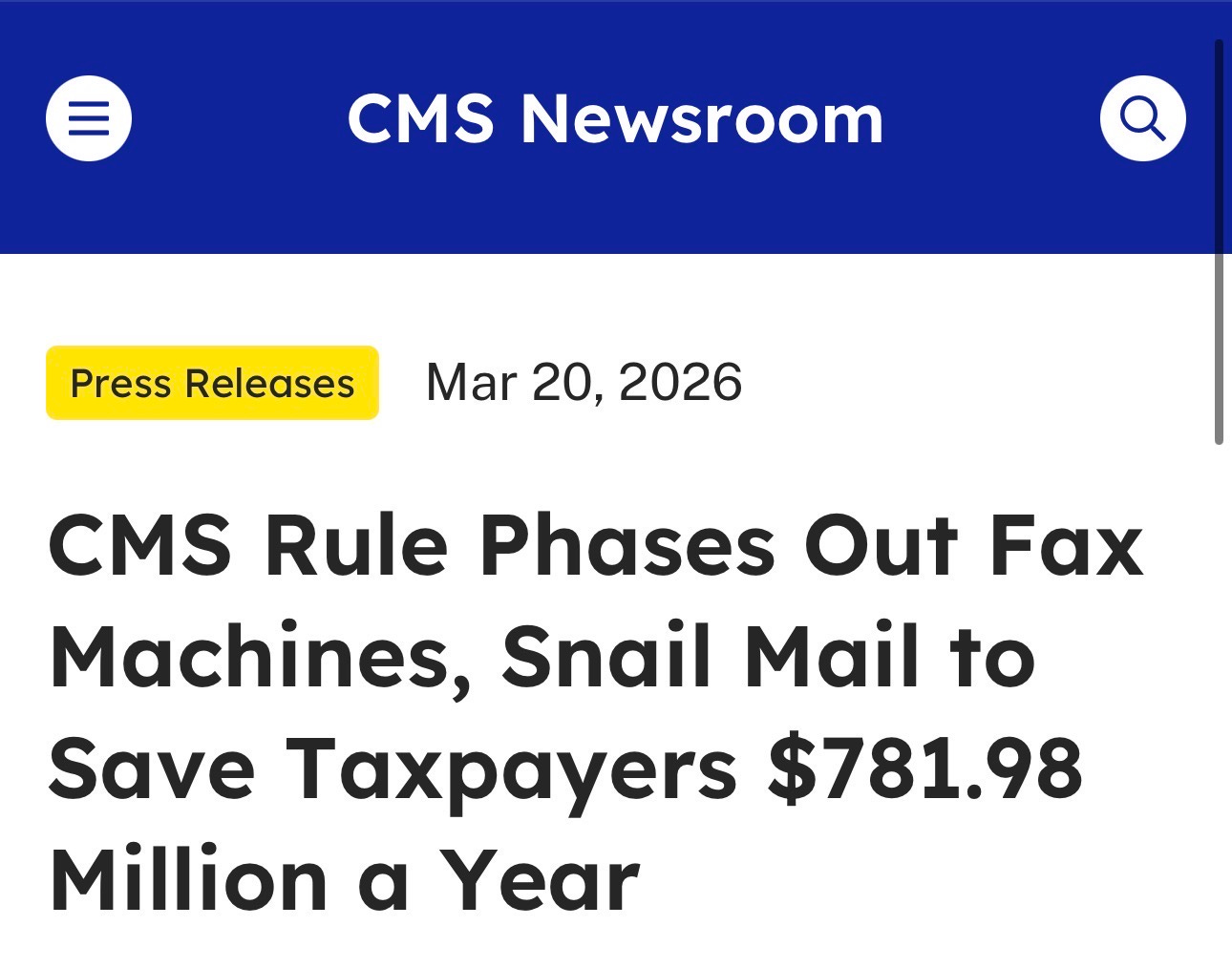
Or...incredibly we might for real deprecate the fax machine. CMS-0053-F mandates electronic claims attachments with a 2028 compliance deadline (shoulda called it “Kill it with FHIR!!”).
Medsender is betting that while the formats might change, the issue with referrals won’t and the queue will just start piling up somewhere else.
Conclusion and parting thoughts
It’s interesting to think about fax as a piece of technology. Fax operates through the telco carriers by converting a picture into black-and-white bits and sending that info as audio tones that represent black black white black white, etc. A lot of those sounds are the dreaded fax machine screech you used to hear as a kid.
Fax used an information channel normally meant for human-to-human communication and retrofitted a method for machines to send information to each other through it. It’s not the most efficient way to do it, but it works because everyone can participate.
Similarly, AI tools are using normally human-to-human processes and retrofitting on top of them. Medsender is betting that AI tools will allow them to make all of the human-to-human processes more efficient, starting with referrals.
But you can imagine that a lot of the back-office ops of a practice are going to look very different in a few years. Hopefully with no faxes at all.
Thinkboi out,
Nikhil Krishnan aka “In this world nothing can be said to be certain, except death and faxes”
Twitter: @nikillinit
Other posts: outofpocket.health/posts
Quick Interlude - “Am I a fit for Knowledgefest?”
See All Courses →Based on the questions I’m getting about Knowledgefest, I’m doing a really bad job explaining who should come.
The conference is for anyone building in healthcare.
- It is not specific to companies delivering patient care - Lots of people at software only, insurance, etc are coming.
- Any size of company can come - We have two person just out of YC companies, people that run ops at clinics, to F500 companies.
- You can be any role - Almost every role touches ops in some way. Product, founders, clinical, etc. should definitely come.
You should apply if you’re not sure, and we’ll let you know :)
Get Out-Of-Pocket in your email