Open Source in Healthcare Is An Opportunity
Get Out-Of-Pocket in your email
Looking to hire the best talent in healthcare? Check out the OOP Talent Collective - where vetted candidates are looking for their next gig. Learn more here or check it out yourself.
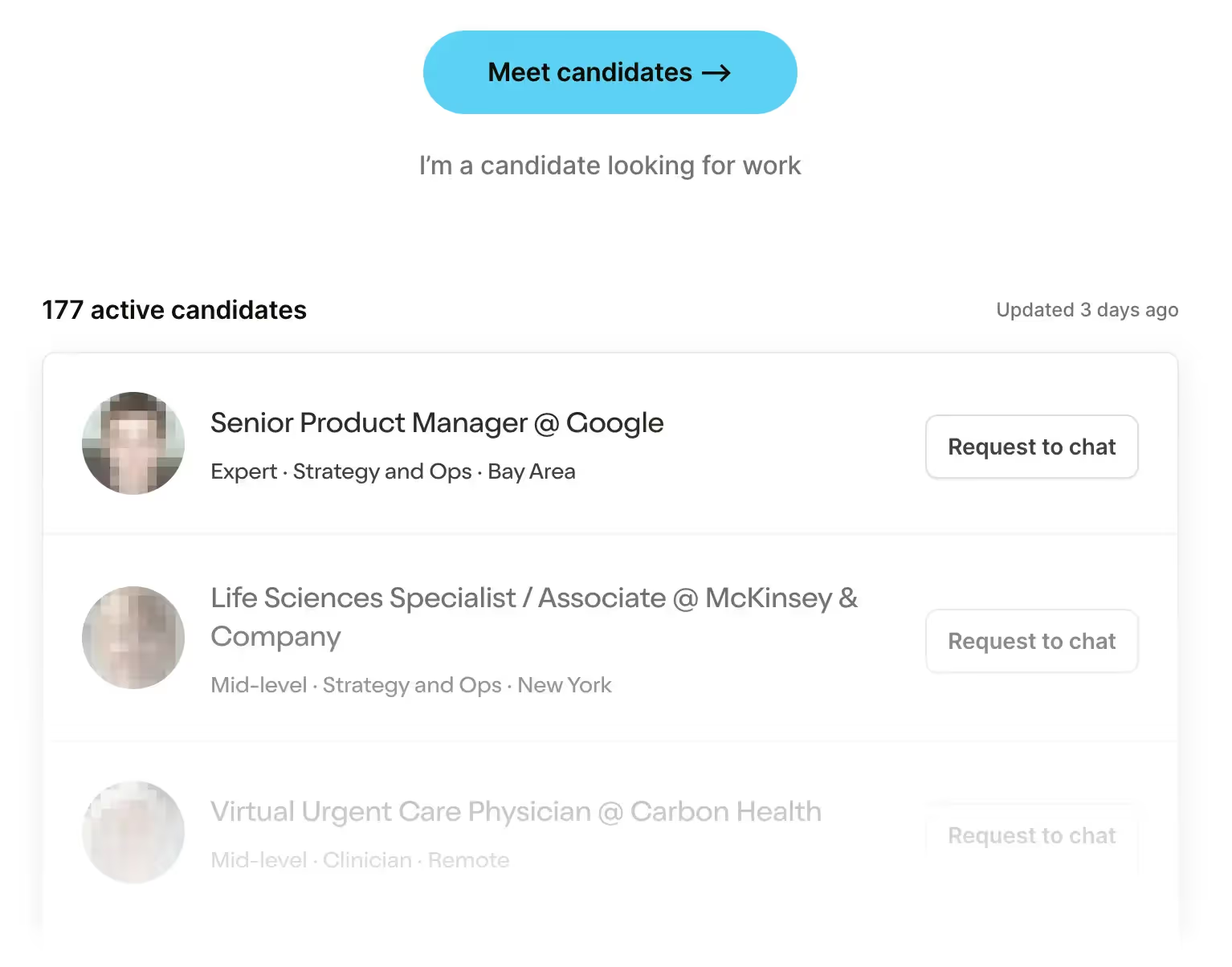 Hire from the Out-Of-Pocket talent collective
AI Agents in Healthcare Ops 101

Featured Jobs
Finance Associate - Spark Advisors
- Spark Advisors helps seniors enroll in Medicare and understand their benefits by monitoring coverage, figuring out the right benefits, and deal with insurance issues. They're hiring a finance associate.
- firsthand is building technology and services to dramatically change the lives of those with serious mental illness who have fallen through the gaps in the safety net. They are hiring a data engineer to build first of its kind infrastructure to empower their peer-led care team.
- J2 Health brings together best in class data and purpose built software to enable healthcare organizations to optimize provider network performance. They're hiring a data scientist.
Looking for a job in health tech? Check out the other awesome healthcare jobs on the job board + give your preferences to get alerted to new postings.
Open Source, a trilogy
I think open source software is one of the most amazing societal coordination mechanisms and is incredibly underrated. A massive chunk of the internet is built on code that’s publicly available for anyone to see, use, modify, and redistribute for free.
Healthcare is basically the polar opposite to this. Every single thing that has value is put behind a paywall, decided by a small group of people, and in many cases mandated to be used. And it has the added benefit of sucking ass as well.
I think that we are now in the moment for open source in healthcare, and I’m actively looking to invest in projects that are doing something in this space. Let me tell you a bit about why I think the moment is now.
This is a 3 part series. You should sign up for the newsletter to get all 3 as they come out.
Part 1 - What is open source and why is it the right time for it in healthcare
Part 2 - What open source categories, companies and projects are particularly interesting in healthcare
Part 3 - What are the main barriers and risks to open source that we need to consider
{{interlude 3}}
A basic primer on open source software
Most times you use software you are paying a license to use a product, the infrastructure it’s hosted on (e.g. the mysterious “cloud”) and the code that powers it. You don’t actually see the code under the hood, it’s considered proprietary.
Open source projects are the opposite. The code is publicly available for anyone to read, copy, modify, and redistribute. You can then use that code yourself, host it on your own computer or cloud instance, and modify it as needed. For example, Meta open sourced their Llama model that you can download yourself onto your computer and run! You could run it on your laptop to analyze the files and the data would never leave your computer. And you can adjust the code if you want.
There are different licenses for open source that determine what you can actually do with the code. Some licenses like MIT and Apache 2.0 let you basically do whatever you want, including building commercial products. Others like GPL say if you modify the code and distribute it, you have to open source your modifications too. Meta's Llama model is publicly available and you can download and modify it, but it has usage restrictions for companies above a certain size.
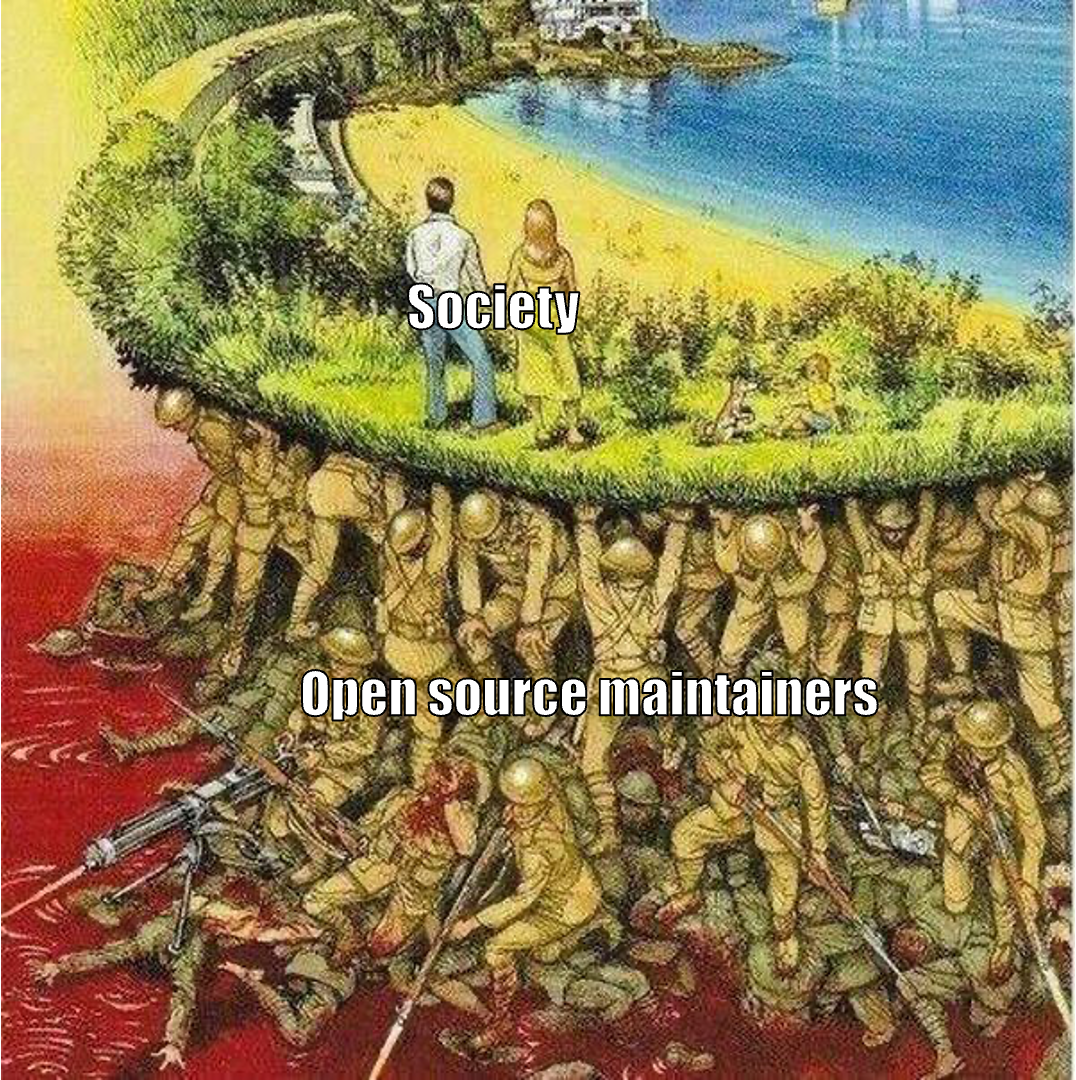
IMO the most interesting part to me is the community around open source. Random people will contribute back to the open source software to improve it. If you find bugs or want to make improvements to open source software so that everyone benefits, you can contribute to it. Or you can be a parasite that benefits from the hard work of others.
As a result, there’s an entire ecosystem and hierarchy around these projects to determine who’s allowed to push code, who reviews the code before it gets added (e.g. maintainers) and more. You have to demonstrate you’re trustworthy enough and give your rationale for why you’re making changes.

Despite open source software being available for free, it does cost people time. So there have been a few different ways open source have been financially supported:
- The company develops something internally and open sources it because it’s good for the ecosystem and presumably helps with recruiting. Meta built React for their own needs and then open sourced it, and now it basically powers half the internet.
- Open source as standard-setting. Some organizations open source software to establish technical authority and set the de facto standard for how a problem should be solved. For example HL7 made FHIR an open standard with open source reference implementations, but you need to pay a membership fee to participate in the governance around how changes are made. You can also charge courses/certifications to be certified in the standard.
- Open source is a competitive weapon. Giving a tool out for free can undercut competitors and bring more people to your own ecosystem. Meta open sourced Llama because they figured the transparency of open source would attract people to build on Llama instead of Anthropic/OpenAI.
- Patronage - people and companies pay donations to open source. Blender has a page dedicated to its patrons with different tiers. I guess Nvidia is like the Medici family?
There’s a lot of messiness and nuance here I’m glossing over, but in general it’s been a pretty integral part of the software development ecosystem. I think it should come to healthcare now.
There’s been quite a few open source healthcare projects, I’m not going to pretend it’s totally new. But I think there are a few reasons why it’ll take off now (or I’m wrong, as per usual).
Open source companies have figured out a business model
In techland there’s been a question about whether open source can be a real standalone business. Which is hilarious since no one ever asked “how does 10 minute grocery delivery make money?” and yet…
A lot of companies figured out a standalone business model for open source. Companies like GitLab popularized the "open core" model. There is a core product that is free, but the enterprise version with advanced security and compliance tools costs money. Others like MongoDB offer managed hosting - the software is free, but running it in production is hard so you pay them to do it. Red Hat built a $34B basically as support and consulting for Linux.
Now that there are some well-trodden paths for open source generally, open source healthcare projects now have playbooks and success stories they can point to and replicate + get investors/customers comfortable with.

Software regulatory costs
If you’re a company that wants to bring software or devices to market with a specific clinical use, it’s likely you’ll fall into some regulatory requirement like requiring a trial or building evidence. The intention here is to assess the risk and make sure it’s worthwhile before putting it in front of patients. But that also increases the costs of bringing that thing to market, which is sometimes so high that a product never makes it to market at all.
Open source basically gives the tools to users to take on that risk themselves. There are definitely risks to this, but some people are willing to take the risk for the requisite upside it brings to their life or company.
Open source is the countermeasure to black box software in healthcare
Healthcare has enough black boxes that it could fill an NYtimes crossword. No wait, it has enough black boxes that it looks like the Epstein emails. Okay too far, reel it back.
In general though healthcare is filled with the following:
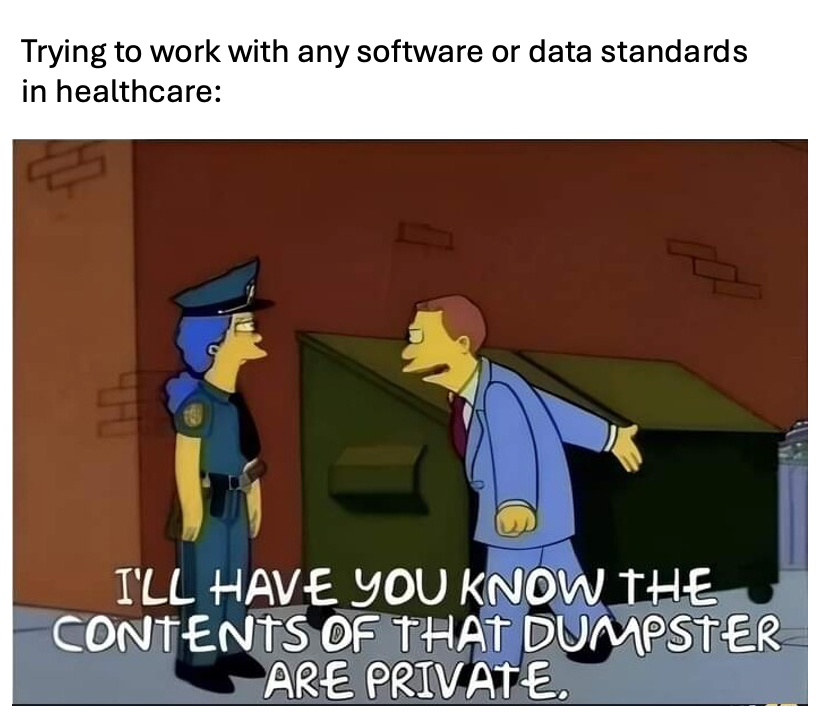
- Tons of standards that are determined by a small group of people (e.g. CPT codes)
- Data and standards frequently cost money to access, and are generally pretty inflexible (X12, DRG groupers, EHR data, etc.)
- Algorithms that are considered proprietary but also very tough to diagnose what’s wrong (InterQual, most clinical decision support tools, lots of new AI tools, etc).
Open source is the antithesis to this. Open models where you can tweak the weights yourself. The ability for way more people to contribute and add fixes to make them more flexible. Easier to deploy onsite yourself and include into your own tools.
Healthcare enterprises will want to create more bespoke workflows
Enterprises want software for their specific workflows. But if no one has the same exact issue, it’s not worth it for a vendor to create it. One big bottleneck has been internal engineering resources, but is it more possible to build that software yourself with AI now?
I don’t think healthcare companies will replace mission-critical software with home-grown tools. However, engineering productivity is increasing significantly with AI-assisted tools. This means you’ll eventually be able to use fewer internal engineering resources + open source software to spin up “good enough” internal tools for those workflows by stitching together open source software and customizing it.
You’re starting to see this happen at the edge. For example, Stanford built its own in-house chatEHR because point solutions were annoying to manage and they didn’t think Epic would build the workflows they needed in the timeline they wanted them.
“Stanford’s health system already runs about 1,500 IT systems and doesn’t need more to manage. ‘Every new application comes with its own integration challenges, identity and access management, bug fixes, updates. They all have their roadmap. And they all want us to co-innovate with them. It is utter madness,’ [Nigam Shah] said…” - STAT News
It’s an absolutely phenomenal era for people that like to say the phrase “build vs. buy”. You can build your own unique workflows that no one would build a full company around. It’s also a good hedge against enterprises worried about vendor lock-in.
The number of open source projects and contributors is going to explode
As engineers get way more productive with AI tools, it’s easier than ever to spin up side projects that would previously be very complex and take weeks to get up and running. The friction to start is way lower now, it’s easier than ever to create a side project→ realize it’s not a business that will get you out of your 9-5 → open source and stop maintaining it.
You’re going to see way more people build things in their spare time at work or in their personal lives and open source it. This is partially because it’s a great way to build clout/get eyeballs. But also people are doing it out of sheer disdain for existing vendors lol. In healthcare this is particularly true, because people's hatred for the middlemen is like 100 white hot suns and the products itself are not particularly hard to replicate.
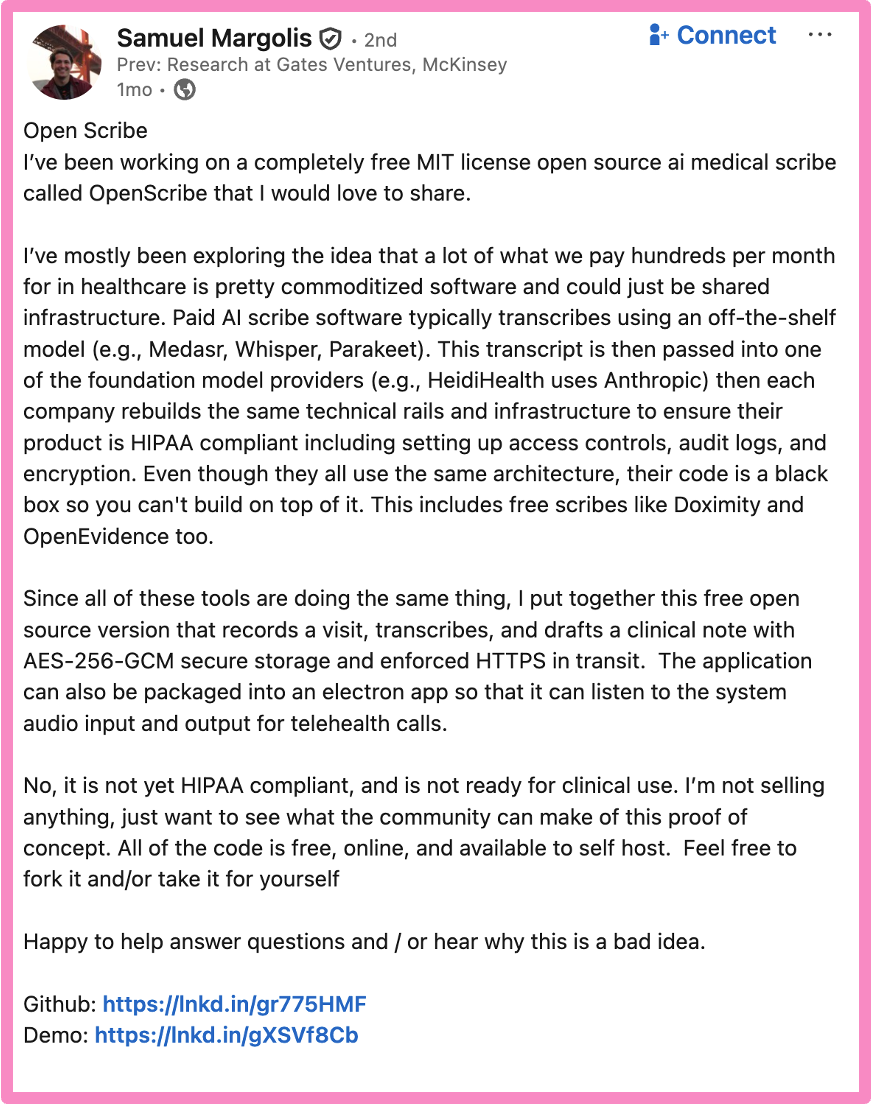
This also now extends to non-engineers as well. AI coding tools have made it dramatically easier for non-engineers to build functional software or curate data for open source datasets. Even me, your resident “guy that took a General Assembly bootcamp during his mid-career crisis”.
People with healthcare expertise but less technical knowledge are going to start to contribute to open source themselves. A healthcare analyst who couldn't contribute to an open source data model two years ago can now use AI assistance to use the code and also make edits if they see there’s an issue.
In general people want to contribute their data, expertise, etc. to help with healthcare but have lost trust in the intermediaries that normally do this and hate the middlemen that charge a tax. Open source now provides a way for them to contribute their skills for the greater good and get some social currency in the process.
Open source can become a form of proof of work for non-technical people
One of the only ways to know if someone is good at their job is working with them.
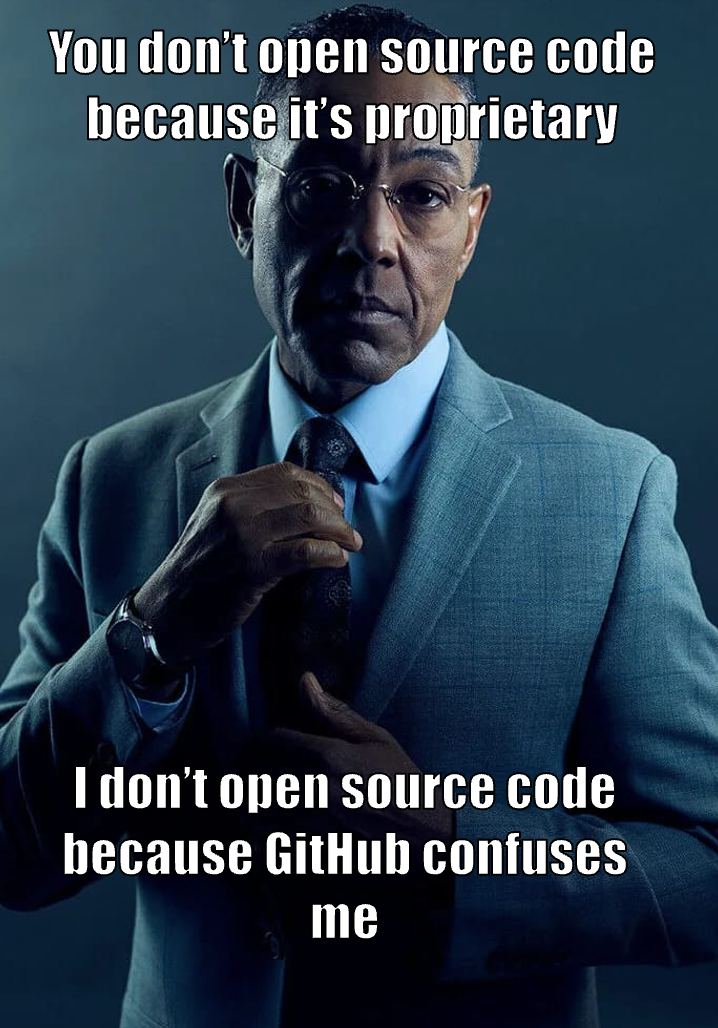
Open source contributions have been one way that people can see how engineers work. When you contribute to an open source project, your code gets reviewed by other developers. It either gets accepted as useful or it doesn't, the community acts as both a filtering and ad-hoc mentoring system.
Now that more non-technical people can contribute to open source, I think this provides a new means of actually gauging expertise and working alongside other people out of a work context. This becomes a new tool you can use to show jobs you know your stuff + build organic networks from other contributors.
Open source as the new social network?
I’m a big believer that the best way to make friends is to work on things with people. This is one of the big reasons we do things like hackathons, workshop based conferences, etc. Also because I need to put food on the table.
As the quality of social networks degrade, people are looking for new homes to find their people. While I don’t think it will be for everyone, I do think the community aspects that are wrapped around open source projects provide a way to find friends by working on something with them over long periods of time. You already have similar interests, there’s a natural topic to talk about (the project), and a place to talk about it.
This has been especially true in healthcare. The typical online places that people would gather and have nuanced discussions (twitter, reddit, etc) have become entirely algorithmic and particularly unfriendly to discussions about healthcare. Just try mentioning Tylenol and you’ll get called slurs so creative you’ll be more impressed than offended.
Maybe open source community members are more interesting people to discuss things with. I’ll become friends with open source contributors before my neighbors realistically.
–
Parting thoughts (part 1)
It’s really amazing how much open source has propelled the software ecosystem forward. It created natural collaboration between people who didn’t know each other. It’s infrastructure that made it easier for people to just get started. It creates a floor of competition for other paid software in that category.
I’m hoping healthcare is now going to see the same productivity benefits by adopting this mindset. There are definitely issues with open source and everything above (governance, bad contributions, corporate freeloaders). We’ll talk all dat in part 3. But I think the upsides can be enormous if we do it right.
In part 2 - I’ll talk about a bunch of open source projects and areas that I think are particularly interesting. Sign up to get it.
Thinkboi out,
Nikhil aka. “copin’ source” aka. “what claude code does to an mf”
Thanks to Colin Durant, Uzair Khan, and Juhan Sonin for reading drafts of this
Twitter: @nikillinit
IG: @outofpockethealth
Other posts: outofpocket.health/posts
If you’re enjoying the newsletter, do me a solid and shoot this over to a friend or healthcare slack channel and tell them to sign up. The line between unemployment and founder of a startup is traction and whether your parents believe you have a job.
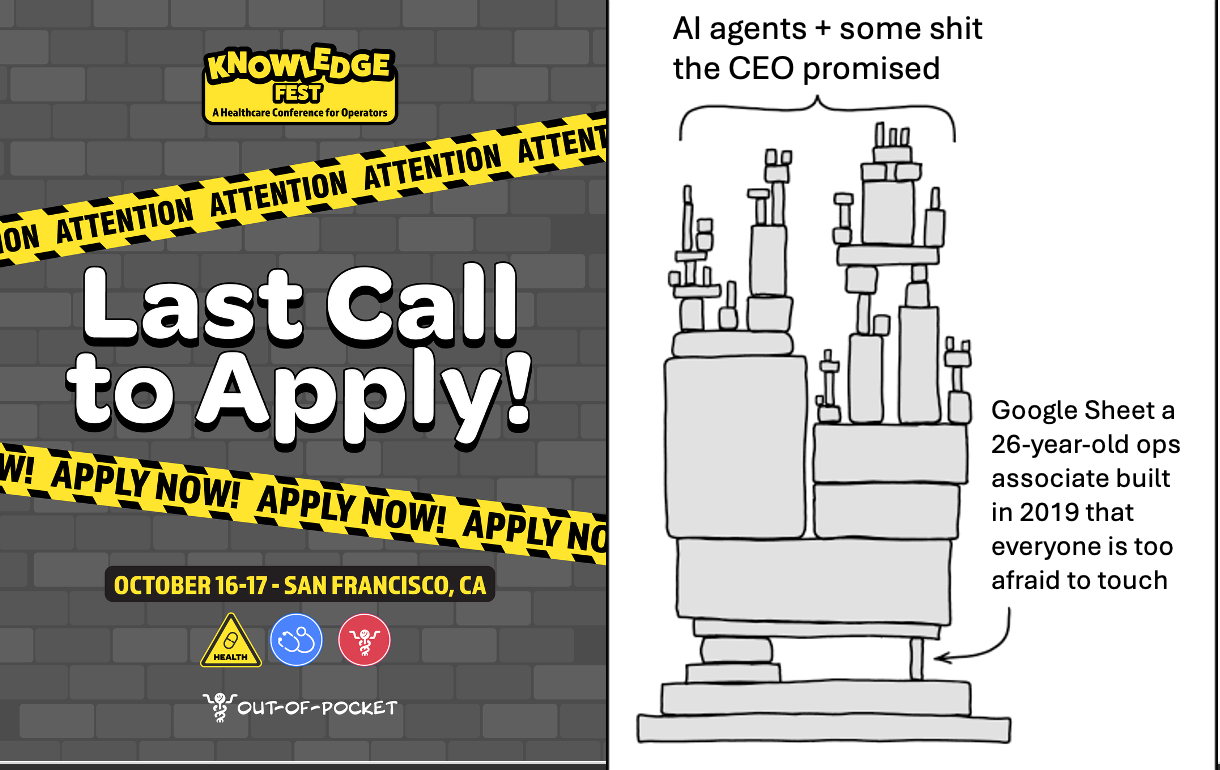
Quick Interlude - “Am I a fit for Knowledgefest?”
See All Courses →Based on the questions I’m getting about Knowledgefest, I’m doing a really bad job explaining who should come.
The conference is for anyone building in healthcare.
- It is not specific to companies delivering patient care - Lots of people at software only, insurance, etc are coming.
- Any size of company can come - We have two person just out of YC companies, people that run ops at clinics, to F500 companies.
- You can be any role - Almost every role touches ops in some way. Product, founders, clinical, etc. should definitely come.
You should apply if you’re not sure, and we’ll let you know :)
Get Out-Of-Pocket in your email