Another set of healthcare business ideas
Get Out-Of-Pocket in your email
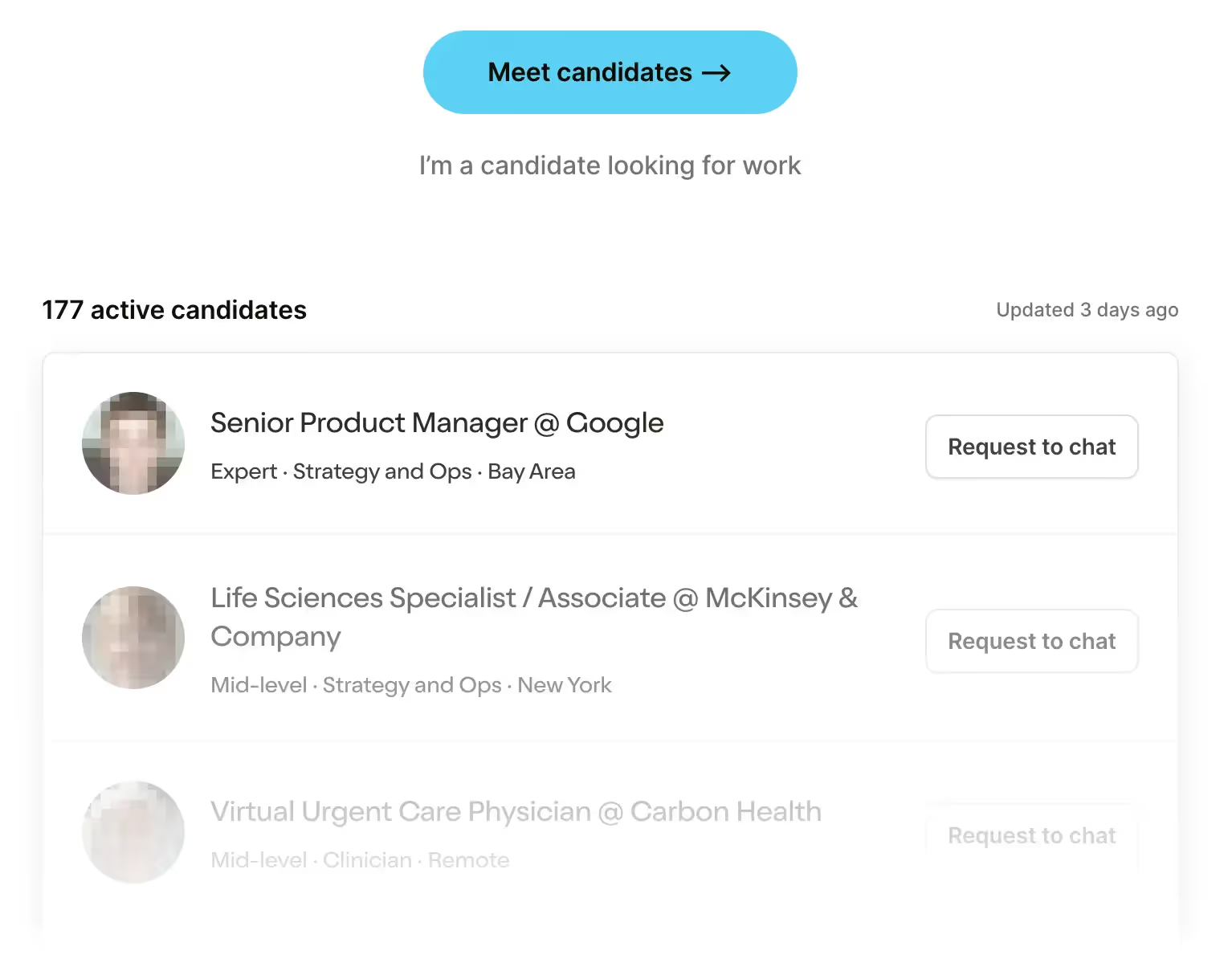
Looking to hire the best talent in healthcare? Check out the OOP Talent Collective - where vetted candidates are looking for their next gig. Learn more here or check it out yourself.
 Hire from the Out-Of-Pocket talent collective
AI Agents in Healthcare Ops 101

Featured Jobs
Finance Associate - Spark Advisors
- Spark Advisors helps seniors enroll in Medicare and understand their benefits by monitoring coverage, figuring out the right benefits, and deal with insurance issues. They're hiring a finance associate.
- firsthand is building technology and services to dramatically change the lives of those with serious mental illness who have fallen through the gaps in the safety net. They are hiring a data engineer to build first of its kind infrastructure to empower their peer-led care team.
- J2 Health brings together best in class data and purpose built software to enable healthcare organizations to optimize provider network performance. They're hiring a data scientist.
Looking for a job in health tech? Check out the other awesome healthcare jobs on the job board + give your preferences to get alerted to new postings.
This episode of Out-Of-Pocket is brought to you by...
Champ AI automates what APIs can’t reach. They identify, build, and run multimodal workflows end-to-end — it's a single platform that reliably works across browsers, portals, unstructured documents, and phone calls, covering everything an operations team touches in a given day.
Their custom approach helps organizations close the “last mile” gaps that often block AI adoption. Learn more about how healthcare companies like Pair Team and Float Health use Champ AI to automate operations.
—
Our media kit for next year is officially done, let’s chat if you’re thinking about 2027 marketing
Just an ideas guy here, you go build it
Last time I wrote out a few healthcare ideas that I thought someone should build. Today I have a few more for you + my favorites that people sent in.
There are some very creative ones in here.
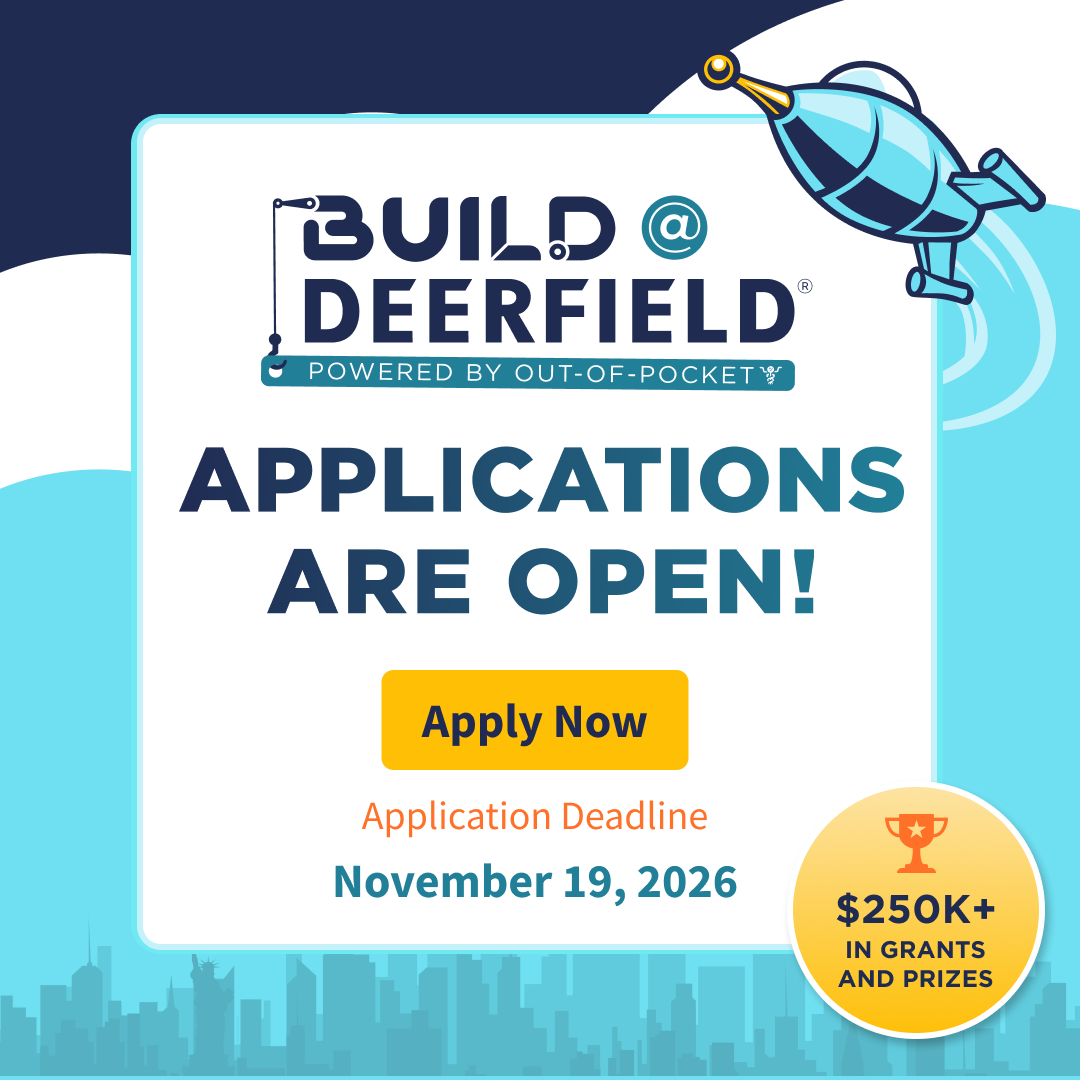
As a reminder, if you have a company idea you think should exist you should apply to our hackathon with Deerfield Management by 11/19. We’re giving non-dilutive grants and $ prizes for people to start healthcare companies!!
Bounties / pledges for healthcare analyses
There are so many times where I will read a paper, think the findings are really interesting, and then find out that it was published in like 2004. I would love for someone to re-do that analysis, and know that I’m not the only one who thinks that.
What if you could...pledge money to authors or departments or whatever to redo that analysis. If a certain threshold is hit, then the author has the incentive to redo the study.
I do wonder if this would trip up some of the clauses around being able to access data for research use only (e.g. this becomes a commercial use). But I’m not a lawyer, I’m just the ideas guy.

Reverse auction for healthcare services
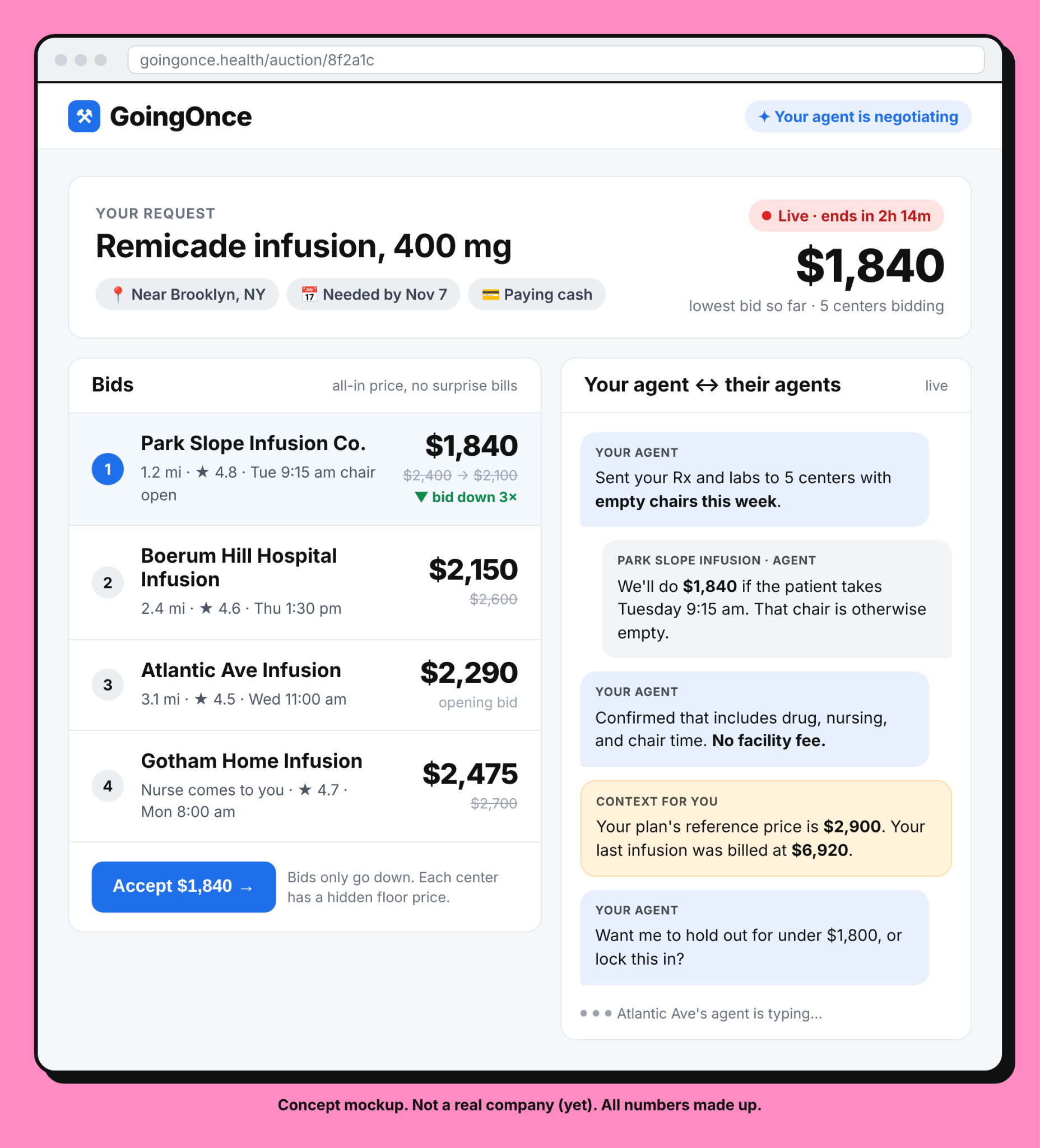
I think the concept of a reverse auction is interesting. Patient says “I want a drug infusion” and then a network of companies offering drug infusions basically bid for you to come there.
There have been companies that have tried this in the past (e.g. medibid), but it’s a very tough problem:
- You have to get customers to actually come to your site when they’re thinking about the transaction.
- There has to be enough available entities on the supply side (e.g. infusion centers with open slots)
- Both sides need a lot of context (what’re you coming in for? Can this facility do that? How do you think about quality?)
- This is not how payers do their contracting/set prices - so it’s mostly relegated to cash.
But I do think AI tools might make this more feasible today. They can gather the context, and two agents can do the bidding to figure out if it’s a good fit. They can also brute force a lot of the logistics part that made this complicated before (e.g. scheduling integration). And if people start actually using AI tools to figure out where to go for care, then you don’t need them to go to your interface.
Places can put their excess capacity on a marketplace and create a floor price that they would bid down to if a patient was looking for care. This would probably have to be for cash but would be interesting to see these new level-funded plans or reference-based pricing plans lean into something like this.
Reminder - OOP headhunting is live!
As a reminder, we work with a few companies to help them recruit people in the OOP universe. We have a self-selecting group of people that are curious, otherwise they wouldn’t read this 80-page long newsletter.
We just added a bunch of really awesome candidates looking for their next thing.
- Staff engineer with 10+ years of experience building software and leading engineering teams. Now focused on hands-on healthcare data infrastructure, including member and claims data. Open to engineering, data or technical co-founder roles.
- Growth marketer with 10+ years of experience building paid acquisition from scratch across healthcare and software. Looking for a Series B/C healthtech company selling to clinicians.
- Strategy and operations leader with experience in value-based care, consulting and venture building. Open to chief of staff, strategy, partnerships, operations or business co-founder roles.
We’ll be opening up the waitlist shortly to more companies, you can sign up for it here. And if you’re smart/read OOP regularly you should join as a candidate, in particular looking for engineers + AI native ops people + senior BD (health plans/hospitals).
Let patients shop for value-based care providers
Submitted by Anonymous
The idea: A portal to look up all the different entities that a patient is “attributed” to: what ACO or health plan you’re in, if you’re in a risk contract, if you’re enrolled in ACCESS, etc. The idea is that you put in your patient info and authorize it to reach out to PCPs, insurers and CMS on your behalf.
In theory it lets consumers partner on “value based” contracts, and ultimately it can be a vector for joint savings with the consumer directly, similar to how car insurance gives bonuses if you don’t speed.
As a patient, how do I proactively decide which provider I should see in primary care and non-hospital specialty settings? And how do I decide which orgs should be managing my health long term (insurer, ACO, PCP, health system or ACCESS org)? With info on which orgs are accountable for your health, plus info on the alternatives, you can “shop”.
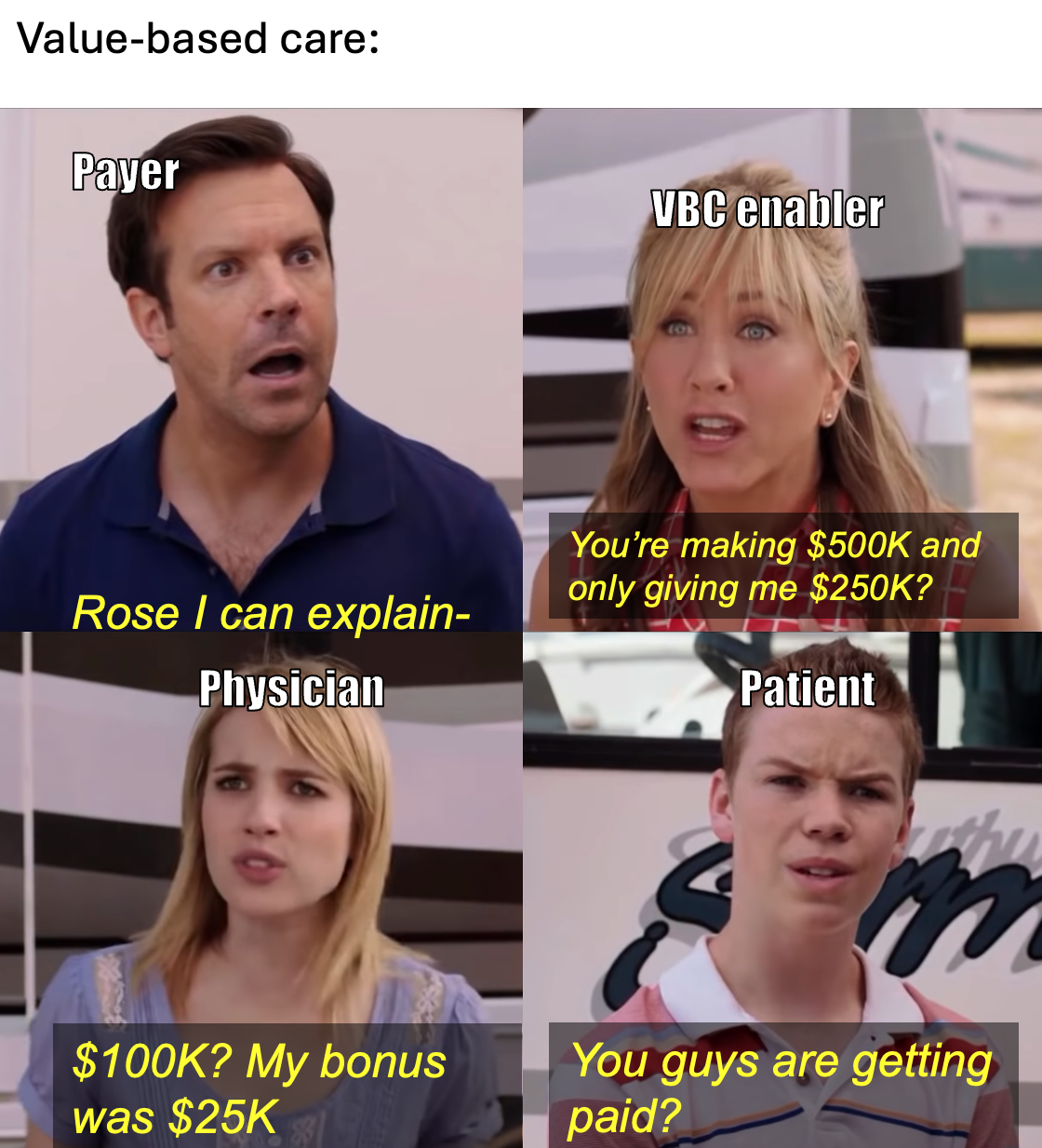
Value-based care is broadly the right idea, but outside of some quality metrics on health plans there are basically no tools for patients to measure any of it. US health consumers actually have some sophistication and can understand the idea of preventive and population health. The reality is that also many parts of the care you get are going to be influenced by the type of payment arrangement your doc is in.
It’s a great play for managed care orgs that believe they can reduce spend and improve outcomes, because it gives them a way to pass savings directly on to customers, a la the car insurance example. Part of the problem in healthcare is that it’s so difficult to understand which entity actually benefits from prevention, so this helps show the dollar flow and could incentivize patient behavior.
You can prob build it today
- One big point of friction is the willingness to sit on the phone with insurers and providers to get an answer. Solved by AI agents.
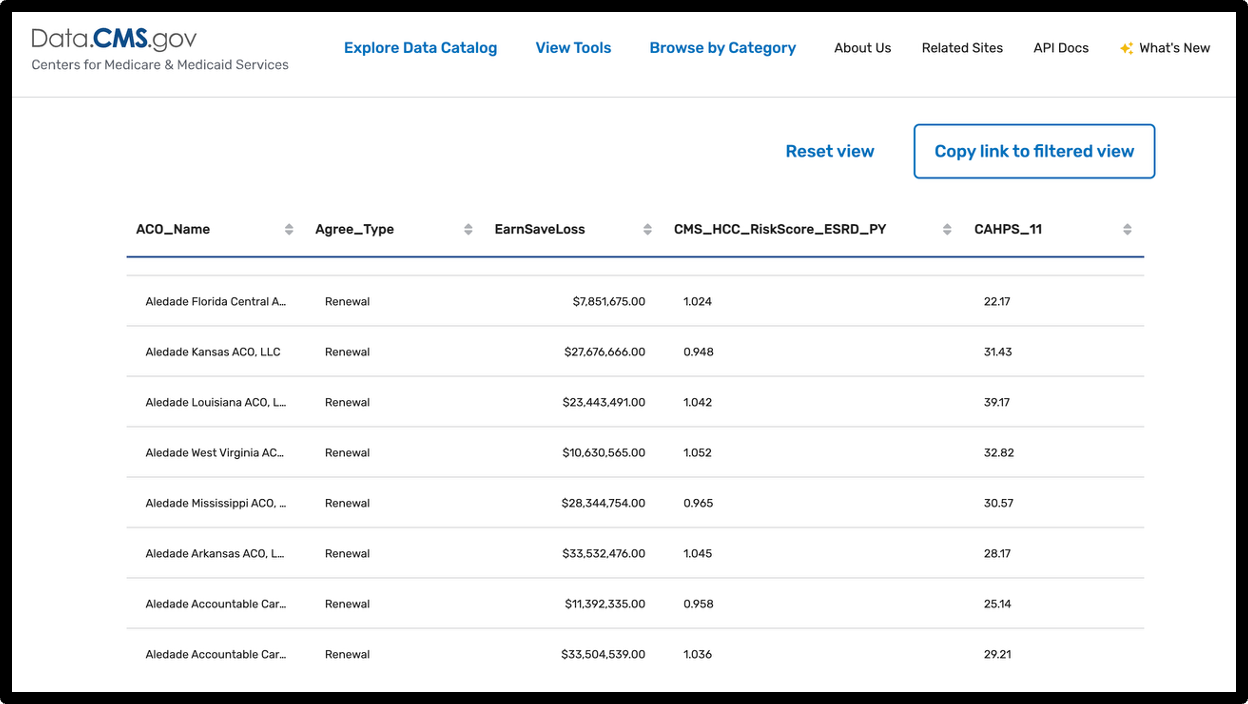
- Another is the willingness to wade through CMS and NCQA PDFs on ACO performance. Also solved with LLMs.
- No full solve for insurer-to-ACO contracts in the private market, but you can probably find some of this out for Medicare/Medicaid I think.
If you can actually get this working, there are a lot of ways to make money. The easiest is D2C advertising or consulting (oh look, your ACO or insurer sucks, good news, open enrollment is coming up and you can choose plan, ACO or provider X). More complex ones are around using data and patient behavior changes to share savings. HSAs sort of try to do this, but there are so few levers there.
Out-Of-Pocket is also supported by...
Museum of healthcare technology
The history of healthcare technology over the years is really interesting and kinda dark. Did you know people used to sell radium dissolved in water as a tonic? The founder paid doctors a kickback on every dose (one-sixth of the price). The FDA couldn’t even ban it at the time. It mostly died off after one guy took so much he had to be buried in a lead-lined coffin, which is part of why the FDA eventually got the power to ban stuff like this.
Museums dedicated to healthcare history could have tons of stories like this. The Mütter Museum is one example of this in Philly, and it’s pretty beloved based on the people I’ve asked about it. But I wish there were more - I was surprised that there wasn’t really one in New York.
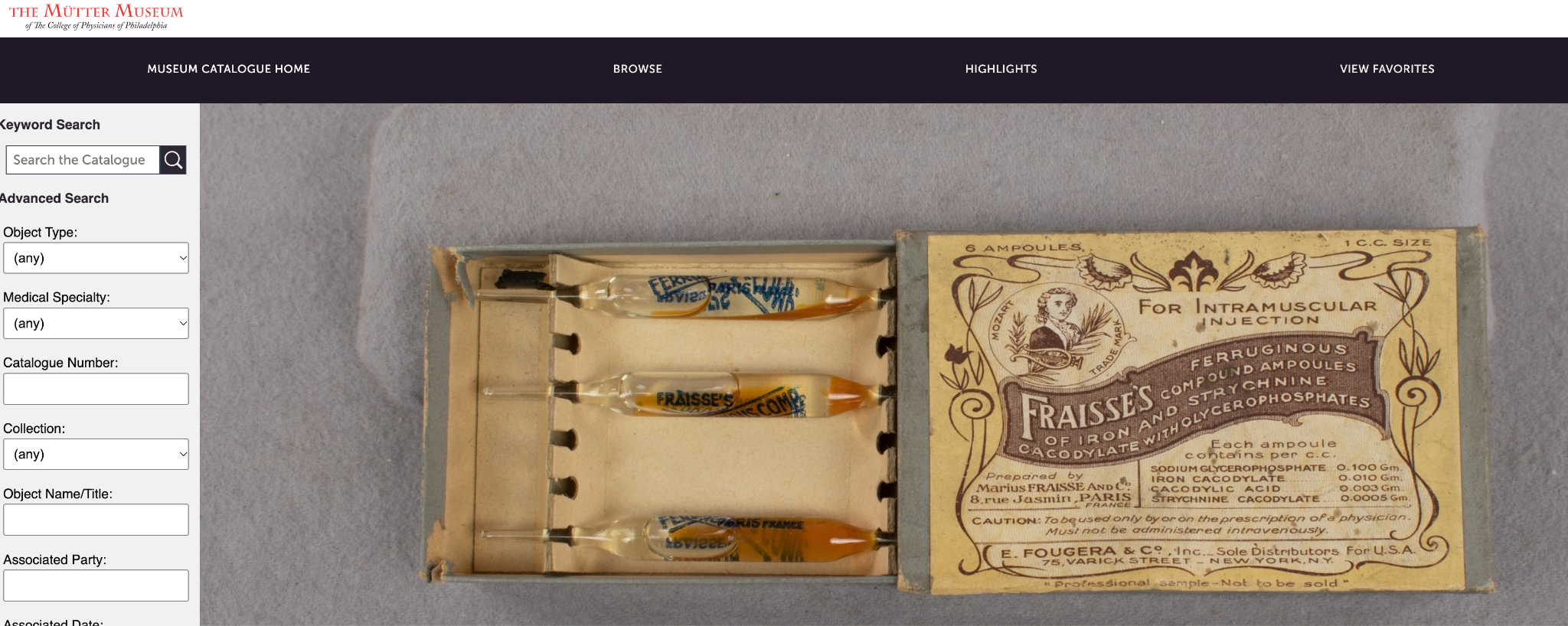
A museum could be a great way to get more kids especially interested in healthcare technologies and also give some appreciation for how far medical technology has actually come. And maybe it would give a sense of how bad things used to be so we don’t backslide on public health interventions like childhood vaccines. Explaining an Iron Lung would be like Scared Straight for some people.
AI models for neurodivergent people
-Submitted by Brody Clemmer
Problem
Frontier models are tuned for a general user. Personalization exists, but it mostly adjusts tone, not how the model paces, structures, and follows through. It also puts the setup burden on the user, which is the hard part for someone with ADHD. Prompting helps, but it's fragile and drifts... not to mention requires a level of knowledge still foreign to most users.
Thesis
The gap is the delivery of information from the models. If the way a model communicates can be shaped as its own layer on top of any frontier model (gpt-5.6-sol → gpt-5.6-sol-adhd), neurodivergent adults could use the same capabilities everyone else does, without having to prompt their way there, and learns from other interactions which improves the overall impact on all neurodivergent users.
What that layer might change at an MVP:
- ADHD: short bursts, proactive follow-ups, redirecting when a thread wanders, connecting ideas across the chat(s), and more steps rather than tasks (and interpreting the same interactions better at input).
- Autism: explicit language, predictable format, awareness of pacing and sensory load,
Gap
The tools and add-on space is crowded, but nobody is building at the model layer, or a model wraparound. Existing neurodivergent AI products are mostly built for kids in school, University research projects, or adjacent players like Slingshot (while they have most of the data) solve a different problem.
For
Adults with ADHD and/or mild autism who want to use AI but find default models draining or prohibitive to use.
Why I care
My wife has lived her entire life with ADHD, and watching her use LLMs has been eye-opening, mostly in terms of communication style. She gave up on Instinct, even though it could help manage our family, what we're having for dinner, and our complex schedules with kids. She routinely drops off ChatGPT and Claude too. They help with what she's asking... the responses are just so long and packed that she gets information paralysis and kind of checks out. Meanwhile, the same tools work great for me out of the box, so it seems to be less about what the model knows and more about how it talks to her (and probably a lot of people like her).

Parting thoughts + call for ideas
Random thoughts:
- It’s been interesting how many company ideas were sent in that were consumer oriented. Even as I think about new company ideas, a big part is around how I as a consumer can interact with the healthcare system in new ways. AI has materially shifted things to give agency to consumers.
- A lot of these ideas also make it clear how much data doesn’t exist that would be awesome to have, or how existing data can be organized and packaged in new ways. This is still underexplored.
- I don’t think all healthcare ideas need to be super serious. In fact maybe making healthcare fun and interesting is actually a big opportunity today (obviously we think so)
- I’ve never been more optimistic about the future of healthcare despite what the doomers say, and I think everyone should TRY starting a company at least once even if they fail.
And don’t forget to apply to our hackathon with Deerfield Management by 11/19. IT’S NON-DILUTIVE GRANTS!!! Who doesn’t want that!
Thinkboi out,
Nikhil aka. “Put it in reverse auction”
P.S. We’re doing a happy hour with Doximity and Whoop at HLTH, come through (especially if you’re a physician)
Twitter: @nikillinit
LinkedIn: Nikhil Krishnan
Quick Interlude - Announcing Build @ Deerfield, powered by Out-Of-Pocket
See All Courses →One of the goals of Out-Of-Pocket is to make it easier for people to start healthcare companies. For the last few months, we have been working behind the scenes to cook up something awesome for people who want to start something.
We’re excited to announce Build @ Deerfield, powered by Out-Of-Pocket. This is a five-week hackathon for early-stage healthcare teams with $250K+ of non-dilutive capital in grants and prizes.
You can see more details here, but in general Deerfield and Out-Of-Pocket are joining forces to do something big for the New York healthcare community. We’ll select 12-15 teams that will:
- Receive cash to start building
- Access to mentors during the program
- Get a chance to present what they’ve built to the broader New York healthcare community at a showcase and reception on January 20-21 at Cure in NYC.
- Judges will select a handful of teams for additional non-dilutive grants and prizes.
If you have an idea you’ve been meaning to build, or your team has just started out, this is your sign. We had such an awesome time doing this last year, you can see some of the projects here.
Now we’re doing it bigger and better.

Apply by November 19, 2026, there’s nothing to lose and a ton to gain. You can find more details and apply here: https://www.outofpocket.health/build-at-deerfield
This is going to be a lot of fun and we’re really excited to be doing this. A personal joy of mine is seeing someone take the plunge just before they build something great, and we’re happy to be a small part of that journey.
Email back if you have any questions. But look at the FAQ first cause we know half of you are about to ask “am I a good fit” or “what are you looking for in an application”.
Get Out-Of-Pocket in your email