How AI will Change (Healthcare) Jobs
Get Out-Of-Pocket in your email
Looking to hire the best talent in healthcare? Check out the OOP Talent Collective - where vetted candidates are looking for their next gig. Learn more here or check it out yourself.
 Hire from the Out-Of-Pocket talent collective
AI Agents in Healthcare Ops 101

Featured Jobs
Finance Associate - Spark Advisors
- Spark Advisors helps seniors enroll in Medicare and understand their benefits by monitoring coverage, figuring out the right benefits, and deal with insurance issues. They're hiring a finance associate.
- firsthand is building technology and services to dramatically change the lives of those with serious mental illness who have fallen through the gaps in the safety net. They are hiring a data engineer to build first of its kind infrastructure to empower their peer-led care team.
- J2 Health brings together best in class data and purpose built software to enable healthcare organizations to optimize provider network performance. They're hiring a data scientist.
Looking for a job in health tech? Check out the other awesome healthcare jobs on the job board + give your preferences to get alerted to new postings.
I’m Seeing How AI is Changing My Job
AI is going to change jobs, obviously.
We’ve been playing around with AI tools while running Out-Of-Pocket and seen a lot of interesting ways people are using tools internally. It’s made me think a little about what work is going to look like in the future, both inside and outside of healthcare.
I have thoughts around what work, tasks, compensation, and bosses look like in the future. I actually think healthcare might be ahead on this curve.

{{interlude 3}}
Back to the show.
-
Work Surveillance is Going to be Normalized
Out-Of-Pocket is a remote company. On top of being able to microwave fish for lunch, one of the benefits of being remote is that everything we do is in Slack, Email, Asana, Google Drive, and increasingly meeting transcription notes (via Granola in our case). We create an insane amount of text data - I have Claude connected to everything to make sense of it.
It’s extremely clear how beneficial recording everything is and I think every desk/email job is basically going to lean into it. Meta is a canary in the coal mine on screen recording everything. But it’s still not totally normalized to record your in-person interactions yet, which is actually where in-person companies have a slight disadvantage. That desk driveby conversation with a coworker to make a decision was never recorded.

But recording is going to come to in-person jobs soon. Healthcare is actually ahead of this. We’ve been tracking access log data into EHRs, which is basically the screen recording equivalent already. And AI scribes have made in-person audio recording normalized for patient visits. The raw audio is transformed into documentation and downstream processes - most people are cool with the tracking because it helps them a lot.
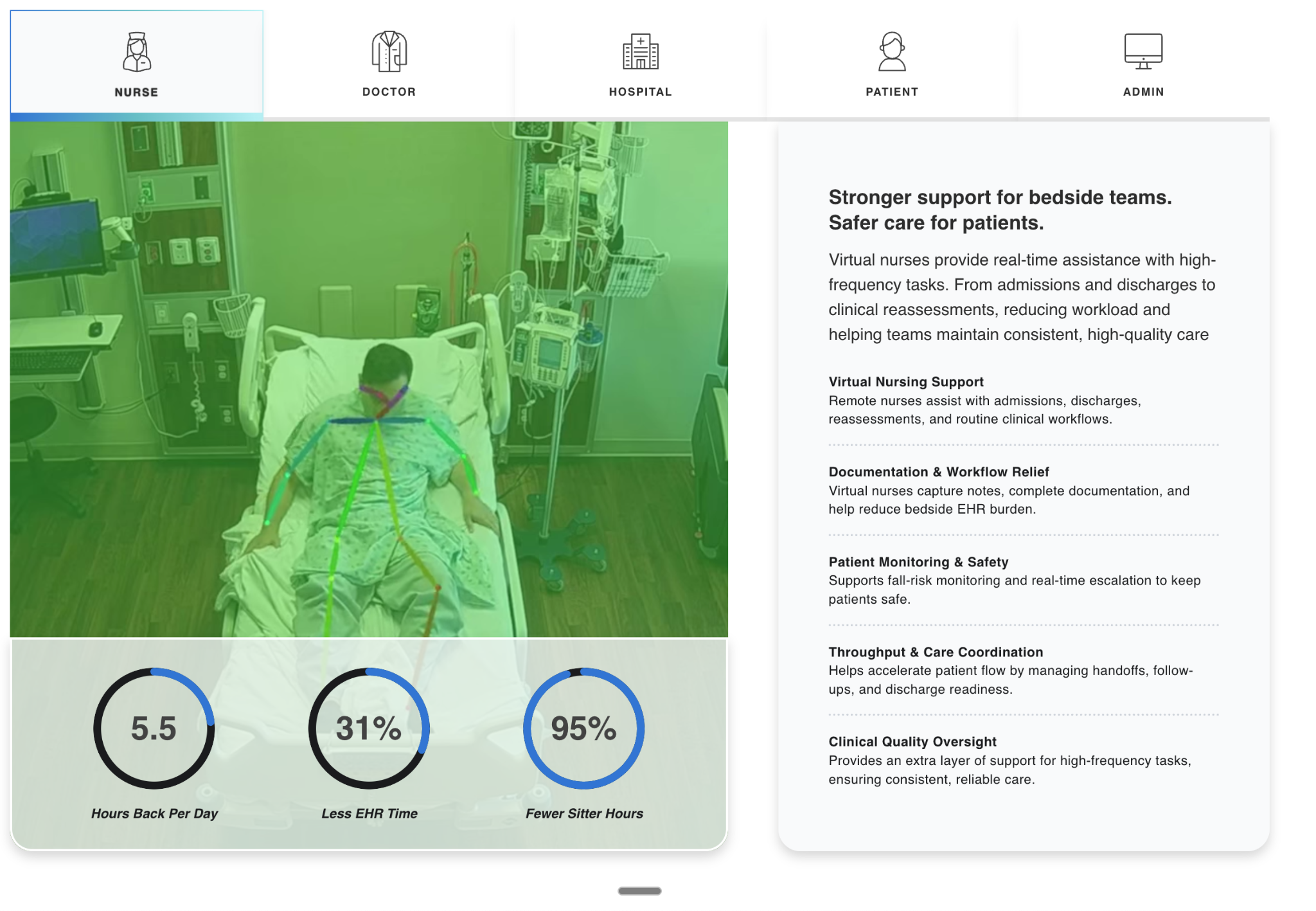
I can see a future in which this extends further to pictures, sensors, in-person conversations, video, and more. There’s already inklings of this in healthcare with these different smart hospital companies like Artisight, Apella, and Care.AI for example which monitor patients so nurses know where to round, record the operating room to turn it into documentation, etc.
I don’t think this is good or bad fwiw, just where things are trending. A few issues it raises, though:
- What do data rights and privacy look like in the future, especially for employees? Will employees be able to refuse and still work there? Will this data be able to be used in things like life insurance underwriting, workers comp, or some other weird area?
- Is it possible to have “offline” conversations at work in the future? A lot of companies explicitly will tell you not to put anything in writing you wouldn’t want seen in the front cover of the New York Times - every company of a certain size gets sued and things get put into discovery. If everything is written and recorded, can anything also come out now? The future is vape breaks outside for privacy.
- Will this change the behavior of people as they interact with customers and patients? Will “real” communications move into side, encrypted channels?
But there is a lot of the upside to this stuff being recorded. Less documentation burden is required, better monitoring of patients is possible, and having the raw data enables retrospective looks at trends. It can even potentially things like lower malpractice rates (we’ll talk about this in a few weeks).
The future of work is going to be very weird, very soon.
Work Splits into Deciding Tasks and Doing Tasks
LLMs and agents are getting pretty good at gathering a bunch of context data from different places and figuring out what tasks need to be done next. Thanks to things like data exhaust and workplace surveillance-esque things we talked about above, this is only going to get better.

But it also requires someone to do the thinking work of figuring out the direction of a project and where the tasks should be heading in the first place. When you run a company, there are a lot of those decisions.
This is why I think most jobs are going to bifurcate:
- Jobs that are almost entirely high cognition and making decisions at a rapid clip, which ends up informing agents and downstream tasks that need to be done.
- Jobs where you’re essentially given a set of tasks to do when you arrive at work. You don’t really have agency over the tasks, but also don’t own the liability if those were the wrong tasks to do.
The area that collapses are jobs where you’re solely gathering and filtering information, transforming information from point A to point B, providing expertise, or making micro level decisions. AI and agents will do the information collection and have enough context to make and assign microdecisions to others. This is a lot of corporate email jobs.
Engineering seems to already be going through this. When I talk to my engineer friends that are really at the frontier, their job seems to basically be splitting into:
- Telling their agents what they want to do and making a lot of the decisions/taste/choices that agents need from them. This is largely cognition work.
- Handling edge cases as they come up, which is largely task work.
- Figuring out a lot of customer issues, which is either task work (implementation) or cognition work (e.g. learning from them to know what to build).
This interview clip with the Brex CEO is a good example of where things seem to be headed. He has several agents that work together to keep him updated on what’s happening at the company, filter out important things, gives him action items, and automatically send updates to people. His OpenClaw agents basically handle everything in between. I’ve never understood what a Chief of Staff did, and only on the cusp of their automation does it finally click.
The Second-Order Effects of AI Creating and Judging Tasks
I think this raises a few interesting questions if we’re talking about AI bosses in the future.
Decision makers creating clones - We’re coming to the point where decision makers will create agents they feel confident can fully make decisions on their behalf. They’ll tell other employees/colleagues that if their agent gives an approval, they can continue. The AI agents autonomously writing prescriptions on behalf of docs are one example of this.
Giving access to my emails, slacks, and past judgment/rationale on decisions…honestly an AI clone of me could probably work right now and exceed my value.
AI as a boss - A lot of people would genuinely rather get managed and doled out tasks by an AI vs. a human. In a lot of ways they may feel the person is biased against them for one reason or another, or just want to clock in/clock out and get paid for the tasks done. Uber is essentially an example of this - the algorithm tells you the price and what task you need to do.

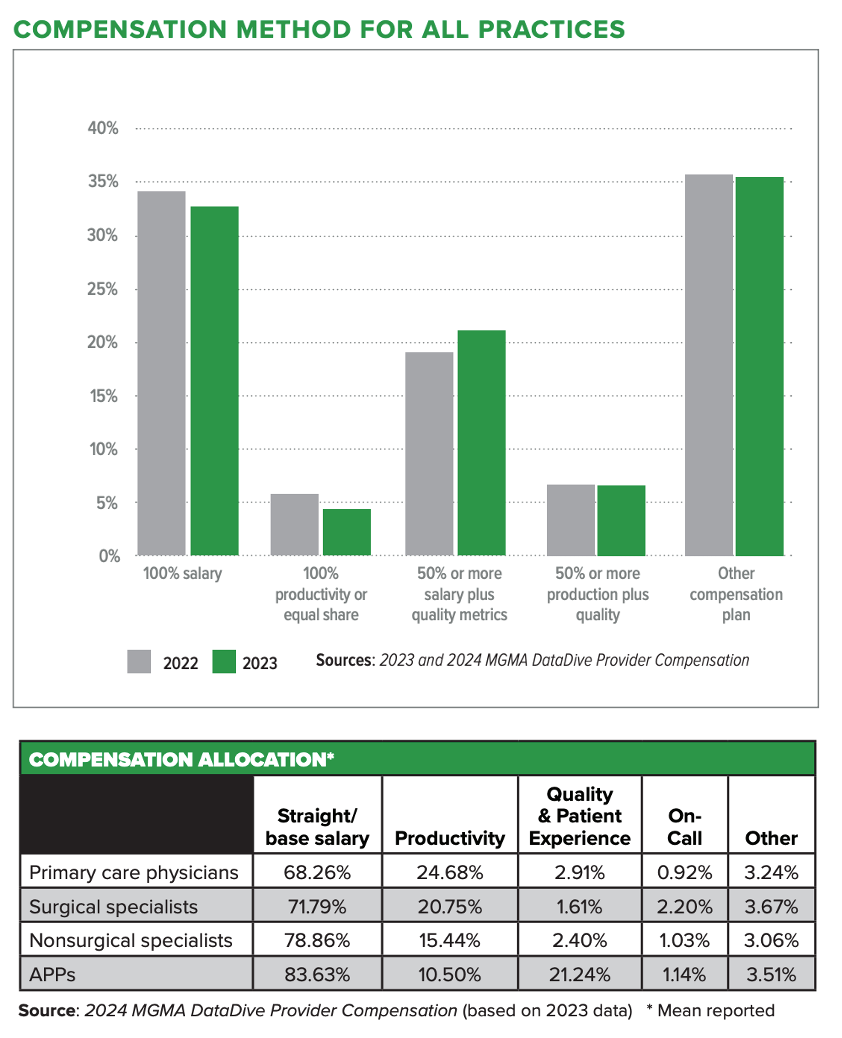
How does compensation change? - Here’s my guess on what happens. I think more of the “task” oriented jobs will have a different compensation structure where you get paid a lower base salary and then get paid more based on tasks completed. There will be some adjustment based on the task complexity. Sales is reading this like, “first time?”
Doordash, for example, is already doing this with tasks to gather data, where you get more money if the data is harder to get. There’s even a site that allows AI agents to “rent a human” to do tasks it can’t do yet.

Weirdly, healthcare is already a bit ahead of the curve here, too. Relative Value Units (RVUs) are essentially already a version of this. For many clinicians, their compensation is generally base salary + bonuses based on RVUs (beyond some minimum RVU threshold they need to hit). The entire world of services delivered gets boiled down to a productivity score based on task complexity, riskiness, etc.; which we’ve explained in the past.
I think this kind of compensation structure is going to happen to more jobs, especially within healthcare as more jobs get atomized into tasks. You’ll see more locum tenens or contractor style jobs for more roles where you’re given a rate, you accept, and you come in with enough context to do the job.
Will people want full days of complex tasks? - The first place AI is taking hold are simple, lay up tasks. But a lot of people use those easy tasks as a palette cleanser or mental break from doing the higher cognition tasks or hard tasks.
Will physicians want an entire caseload of complex patients that need in-depth counseling for their entire days? Will billers/coders only work on complex denial appeals and payer coordination? Will newsletter writers spend each day writing meta pieces grappling with the societal ramifications of AI?
Parting Thoughts
I’m sure when computers first came out, work changed a ton. All of you Medicare beneficiaries can tell me about that time at some point. I’m guessing a lot of tasks become internal coordination of information and white collar work as an industry basically proliferated.
AI is going to do something similar. It’s going to shift our jobs in a lot of ways we can only imagine. And I think healthcare might actually give us a glimpse into what that future or tech/work might look like. That’s probably the first time that sentence has ever been said.
Thinkboi out,
Nikhil aka. “Can a court jester be automated?” aka. “RIP Coase you woulda loved this shit”
Twitter: @nikillinit
IG: @outofpockethealth
Other posts: outofpocket.health/posts
If you’re enjoying the newsletter, do me a solid and shoot this over to a friend or healthcare slack channel and tell them to sign up. The line between unemployment and founder of a startup is traction and whether your parents believe you have a job.
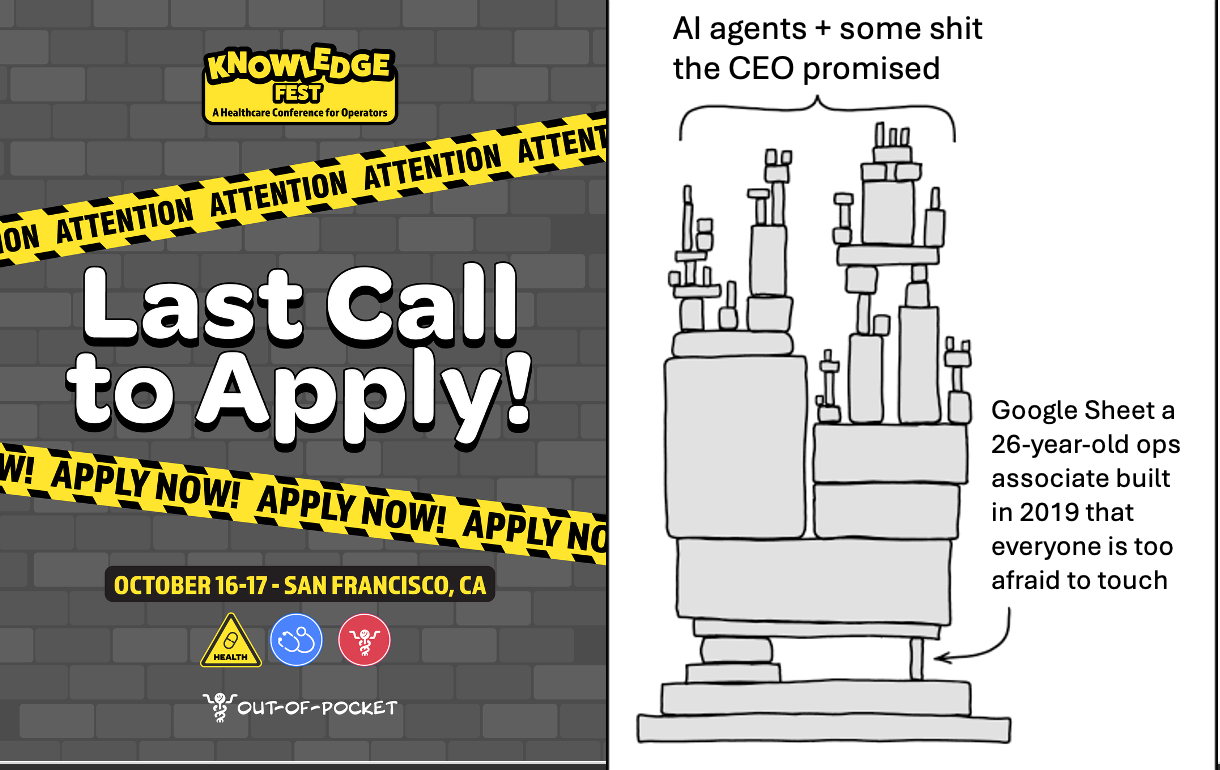
Quick Interlude - “Am I a fit for Knowledgefest?”
See All Courses →Based on the questions I’m getting about Knowledgefest, I’m doing a really bad job explaining who should come.
The conference is for anyone building in healthcare.
- It is not specific to companies delivering patient care - Lots of people at software only, insurance, etc are coming.
- Any size of company can come - We have two person just out of YC companies, people that run ops at clinics, to F500 companies.
- You can be any role - Almost every role touches ops in some way. Product, founders, clinical, etc. should definitely come.
You should apply if you’re not sure, and we’ll let you know :)
Get Out-Of-Pocket in your email