Healthcare is a US jobs program that’s now wobbling
Get Out-Of-Pocket in your email
Looking to hire the best talent in healthcare? Check out the OOP Talent Collective - where vetted candidates are looking for their next gig. Learn more here or check it out yourself.
 Hire from the Out-Of-Pocket talent collective
Healthcare 101 Crash Course

Featured Jobs
Finance Associate - Spark Advisors
- Spark Advisors helps seniors enroll in Medicare and understand their benefits by monitoring coverage, figuring out the right benefits, and deal with insurance issues. They're hiring a finance associate.
- firsthand is building technology and services to dramatically change the lives of those with serious mental illness who have fallen through the gaps in the safety net. They are hiring a data engineer to build first of its kind infrastructure to empower their peer-led care team.
- J2 Health brings together best in class data and purpose built software to enable healthcare organizations to optimize provider network performance. They're hiring a data scientist.
Looking for a job in health tech? Check out the other awesome healthcare jobs on the job board + give your preferences to get alerted to new postings.
This episode of Out-Of-Pocket is brought to you by...
Enterprise AI. Healthcare RCM expertise. Better financial performance.
Meet R1.
—
The healthcare jobs machine
A few months ago I was on a call trying to pitch a group sale of our healthcare 101 crash course (starts Feb!!!) to a company that processes claims. I got on the call and there were 7 other people on it, it felt like one of those Jubilee videos. 20 minutes of the 45 min meeting was everyone introducing themselves.
So anyway, healthcare in the US is a jobs program. Every time the jobs report comes out, it’s pretty clear healthcare is propping up the entire labor force.
Today I want to talk a bit about how that happened, why it might be changing, and a quick thought on what a new jobs program could look like.
I did some slicing and dicing of the jobs data for this, like...actual work. So you better read it.
We’re manufacturing new jobs
Y’all mind if a thinkboi gets a little labor economics motion?

In the 1970s manufacturing jobs started moving overseas and left big holes in the economy, especially outside of the major metros. Simultaneously Medicare and Medicaid had just been created in 1965 as the population was getting older with more complex, around-the-clock needs, and every new piece of technology (imaging, dialysis, etc.) required a bunch of ancillary staff to run it.
Great timing to create a limitless pool of cash just at the time we needed new jobs! As a result while manufacturing shrank, healthcare grew and the two lines crossed. This was especially true in those areas where manufacturing used to be.

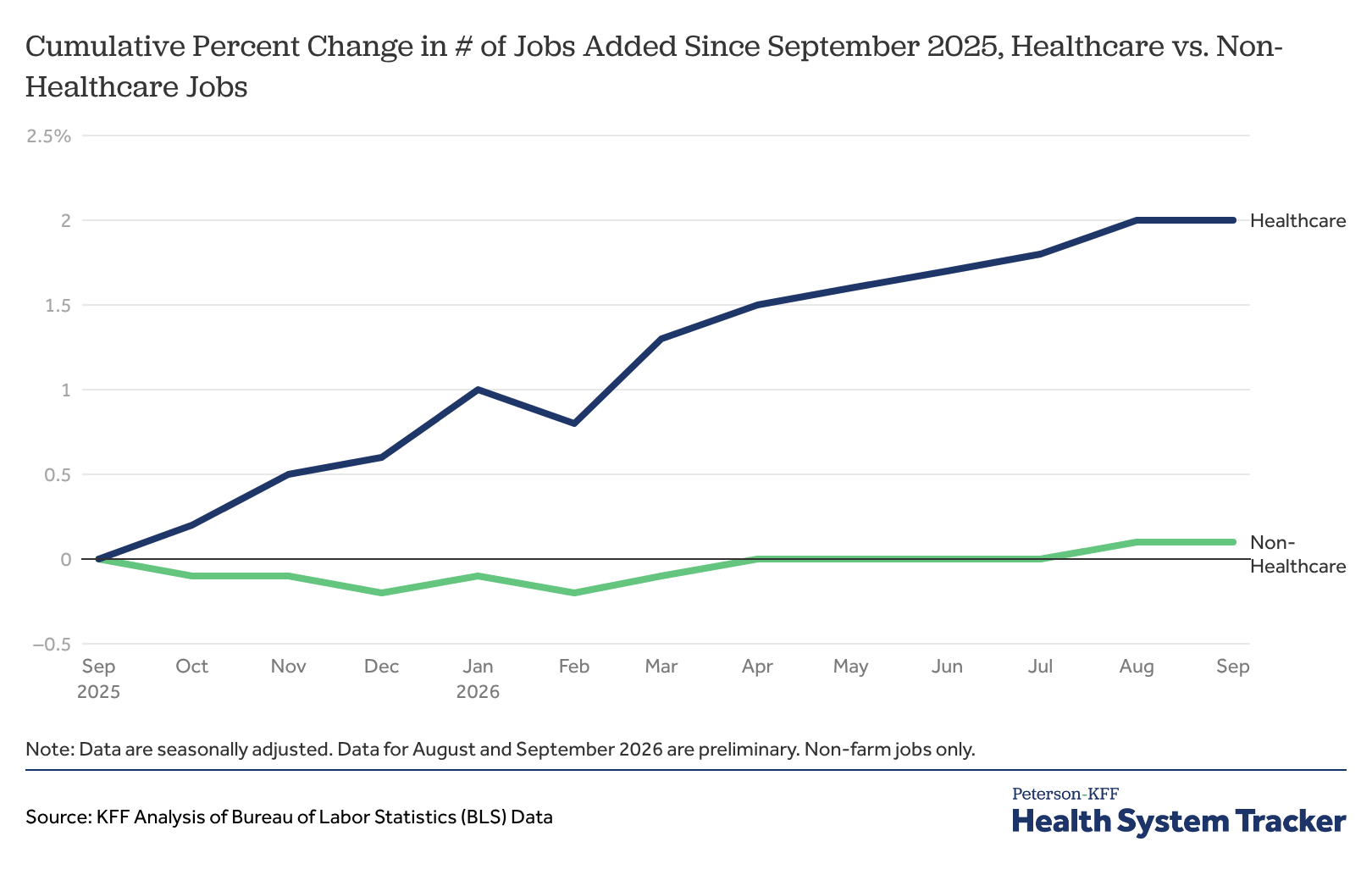
Now let’s take a look today. Per the Peterson-KFF tracker, from September 2025 to September 2026, healthcare added 372,000 jobs while the entire rest of the economy added 124,000. Healthcare is now 11.7% of all US jobs, that is crazy!!! At this rate the only three jobs are going to be in healthcare, data center mechanic, and hot + shitposting.
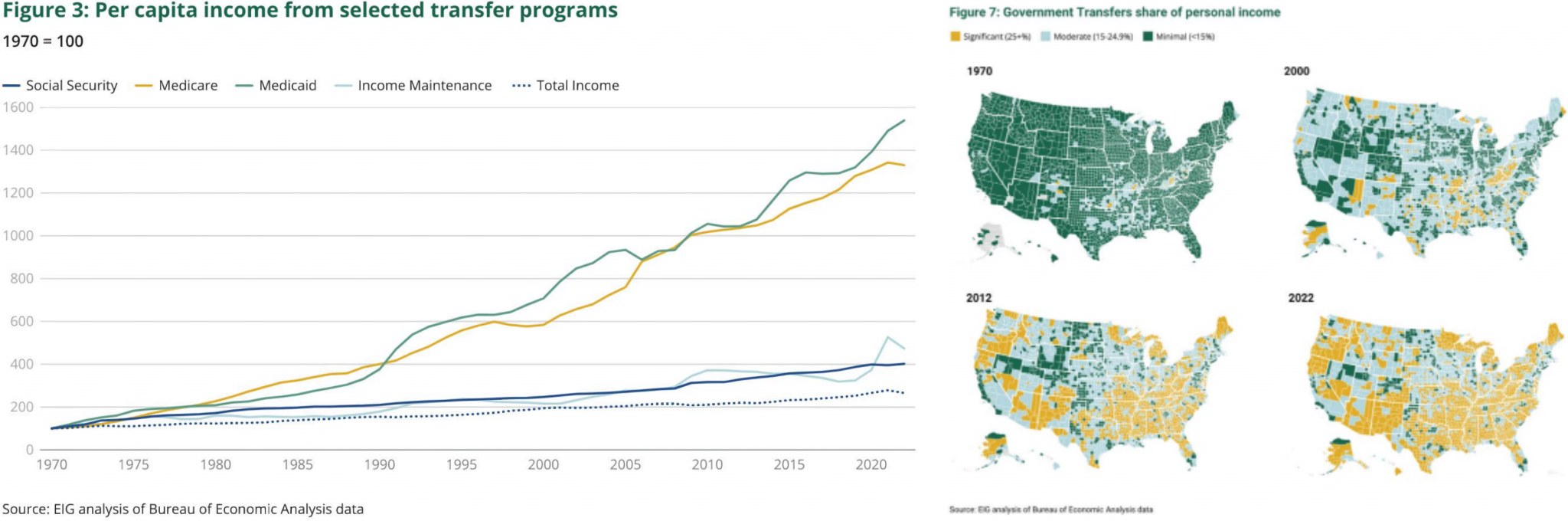
And the jobs obviously follow the money. EIG put out a report about government transfers, which is a benefit people receive from the government as income/not paying for something essentially. I think this is an interesting proxy for how economically viable and job supporting a county can be WITHOUT government help.
If you look through the data, Medicare/Medicaid have become the biggest sources of income for particularly non-metropolitan areas. Some stats in the data:
- Government transfers are now 17.6% of all personal income in the US, up from about 8% in 1970. Medicare and Medicaid are 46% of all government transfer dollars!
- 53% of counties get more than 25%+ of their income from government transfers (this covers about 72M people).
- Kentucky seems to be the home of the Colonel and government transfer programs. Twelve of the top fifteen counties receiving government transfers are there. Owsley County gets 63% of personal income from transfers, and Medicaid alone is 32% of all income in the county.
Those government transfers via Medicaid/Medicare get transmuted alchemically into jobs. Phoebe Putney Health System has 6000+ workers and is the largest employer in southwest Georgia. Dougherty County, where it's based, gets 34% of its personal income from government transfers.
In New York we have a program that pays friends and family as caregivers. In 2023 it grew by 57,000 jobs and became 38% of all job growth in the state (they’ve made changes to the program now that have flattened it).
We have become a country of healthcare jobs with a propping of government dollars. Is that fine?
I think this grand bargain worked for a while. We were still seeing economic productivity, government spending hadn’t yet gotten too crazy, etc. But a few things are happening now that suggest the bargain is falling apart.
In fact we’re already seeing some deceleration as an early sign this year and many organizations are starting to lay off employees.
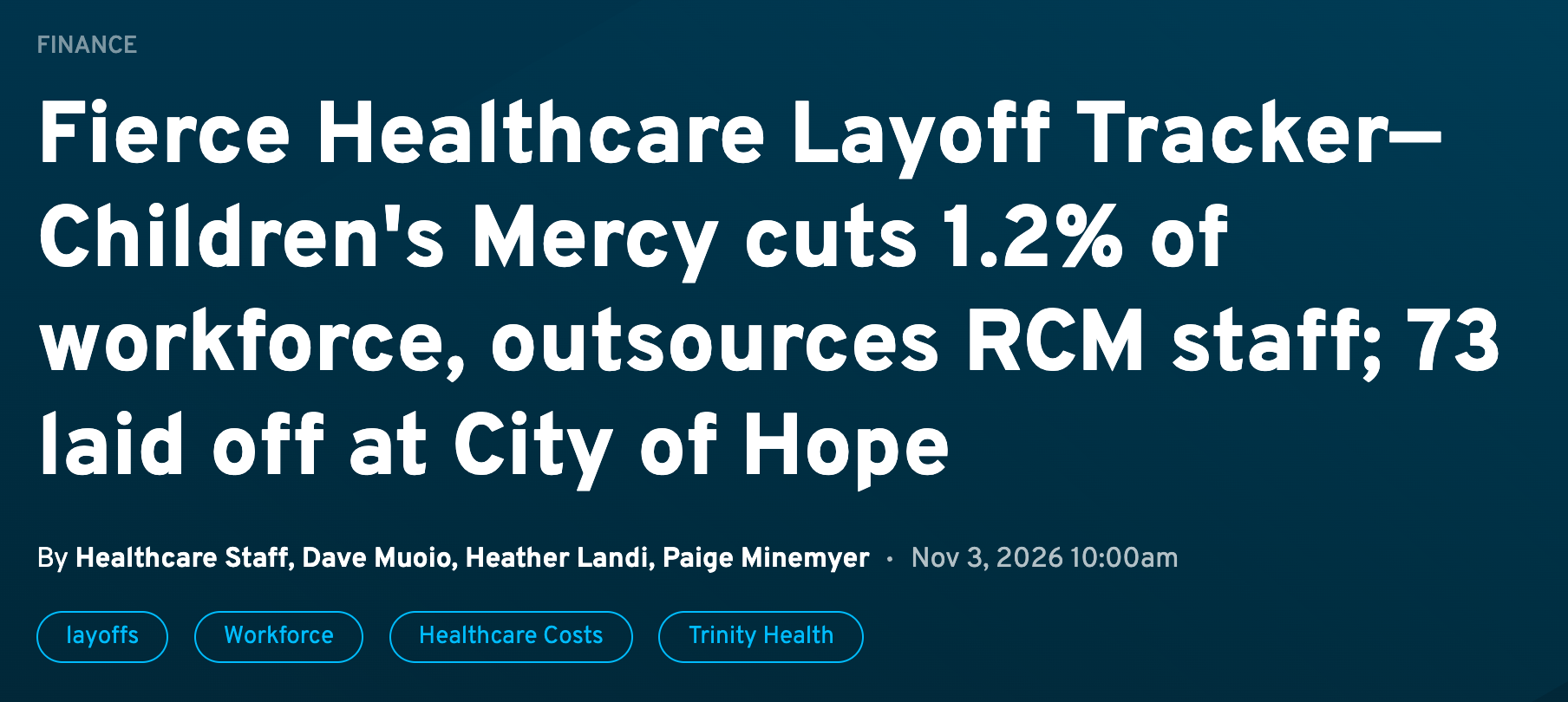
Reason 1: Government healthcare spend is getting more scrutiny
Government spending has gotten out of control and they are looking for places to cut. Medicare was effectively a limitless pool of money when passed. But a lot of stuff has happened since Medicare got started that yielded a lot of government printing (we seem to really enjoy the scenery in Iraq and Iran). As a result, there’s a lot more scrutiny over how Medicare/Medicaid dollars are spent.
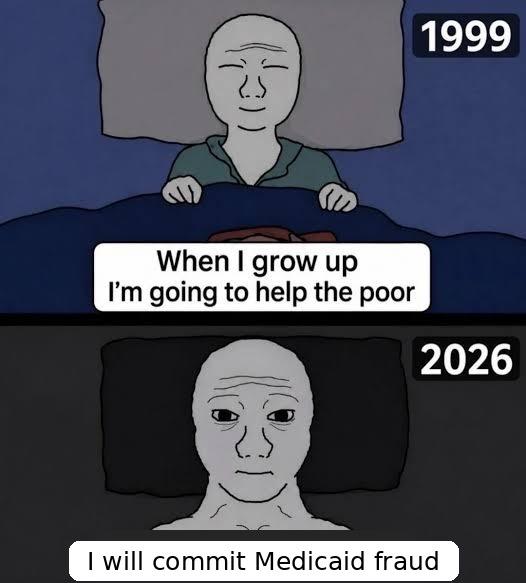
- One Big Beautiful Bill cut ~$900B+ from federal Medicaid - A big chunk of it is targeted at reducing the federal match to states.
- Medicare is trying to pay out less money - They’ve gotten much stricter about money going out the door. More aggressive audits of Medicare Advantage plans and programs to introduce prior auth into traditional Medicare.
- CMS is focusing heavily on fraud, waste and abuse - They froze ~$38B for California’s IHSS (800k+ caregivers) and the DOJ sued New York’s Health Commissioner + Medicaid Director over fraud in the Medicaid caregiver program I was talking about.
All in all, it’s clear the federal government no longer wants to be treated like an infinite money pool that can just inject money into state economies.
Out-Of-Pocket is also supported by...

Reason 2: Local politicians are viewing hospitals as the issue
Since healthcare represented a huge part of employment in a given state, a lot of local politicians would fight on the side of their local providers. But I have a feeling that’s changing as more realize that it’s at the expense of other jobs in the state.
There’s a paper by Zack Cooper and the “f*** monopolies” squad that used IRS data to see what happens after hospital mergers jack up prices, and every 1% price increase leads local non-healthcare employers to cut payroll and headcount by ~0.4%.
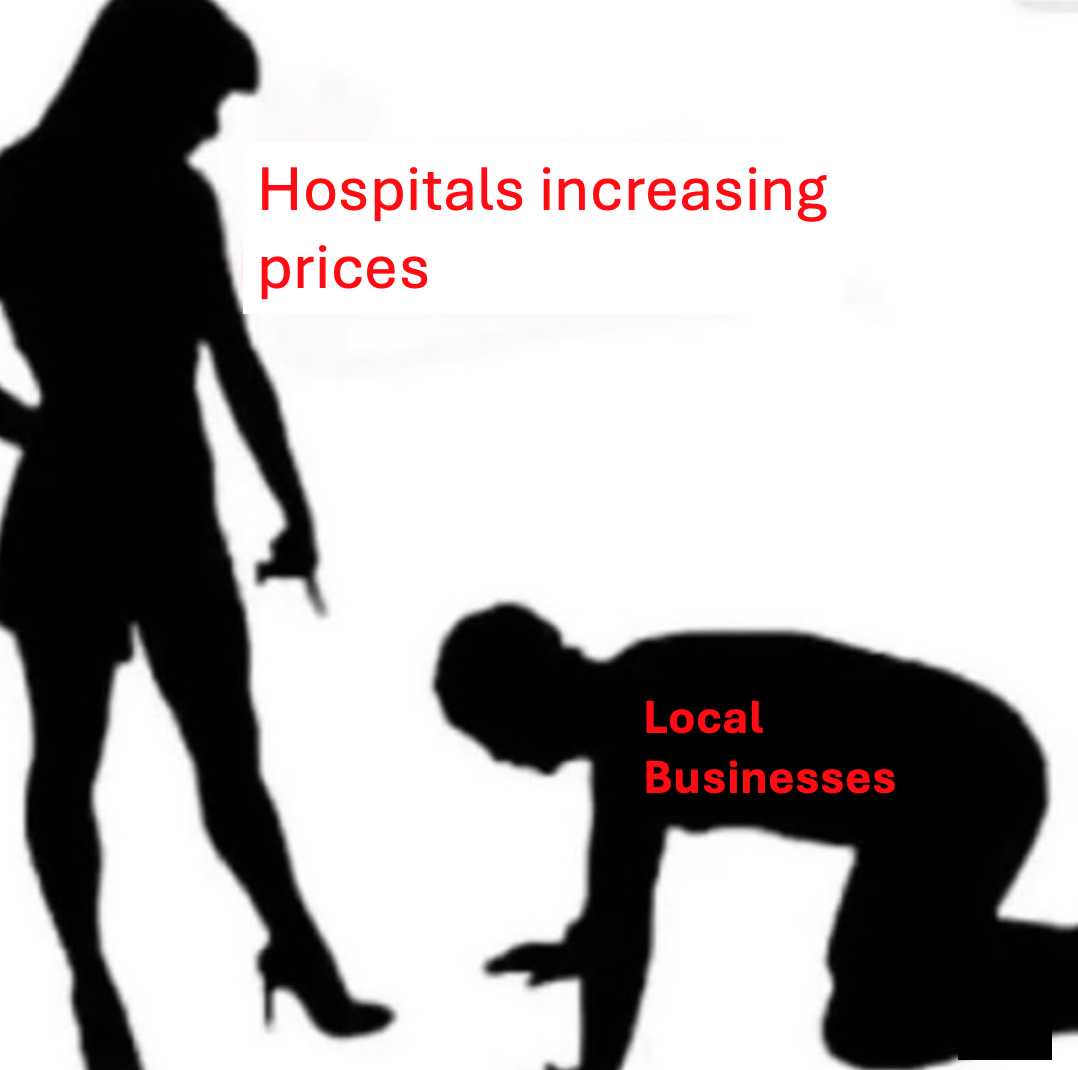
A jobs program doesn’t work if you LOSE jobs from other employers not hiring. Companies are choosing where to close locations or open up new ones based on local healthcare costs. Indiana is an interesting example of this:
“We have plants all over the country, and whenever we’re talking about opening a new one, do you know what I say? I say, ‘ABI,’” according to the Indy Star. The executive elaborated: “Anywhere but Indiana. On average we pay $2,200 for every worker’s emergency room visit in Indiana. In Michigan it’s $800. The difference there is the profit margin on one” - Becker’s Hospital Review
Indiana is now taking on the hospitals in the state and trying to cap how much they can charge employers or risk losing their non-profit status. You are starting to see many more states exploring these kinds of hospital price caps as their own state health plans are bearing enormous costs.
As voters themselves lose trust in their local hospitals, politicians also see an opportunity to use that to their advantage.
Quick interlude - Headhunting + Data Camp sponsors
2 very quick things for you.
- Healthcare 101 Crash Course is now enrolling for February. I WILL TEACH YOUR PEOPLE HOW US HEALTHCARE WORKS WHICH IS KINDA IMPORTANT IF YOU ARE WORKING IN US HEALTHCARE. Sign up here, email back for group discounts.
- Our headhunting service is really picking up steam. We are helping some excellent companies find excellent people. If that sounds like you, or you know a great engineer looking to break into healthcare, send them our way.

Reason 3: AI will take admin jobs and extract dollars from local economies
While it’s still early, I think AI is going to meaningfully hollow out admin jobs in healthcare. AI is really good at handling email jobs, coordination work, data entry, etc.
It will not take very long before computers are better at these admin tasks than humans - less mistakes, faster, operating at all hours, and cheaper. Eventually the agents will even be able to create committees on small inconsequential changes, so you all are in trouble.
Interestingly in the Bureau for Labor Statistics data they give commentary on where they think AI will impact jobs. I think several of their assumptions are wrong (e.g. IMO medical record specialists should go down, not up) and they’re too conservative about how rapid the job loss will be in some of these areas over 10 years. But nonetheless you can see where the jobs are today and it flags who’s at-risk.
Customer service is 2.6M people (not just healthcare), claims adjusters are 376K, billing work is 400K+, etc. I put the wrangled data into a google sheet here if you’re curious. A non-insignificant number of jobs here are at risk, and many of them are accessible jobs that only require a high school level education.
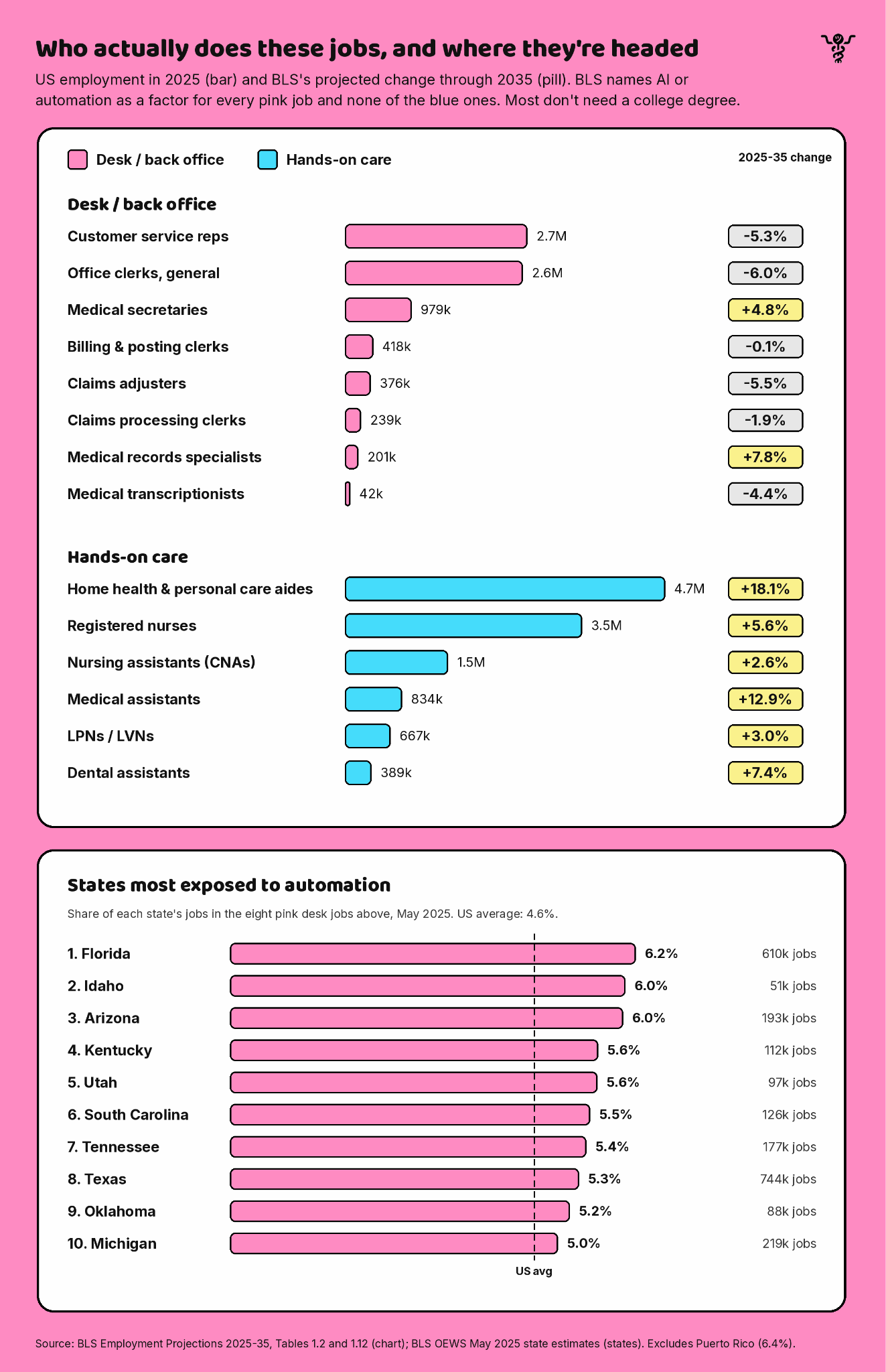
I think we’re already starting to see inklings of this happen. Revere Health laid off 177 people explicitly talking about a partnership with a claims-automation company that uses AI. Mass General Brigham has been doing layoffs explicitly targeting duplicative administrative layers. Looking at the long list of healthcare institution layoffs, there’s clearly a focus on admin/back-office staff.
This will also redistribute where the money goes. We’re going to see a lot of money siphoned out of local economies and into a handful of AI companies. For example, when someone orders an Uber the driver receives the money and spends it in the local economy. But when someone orders a Waymo that money exits that local economy goes to Waymo in SF, where it’s converted into chinese peptides and compute.
I think this same dynamic will play out with AI taking a lot of healthcare admin jobs. This is going to cause even more of a rift societally as dollars accumulate in a smaller handful of cities.
Parting thoughts - the next jobs program?
I don’t think this is limited to healthcare, there’s a general sense that we’re about to go through a mass displacement of jobs across the economy. New jobs will certainly appear in their wake - we’re already seeing for example a boost in areas like manufacturing in this last jobs report.
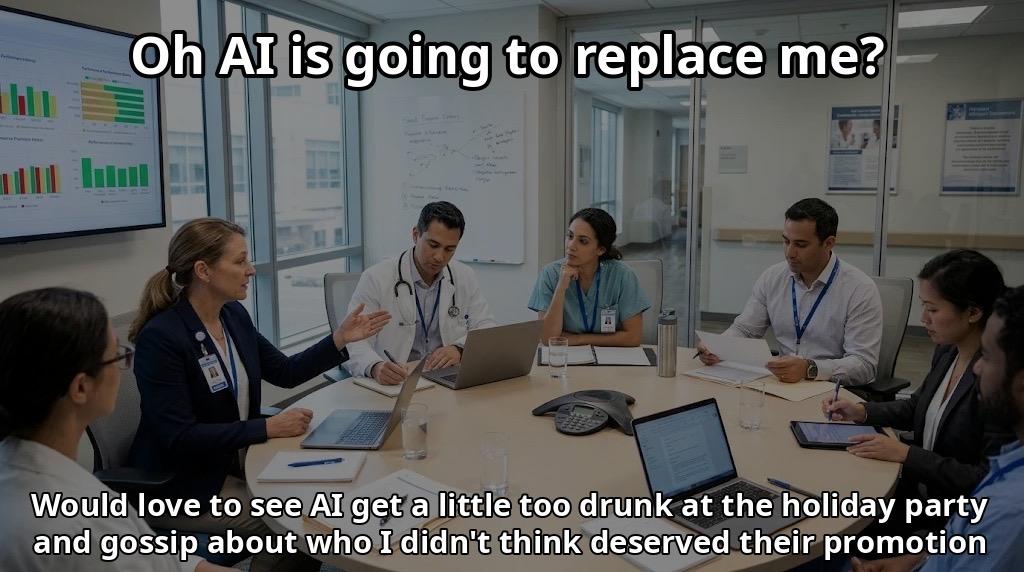
Healthcare worked as a jobs program for a while, but it’s run its course. We need a jobs program that feels much more net positive to citizens and can absorb some of the upcoming job losses.
These jobs would have to help local economies that are struggling + be easily accessible without a lot of advanced degrees. Maybe that’s just more healthcare jobs that are more patient-assisting instead of admin (e.g. home health aides, navigators, etc.).
But I think there’s also an opportunity to explore a new government incentivized jobs program which won’t be created by the free market. My half-baked idea would be a jobs program that gets local communities to interact more in person. Programs pay people to run the stuff that gets the people together. YMCAs, rec centers, third spaces, youth sports leagues, the senior center, etc. Or programs to do civic service in other states.
Would love to hear ideas on what you think the next jobs program should be.
Thinkboi out,
Nikhil aka. “Recession proof or proof of recession?” aka. “Wait...am I part of the healthcare jobs program?”
P.S. We are about to announce Datacamp 2027 - We are already chatting with companies about sponsorship. If you’re trying to get in front of healthcare data professionals, we should chat sooner than later.

Twitter: @nikillinit
LinkedIn: Nikhil Krishnan
Quick Interlude - Announcing Build @ Deerfield, powered by Out-Of-Pocket
See All Courses →One of the goals of Out-Of-Pocket is to make it easier for people to start healthcare companies. For the last few months, we have been working behind the scenes to cook up something awesome for people who want to start something.
We’re excited to announce Build @ Deerfield, powered by Out-Of-Pocket. This is a five-week hackathon for early-stage healthcare teams with $250K+ of non-dilutive capital in grants and prizes.
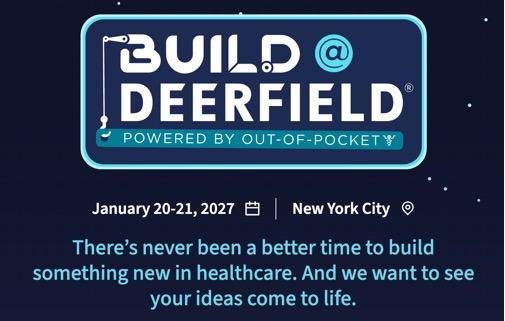
You can see more details here, but in general Deerfield and Out-Of-Pocket are joining forces to do something big for the New York healthcare community. We’ll select 12-15 teams that will:
- Receive cash to start building
- Access to mentors during the program
- Get a chance to present what they’ve built to the broader New York healthcare community at a showcase and reception on January 20-21 at Cure in NYC.
- Judges will select a handful of teams for additional non-dilutive grants and prizes.
If you have an idea you’ve been meaning to build, or your team has just started out, this is your sign. We had such an awesome time doing this last year, you can see some of the projects here.
Now we’re doing it bigger and better.

Apply by November 19, 2026, there’s nothing to lose and a ton to gain. You can find more details and apply here: https://www.outofpocket.health/build-at-deerfield
This is going to be a lot of fun and we’re really excited to be doing this. A personal joy of mine is seeing someone take the plunge just before they build something great, and we’re happy to be a small part of that journey.
Email back if you have any questions. But look at the FAQ first cause we know half of you are about to ask “am I a good fit” or “what are you looking for in an application”.
Get Out-Of-Pocket in your email